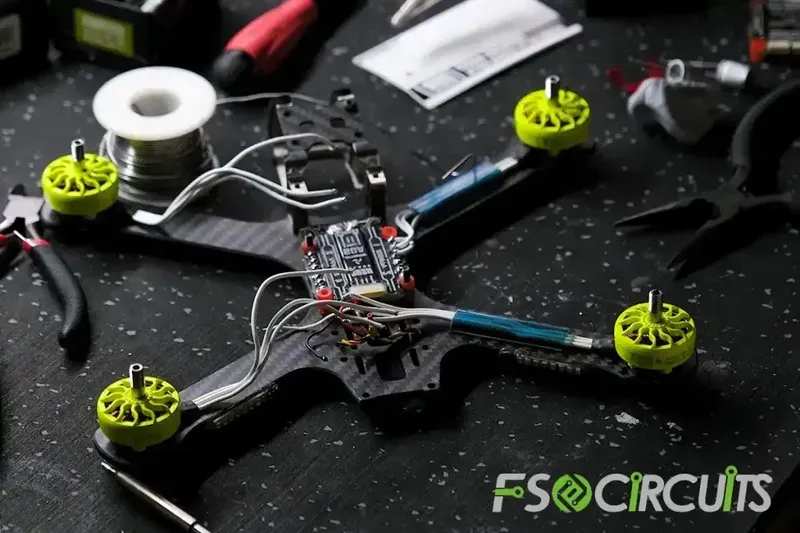
In an era defined by rapid technological advancements, unmanned transport vehicles (UTVs) are revolutionizing military logistics and operations. These sophisticated systems demand robust and reliable Printed Circuit Boards (PCBs) to ensure seamless functionality in harsh environments. Zero One Solution Limited specializes in providing cutting-edge PCB solutions tailored for military UTVs, empowering our clients to develop and deploy next-generation autonomous transport systems. This article delves into the critical aspects of PCB design, manufacturing, and assembly for military UTVs, highlighting the expertise and capabilities of Zero One Solution Limited in this specialized field. Why is reliable PCB so important for military UTVs? How can Zero One Solution Limited help?
Introduction to Military Unmanned Transport Vehicles (UTVs)
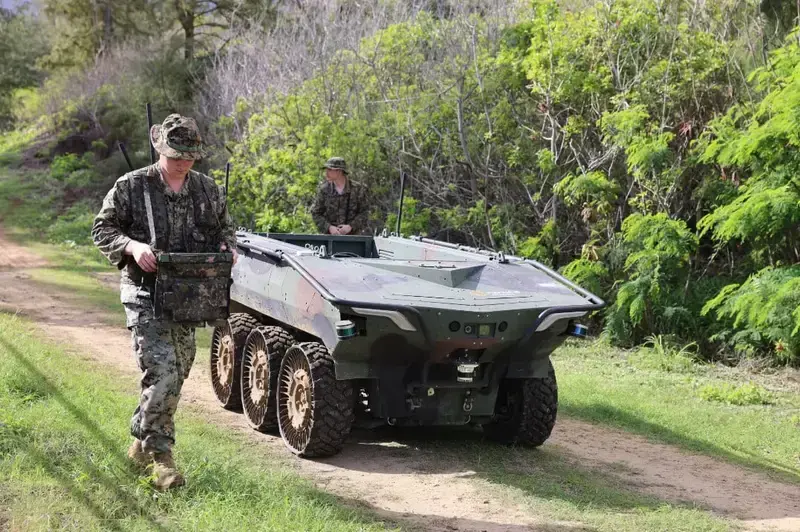
Military UTV in Field
Military Unmanned Transport Vehicles (UTVs) are rapidly transforming modern warfare and logistics, providing unparalleled capabilities for reconnaissance, supply delivery, explosive ordnance disposal, and combat support in hazardous environments. These autonomous systems significantly reduce human risk while enhancing operational efficiency and strategic reach. At the core of their sophisticated operation lies high-performance electronic systems, with Printed Circuit Boards (PCBs) serving as the fundamental backbone for all critical functions, demanding exceptional reliability and resilience to withstand the extreme conditions of military deployment.
Enhanced Operational Safety UTVs remove personnel from dangerous situations, such as hostile fire zones, chemical weapon sites, or IED clearing, dramatically reducing casualties and injury rates among military personnel. This directly addresses the critical need for force protection in contemporary conflicts and humanitarian operations. For example, during search and rescue missions in contaminated areas, UTVs can provide initial assessments without risking human life, as demonstrated in CBRN (Chemical, Biological, Radiological, and Nuclear) scenarios by NATO's Robotic Autonomous Systems (RAS) initiative.
UTV Application Area
Key Functionality
PCB Criticality
Logistics & Resupply
Automated cargo transport, last-mile delivery
Power management, navigation (GPS/INS), communication modules
Reconnaissance & Surveillance
Sensor data acquisition (thermal, EO/IR), real-time data transmission
High-speed data processing, sensor interfaces, secure communication links
Combat Support
Armed escort, target acquisition, fire support
Weapon control systems, precision targeting, robust power distribution
Printed Circuit Boards (PCBs) are the indispensable backbone of all electronic systems within Military Unmanned Transport Vehicles (UTVs), orchestrating critical functions from autonomous navigation to secure communications and advanced sensor integration. Unlike commercial applications, PCBs in military UTVs operate under extreme conditions, necessitating uncompromising reliability, durability, and performance to ensure mission success and soldier safety. Their foundational role demands adherence to rigorous military standards, making them a cornerstone of UTV operational integrity.
Why are PCBs critical for Military UTV navigation? PCBs manage the complex algorithms and sensor data (GPS, Inertial Measurement Units) essential for precise autonomous navigation, path planning, and obstacle avoidance, enabling UTVs to operate effectively in diverse and challenging terrains without human intervention. The high-density interconnects and robust signal integrity on these PCBs are crucial for accurate real-time data processing and control loop stability.
Function Category
PCB's Core Contribution
Specific Military Requirement
Navigation & Control
Processes sensor data, executes movement commands, manages autonomous routing.
High-speed data processing, real-time responsiveness, redundancy for fault tolerance.
How do PCBs enable communication systems in Military UTVs? PCBs are central to the transceivers, amplifiers, and data processors that facilitate secure and reliable communication between the UTV, command centers, and other unmanned assets. They must support various communication protocols (e.g., SATCOM, tactical radio) while mitigating electromagnetic interference (EMI) to ensure robust data links in contested environments.
Function Category
PCB's Core Contribution
Specific Military Requirement
Communication
Manages data transmission/reception, signal modulation, and encryption.
EMI/EMC compliance, secure data handling, resilient under jamming.
What role do PCBs play in sensor integration for Military UTVs? PCBs provide the interface and processing capabilities for integrating various sensors such as LiDAR, thermal cameras, radar, and chemical/biological detectors. They enable rapid data acquisition, fusion, and analysis, providing the UTV with comprehensive situational awareness. Signal integrity and power delivery for these sensitive components are paramount.
Function Category
PCB's Core Contribution
Specific Military Requirement
Sensor Integration
Interfaces with multiple sensor types, processes raw data, enables data fusion.
High channel count, low noise design, robust against environmental stressors.
Why are PCB power management solutions critical for Military UTVs? PCBs contain the power conversion and distribution circuitry that efficiently manages energy from batteries or power generators to all subsystems. Robust power management PCBs ensure stable voltage supply, prevent overcurrents, and optimize power consumption, which is vital for extending operational endurance and mission duration in the field.
High efficiency, thermal dissipation, wide operating temperature range.
Key PCB Design Considerations for Military UTVs
Designing Printed Circuit Boards (PCBs) for Military Unmanned Transport Vehicles (UTVs) presents a unique set of engineering challenges that demand meticulous attention to detail and adherence to stringent performance criteria. Unlike commercial applications, military UTVs operate in extreme and unpredictable environments, necessitating PCBs that can withstand severe mechanical stress, thermal fluctuations, electromagnetic interference, and chemical exposure, all while maintaining absolute reliability for mission-critical functions. The core objective in these designs is to ensure unwavering operational integrity, often under conditions where failure is not an option.
Signal Integrity (SI) and Power Integrity (PI) Maintaining high signal integrity is paramount for reliable data transmission in high-speed digital and RF circuits. This involves careful impedance matching, controlled trace routing, minimizing crosstalk, and employing robust grounding schemes. Power integrity is equally crucial, ensuring stable and clean power delivery to all components to prevent noise-induced errors and performance degradation, particularly in complex systems with varying power demands. Simulation tools are extensively used to predict and mitigate SI/PI issues early in the design cycle.
Design Aspect
Challenge in Military UTVs
Zero One Solution Approach
Thermal Management
Extreme temperature swings (-55
C to +125
C), high power dissipation in compact enclosures.
Utilize advanced thermal vias, heat sinks, embedded copper planes, and specialized substrate materials with high thermal conductivity (e.g., Ceramic, Metal Core PCB). Implement thermal simulation during design phase to optimize heat dissipation paths.
Space Constraints & Weight Reduction
Limited physical space, necessity for lightweight designs to maximize payload and operational range.
Employ high-density interconnect (HDI) technology, micro-vias, fine-pitch components, and multi-layer stack-ups. Optimize component placement and routing for compact form factors without compromising performance or manufacturability. Explore flex and rigid-flex options for complex geometries.
Ruggedization and Environmental Durability Military UTV PCBs must endure severe shock, vibration, and acceleration. This necessitates robust mechanical design, including secure component mounting, appropriate trace widths for high current, and stiffeners for larger boards. Conformal coatings and potting compounds are applied to protect against moisture, dust, fuel, and chemical exposure, preventing corrosion and short circuits. Designs must also account for electromagnetic compatibility (EMC/EMI) to prevent interference with sensitive onboard systems and external communications, often through shielding and filtering techniques.
Material Selection for High-Reliability Military UTV PCBs
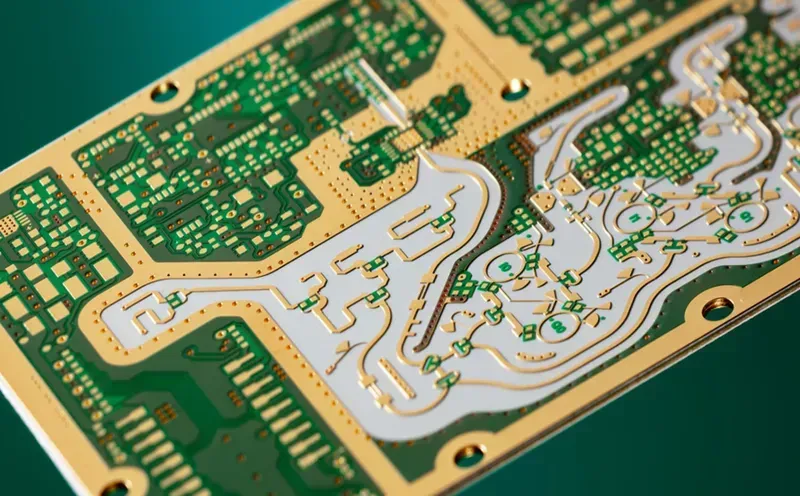
Rogers PCB Material
The operational integrity of Military Unmanned Transport Vehicles (UTVs) hinges critically on the underlying Printed Circuit Board (PCB) infrastructure. In the demanding theatres of military operations, where extreme temperatures, relentless vibrations, and harsh environmental factors are commonplace, the selection of appropriate PCB materials is paramount. These materials must not only facilitate complex electronic functions but also ensure the long-term reliability and survivability of the UTV, directly impacting mission success and personnel safety. Choosing the right substrate, laminate, and prepreg is foundational to building a PCB that can perform flawlessly under duress, embodying the resilience required for military-grade applications.
Material Type
Key Characteristics for Military UTV PCBs
Common Applications in UTVs
FR-4 (Standard/High Tg)
Cost-effective, good electrical properties, widely available. High Tg versions offer improved thermal stability.
General control boards, power management units, non-critical communication modules.
Rogers (High-Frequency Laminates)
Excellent dielectric constant stability across frequency and temperature, low loss, superior signal integrity for high-speed signals.
Radar systems, RF communication modules, advanced sensor arrays, navigation systems.
Polyimide
Exceptional thermal endurance, chemical resistance, radiation resistance, and mechanical robustness. Often used in flexible PCBs.
Engine control units (ECUs), sensor interfaces in high-heat zones, flexible interconnections for complex assemblies.
Ceramic Substrates
Superior thermal conductivity, excellent high-frequency performance, high mechanical stiffness, hermetic sealing capabilities.
High-power amplifier modules, certain integrated sensor packages, specialized RF components.
BT-Epoxy (Bismaleimide Triazine)
High glass transition temperature (Tg), low dielectric loss, good thermal reliability, and high mechanical strength.
Thermal Management Considerations for Military UTV PCB Materials Military UTVs often operate in environments with extreme temperature fluctuations. Materials with high glass transition temperatures (Tg) and low coefficient of thermal expansion (CTE) are crucial to prevent delamination and ensure dimensional stability. Effective thermal management via material selection, such as thermally conductive laminates or integrating heat sinks directly into the PCB design, is vital to dissipate heat generated by high-power components, preventing thermal runaway and extending component lifespan.
Vibration and Shock Resistance in Military PCB Materials Unmanned vehicles are subjected to constant vibrations and shocks during traversal over rugged terrain. PCB materials must possess excellent mechanical integrity to withstand these forces without fracturing or delaminating. Reinforced laminates and materials with high flexural strength contribute significantly to the overall robustness of the PCB, ensuring continuous operation under severe mechanical stress, a critical factor for mission-critical systems.
EMI/EMC Shielding and Signal Integrity in Military UTV PCB Materials In military applications, electromagnetic interference (EMI) and electromagnetic compatibility (EMC) are paramount to prevent signal corruption and ensure secure communications. PCB material choices, particularly those with controlled impedance properties and low dielectric loss, play a significant role in maintaining signal integrity and minimizing crosstalk. Strategic material layering and grounding techniques further enhance the board's resistance to electromagnetic interference, safeguarding sensitive data and control signals.
Manufacturing Processes for Military-Grade PCBs
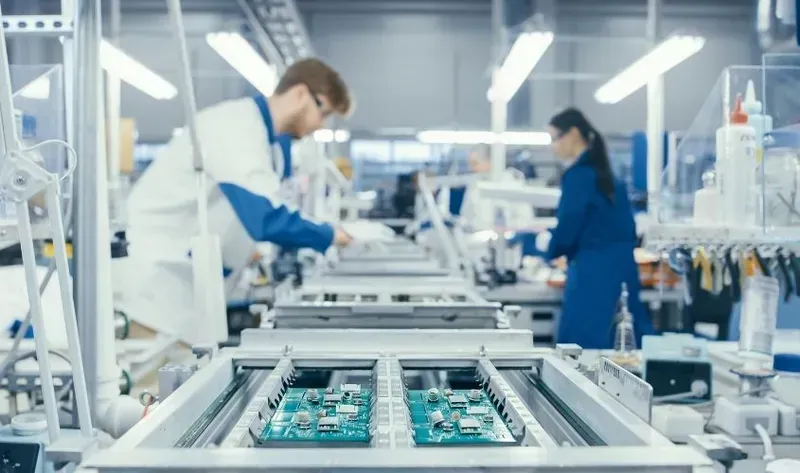
PCB Manufacturing Factory
The manufacturing of Printed Circuit Boards (PCBs) for military unmanned transport vehicles (UTVs) demands exceptionally precise and rigorous processes, far exceeding commercial standards. These advanced techniques are critical to ensuring the operational integrity, reliability, and longevity of UTVs in the most demanding combat and logistical environments. From meticulous substrate preparation to sophisticated quality control, every step is optimized for mission-critical performance.
Precision Etching for Fine Line Circuitry Military-grade PCBs often feature high-density interconnect (HDI) designs with incredibly fine lines and spaces to accommodate complex electronic systems within limited space. Precision etching, typically employing advanced photolithography and chemical etching processes, is essential to accurately transfer circuit patterns onto the copper layers. This includes differential etching techniques to maintain tight tolerances and ensure signal integrity, which is paramount for high-speed data transmission in communication and sensor systems.
Controlled Impedance Routing Signal integrity is a non-negotiable requirement for military UTVs, especially for high-frequency signals from radar, communications, and navigation systems. Controlled impedance routing involves designing and manufacturing traces with precise width, spacing, and dielectric properties to maintain a consistent impedance throughout the signal path. This minimizes signal reflection and distortion, ensuring reliable data transfer, crucial for real-time command and control, and accurate sensor readings.
Multilayer Lamination and Stack-up Optimization To integrate numerous components and functionalities, military UTV PCBs are often multilayered. The lamination process involves bonding multiple layers of copper circuitry and dielectric materials under precise temperature and pressure. Optimized stack-up design, considering dielectric constants and layer thickness, is crucial for achieving desired electrical performance (e.g., impedance control, crosstalk reduction) and mechanical robustness, enhancing the PCB's ability to withstand shock and vibration.
Automated Optical Inspection (AOI) and X-ray Inspection Quality assurance is integrated throughout the manufacturing process. Automated Optical Inspection (AOI) systems use high-resolution cameras to rapidly scan PCBs for defects such as opens, shorts, thinning, and missing features. For hidden layers and solder joints, X-ray inspection is employed to detect voids, misalignments, or insufficient solder, ensuring the integrity of internal connections and component attachment, vital for preventing failures in the field.
Surface Finish Application for Environmental Protection The choice and application of surface finish are critical for solderability and environmental protection. Common military-grade finishes include Electroless Nickel Immersion Gold (ENIG) for its excellent flatness and oxidation resistance, and Immersion Silver (ImAg) or Organic Solderability Preservative (OSP) for lead-free applications. These finishes protect the copper traces from corrosion and ensure reliable solder joint formation, extending the PCB's operational life in harsh conditions.
These sophisticated manufacturing processes, combined with stringent quality control, are foundational to producing PCBs that can endure the extreme operational demands of military unmanned transport vehicles, ensuring their unwavering performance and mission success.
PCB Assembly and Testing for Unmanned Vehicle Applications
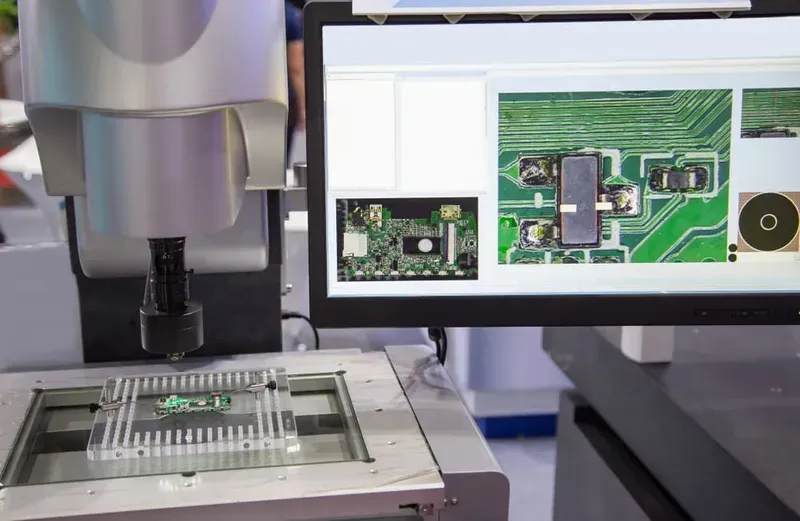
PCB AOI Machine
The robust functionality and long-term reliability of Printed Circuit Boards (PCBs) in Military Unmanned Transport Vehicles (UTVs) are fundamentally dependent on meticulous assembly and rigorous testing protocols. Beyond the design and material selection, the precision with which components are integrated and the thoroughness of subsequent validation procedures are paramount to ensuring these critical electronic systems perform flawlessly in the demanding and often hazardous environments of military operations. This phase transforms a bare board into a fully functional electronic module capable of enduring extreme conditions and executing complex tasks without failure.
Automated Component Placement (Pick-and-Place) Utilizing high-precision automated pick-and-place machines for surface-mount technology (SMT) components ensures accurate and repeatable placement, minimizing human error and accelerating production. This is crucial for dense boards with numerous small components found in advanced UTV electronics.
Reflow Soldering and Wave Soldering For SMT components, controlled reflow soldering processes create strong, reliable solder joints. For through-hole components, wave soldering provides efficient and consistent connections. Both processes are precisely calibrated to prevent thermal stress and ensure optimal solder joint integrity, vital for vibration resistance.
Conformal Coating Application After assembly, a protective conformal coating is often applied. This thin polymeric film acts as a barrier against moisture, dust, chemicals, and extreme temperatures, significantly enhancing the PCB's durability and lifespan in harsh military environments, including resistance to fungal growth and salt spray.
X-ray Inspection (Automated X-ray Inspection - AXI) AXI is indispensable for inspecting hidden solder joints, such as those under Ball Grid Arrays (BGAs) and Quad Flat No-Lead (QFN) packages. This non-destructive testing method identifies voids, shorts, and misalignments that are undetectable by optical inspection, ensuring the structural integrity of critical connections.
Automated Optical Inspection (AOI) AOI systems use high-resolution cameras to scan the PCB for defects immediately after soldering. They identify common errors like missing components, incorrect polarity, solder bridges, and open circuits, ensuring compliance with IPC standards and design specifications.
In-Circuit Testing (ICT) ICT uses a bed of nails fixture to probe various points on the PCB, checking for shorts, opens, resistance, capacitance, and other electrical parameters of individual components. This verifies component functionality and corrects assembly errors early in the production cycle.
Functional Testing (FCT) FCT simulates the actual operating environment of the UTV, verifying that the PCB performs its intended functions according to specifications. This includes testing communication interfaces, sensor inputs, power management, and control outputs, ensuring end-to-end operational readiness and validating the board's entire functionality.
Environmental Stress Screening (ESS) and Burn-in Testing PCBs designed for military UTVs often undergo ESS, which involves subjecting them to cycles of extreme temperature changes and vibrations. Burn-in testing, typically at elevated temperatures, helps to precipitate early-life failures (infant mortality), ensuring that only robust and reliable boards are deployed in the field. This proactive approach significantly enhances mission critical reliability.
Zero One Solution Limited: Your Partner for Military UTV PCB Solutions
In the demanding realm of military unmanned transport vehicles (UTVs), where performance and reliability are paramount, Zero One Solution Limited stands as a proven leader in providing comprehensive PCB solutions. Our decade-long expertise, coupled with a relentless focus on rapid prototyping and stringent quality control, positions us as the ideal partner to meet the complex electronic requirements of next-generation military UTVs.
Zero One Solution Limited offers a complete one-stop service, from initial PCB design and engineering to manufacturing and assembly. This integrated approach ensures seamless coordination and adherence to the highest military standards throughout the entire product lifecycle. Our rapid-response R&D prototype manufacturing capability is particularly crucial for defense contractors and military innovators, enabling accelerated product development cycles and faster deployment of critical technologies.
Integrated Design to Delivery We provide end-to-end PCB services, from schematic capture and layout design optimized for military specifications (IPC Class 3/A) to precision fabrication and assembly, ensuring a cohesive and efficient development process for military UTV electronics.
Rapid Prototyping Excellence Our specialized rapid prototyping capabilities allow for quick iteration and validation of PCB designs, significantly reducing time-to-market for critical military UTV components and systems. This agility supports the dynamic nature of defense technology development.
Headquartered in Shenzhen, China's electronic manufacturing hub, and with a strategic branch office in Dubai, Zero One Solution Limited leverages a robust global PCBA supply chain network. This global presence ensures not only competitive sourcing of high-quality materials but also efficient logistics and support, crucial for international military projects and global defense supply chains.
Service Aspect
Zero One Solution Limited's Advantage
Benefit for Military UTV PCB Solutions
PCB Design & Engineering
IPC Class 3/A compliance, DFM/DFA optimization
Enhanced reliability and manufacturability for harsh military environments
Advanced Manufacturing
Precision etching, controlled impedance, AOI
Superior signal integrity and robust physical construction
Component Sourcing
Global network, authorized distributors
Access to high-grade, traceable military-spec components
Rapid Prototyping
Expedited turnaround times
Accelerated R&D cycles and faster field deployment
Guaranteed performance and durability under extreme conditions
Case Studies: Successful Military UTV PCB Projects
PCB Installation in Military UTV
Zero One Solution Limited has a proven track record of delivering robust and high-performance PCB solutions for military unmanned transport vehicles (UTVs). Our expertise in navigating the stringent demands of defense applications, coupled with our rapid prototyping and comprehensive manufacturing capabilities, allows us to address complex challenges and deliver optimal performance for critical missions. Below are illustrative case studies showcasing our success in military UTV PCB projects.
Project Focus
Key Challenges
Zero One Solution Limited's Approach
Achieved Outcomes
Advanced Navigation & Sensor Fusion
Integration of multiple high-speed sensor data streams; maintaining signal integrity in high-EMI environments; size and weight constraints.
Utilized multi-layer HDI PCB design with controlled impedance routing; implemented robust EMI shielding techniques; optimized component placement for minimal crosstalk.
Enabled precise real-time navigation and superior situational awareness, enhancing UTV operational effectiveness in complex terrains. Achieved a 20% reduction in board size.
Project Focus
Key Challenges
Zero One Solution Limited's Approach
Achieved Outcomes
Ruggedized Power Management Unit
Extreme temperature fluctuations (-40°C to +85°C); severe vibration and shock resistance; efficient power delivery under varied load conditions.
Selected high-Tg laminates (e.g., Rogers 4003C) for thermal stability; incorporated reinforced vias and heavy copper traces for improved current handling and mechanical resilience; implemented advanced thermal management solutions.
Ensured uninterrupted power supply across diverse operational climates, significantly improving UTV uptime and mission reliability. Exceeded MIL-STD-810G vibration and shock requirements.
Project Focus
Key Challenges
Zero One Solution Limited's Approach
Achieved Outcomes
Secure Communication Module
Need for high-frequency data transmission; protection against electronic warfare (EW) threats; minimal latency for command and control.
Designed with RF-optimized PCB materials (e.g., PTFE-based laminates) for low signal loss; implemented advanced shielding and ground plane strategies to mitigate EW interference; employed stringent DFM/DFA for signal path optimization.
Provided reliable and secure data links for real-time command and control, significantly enhancing the UTV's battlefield communication capabilities and resilience against jamming.
Future Trends in PCB Technology for Military UTVs
Flexible PCB
The relentless pursuit of innovation in military unmanned transport vehicles (UTVs) is intrinsically linked to advancements in Printed Circuit Board (PCB) technology. Future military UTVs will demand PCBs that are not only more resilient and compact but also capable of integrating increasingly sophisticated functionalities, directly impacting their operational capabilities and strategic value on the battlefield.
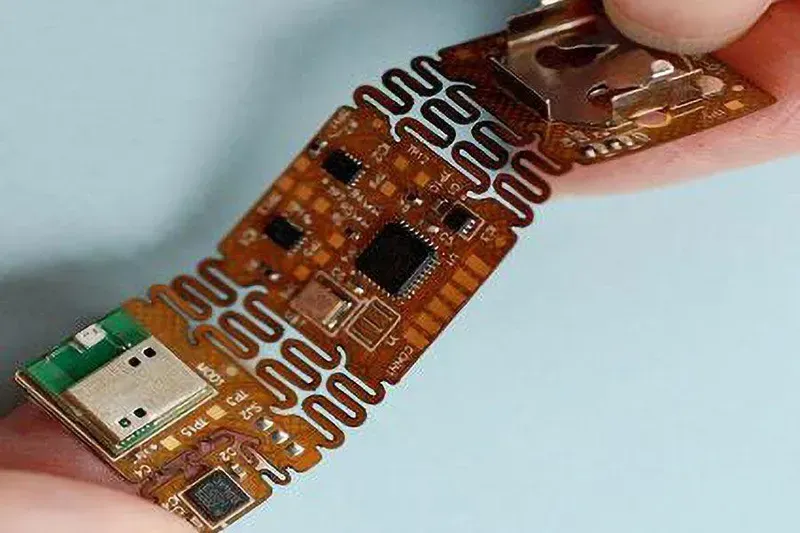
Flexible and Flex-Rigid PCBs Flexible and flex-rigid PCBs are poised to revolutionize military UTV design by enabling three-dimensional interconnectivity and significantly reducing overall weight and space. Their ability to bend and conform to irregular shapes allows for more compact and efficient packaging of electronic systems, crucial for the restricted internal volumes of UTVs. This flexibility also inherently improves vibration resistance and shock absorption, enhancing reliability in harsh military environments. Future applications include sensor arrays integrated directly into vehicle structures and compact, high-density control modules for advanced autonomous systems, offering unparalleled design freedom and robust performance where traditional rigid boards cannot operate efficiently. According to a market report, the global flexible PCB market is projected to grow significantly, driven by demand for compact and durable electronic solutions across various high-reliability sectors, including defense.
Embedded Components and System-in-Package (SiP) Embedding passive and active components directly within the PCB substrate, or utilizing System-in-Package (SiP) technology, is a critical trend for military UTVs. This approach dramatically reduces the board footprint, minimizes signal path lengths, and improves overall system performance by mitigating parasitic effects. For military applications, this translates to smaller, lighter, and more robust electronic modules, essential for maximizing payload capacity and extending operational endurance. SiP solutions, integrating multiple ICs and discrete components into a single package, offer enhanced reliability due to fewer external connections and improved thermal dissipation. This miniaturization also makes UTVs more resistant to electromagnetic interference (EMI) and less susceptible to physical damage, providing a distinct advantage in contested environments.
Advanced Thermal Management Solutions As military UTVs integrate more powerful processors and high-frequency communication systems, thermal management of PCBs becomes paramount. Future trends include the integration of advanced heat dissipation materials, such as metal-core PCBs (MCPCBs) and ceramic substrates, and the implementation of sophisticated liquid cooling or phase-change cooling systems directly onto or within the PCB structure. Nanomaterials like graphene are also being explored for their superior thermal conductivity. Effective thermal management ensures the long-term reliability and optimal performance of critical electronic components, preventing overheating that can lead to system failures in extreme operating temperatures encountered in military theaters. Innovations in this area will allow for greater computational power and sensor density without compromising operational stability.
High-Frequency and Millimeter-Wave PCBs The increasing reliance on advanced communication, radar, and sensing systems in military UTVs necessitates PCBs capable of handling high-frequency and millimeter-wave signals. This trend involves the use of specialized low-loss dielectric materials (e.g., PTFE, ceramic-filled hydrocarbons) and precise impedance control techniques. Future UTVs will utilize these PCBs for sophisticated autonomous navigation, high-bandwidth data transmission, and advanced target acquisition systems, demanding extremely stable and low-noise signal environments. These advancements will enable real-time data processing and enhanced situational awareness, crucial for effective mission execution in complex operational scenarios.
FAQs about Military UTV PCBs
What makes PCBs for Military Unmanned Transport Vehicles (UTVs) different from commercial PCBs? PCBs for military UTVs must adhere to significantly more stringent standards for reliability, durability, and performance. Unlike commercial PCBs, they are designed to withstand extreme environmental conditions such as wide temperature fluctuations (-55°C to +125°C), high shock and vibration (e.g., MIL-STD-810G), electromagnetic interference (EMI), and chemical exposure. They also often require specialized materials, precise impedance control for high-speed signals, enhanced thermal management, and robust manufacturing processes to ensure mission-critical functionality and extended operational lifespans in harsh combat or logistical environments.
Which materials are commonly used for high-reliability military UTV PCBs? For high-reliability military UTV PCBs, the selection of materials is paramount. Common choices include high-Tg (glass transition temperature) FR-4 laminates for improved thermal stability, and advanced materials like Rogers, Arlon, or other specialized ceramic-filled laminates for high-frequency applications, superior signal integrity, and exceptional dielectric performance. Polyimide-based materials are also utilized for their excellent thermal resistance and mechanical flexibility, particularly in applications requiring higher operating temperatures or dynamic bending.
How does Zero One Solution Limited ensure the reliability of PCBs for military UTVs? Zero One Solution Limited ensures the reliability of PCBs for military UTVs through a comprehensive, multi-faceted approach. This includes meticulous DFM (Design for Manufacturability) analysis to optimize layouts for robustness, selection of military-grade materials, and adherence to industry standards (e.g., IPC Class 3/A). Our manufacturing processes incorporate precision etching, controlled impedance routing, and stringent quality control including Automated Optical Inspection (AOI) and X-ray inspection. Furthermore, rigorous testing protocols such as environmental stress screening (ESS), functional testing, and in-circuit testing (ICT) are employed to validate performance under simulated operational conditions.
What specific design considerations are crucial for military UTV PCB thermal management? Thermal management in military UTV PCBs is critical due to high power densities and extreme operating temperatures. Key design considerations include the use of thick copper layers for improved heat dissipation, thermal vias to transfer heat away from components, and incorporating thermal pads. Additionally, selecting substrates with higher thermal conductivity, utilizing heat sinks, and optimizing component placement to minimize hot spots are essential. Advanced simulation tools are often employed to predict and mitigate thermal issues during the design phase, ensuring consistent performance and preventing premature component failure.
Can Zero One Solution Limited provide rapid prototyping for military UTV PCB solutions? Yes, Zero One Solution Limited specializes in rapid prototyping for military UTV PCB solutions. We understand the accelerated development cycles inherent in defense applications. Our advanced manufacturing capabilities and streamlined processes, combined with a robust global supply chain, enable us to quickly produce high-quality prototypes that meet military specifications. This rapid turnaround empowers our clients to iterate designs, perform critical testing, and accelerate their product development timelines, bringing innovative UTV solutions to market with exceptional efficiency.
In conclusion, the reliability and performance of military unmanned transport vehicles hinge on the quality and design of their PCBs. Zero One Solution Limited is committed to providing comprehensive PCB solutions, from design and rapid prototyping to manufacturing and assembly, ensuring that our clients can confidently deploy their UTVs in the most demanding environments. Contact us today to discover how our expertise can drive your unmanned transport vehicle projects to success. Let's collaborate and innovate the future of military logistics!