The vastness of our oceans holds countless secrets, and unraveling them requires sophisticated technology. Ocean data buoys serve as crucial sentinels, gathering vital information about our marine environment. At the heart of these buoys lies the control board, a complex PCB that demands reliability and precision. Zero One Solution Limited, with its decade-long expertise in PCB solutions and rapid prototyping, empowers the development of advanced ocean monitoring systems. How can a robust and efficiently designed control board revolutionize ocean data collection? This article explores the critical role of PCB solutions in ocean data buoys, showcasing how Zero One Solution Limited is driving innovation in this field.
The Critical Role of Ocean Data Buoys
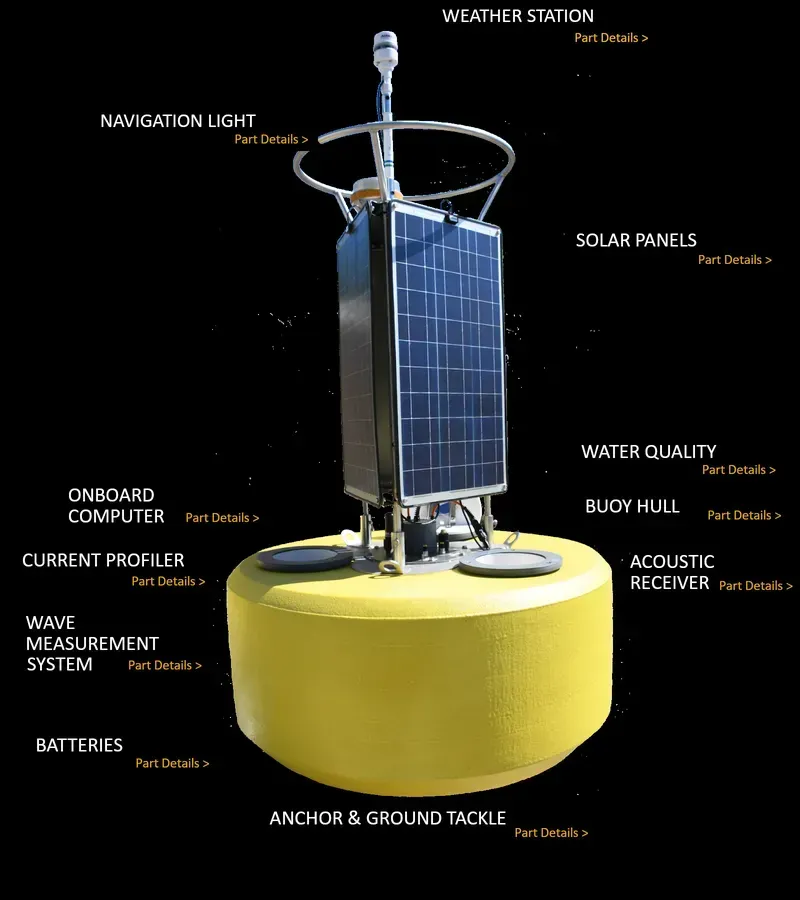
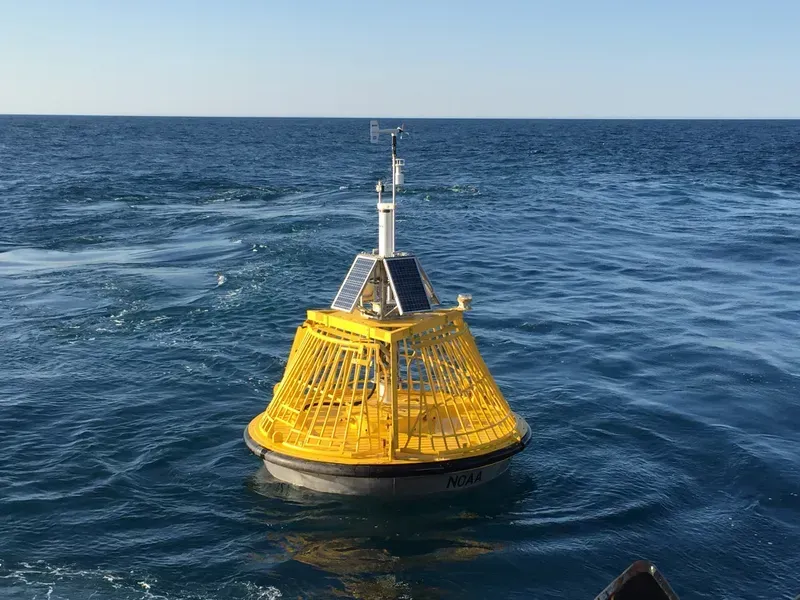
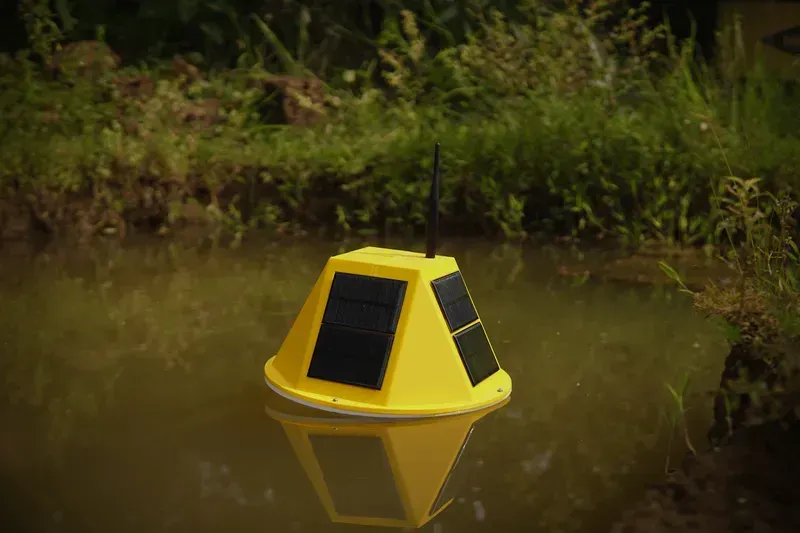
Ocean data buoys are indispensable sentinels of our planet's vast and complex marine environment, acting as critical platforms for continuous, real-time data collection that underpins global weather prediction, climate change understanding, and safe marine operations. These autonomous floating stations gather a diverse array of environmental parameters, including sea surface temperature, salinity, wave height and period, ocean currents, wind speed and direction, and atmospheric pressure, providing foundational insights crucial for scientific research and practical applications worldwide. Without the consistent stream of high-fidelity data provided by these buoys, our ability to forecast severe weather events, monitor long-term climate patterns, and ensure the safety of maritime activities would be severely hampered, underscoring their vital importance in modern oceanography and meteorology.
Why are ocean data buoys essential for weather forecasting? Ocean data buoys provide real-time measurements of atmospheric and oceanic conditions, such as sea surface temperature, air pressure, and wind speed. This data is fed into meteorological models, significantly enhancing the accuracy of weather forecasts, particularly for predicting extreme events like hurricanes and typhoons by providing crucial initial conditions and validating model outputs over vast oceanic regions where traditional observations are scarce.
How do ocean data buoys contribute to climate change research? By collecting long-term, consistent datasets on ocean temperature, salinity, and carbon dioxide levels, ocean data buoys enable scientists to monitor subtle but critical changes in the marine environment. This continuous monitoring helps to track ocean warming, sea-level rise, and ocean acidification, providing vital evidence to understand the mechanisms and impacts of climate change and to validate climate models.
What specific data do ocean data buoys typically collect? Ocean data buoys are equipped with various sensors to measure a comprehensive suite of parameters. These include meteorological data (air temperature, humidity, atmospheric pressure, wind speed and direction) and oceanographic data (sea surface temperature, subsurface temperature profiles, salinity, wave height, period and direction, ocean currents, and sometimes dissolved oxygen and chlorophyll fluorescence).
How do ocean data buoys support marine navigation and safety? The real-time data from ocean data buoys is crucial for mariners, providing up-to-date information on sea state, currents, and weather conditions. This information helps ships plot safer and more efficient routes, avoid hazardous conditions, and contributes to search and rescue operations by providing critical environmental data for drift modeling. It also supports port operations by forecasting wave heights and currents at harbor entrances.
What are the challenges in deploying and maintaining ocean data buoys? Deploying and maintaining ocean data buoys involves significant challenges due to the harsh marine environment. These include ensuring power autonomy over long periods, protecting sensitive electronics from saltwater corrosion, resisting strong wave forces and currents, preventing biofouling (the accumulation of marine organisms), and ensuring reliable data transmission from remote locations. Regular maintenance and retrieval operations are also complex and costly.
Understanding the Ocean Data Buoy Control Board
Ocean Data Buoy Control Board Components
The ocean data buoy control board is the sophisticated brain of a marine data collection system, orchestrating every function from sensor data acquisition to long-range communication. Its robust design and specialized components are paramount for reliable operation in the unforgiving ocean environment, ensuring precise data capture, efficient processing, and seamless transmission to shore-based stations for critical analysis and decision-making.
Component Category
Key Function
Example Components
Microcontroller/Processor Unit (MCU/MPU)
Core processing, data management, system control, task scheduling
Connecting to actuators, indicators, and other internal/external modules
GPIO, I2C, SPI
Challenges in Designing PCBs for Harsh Marine Environments
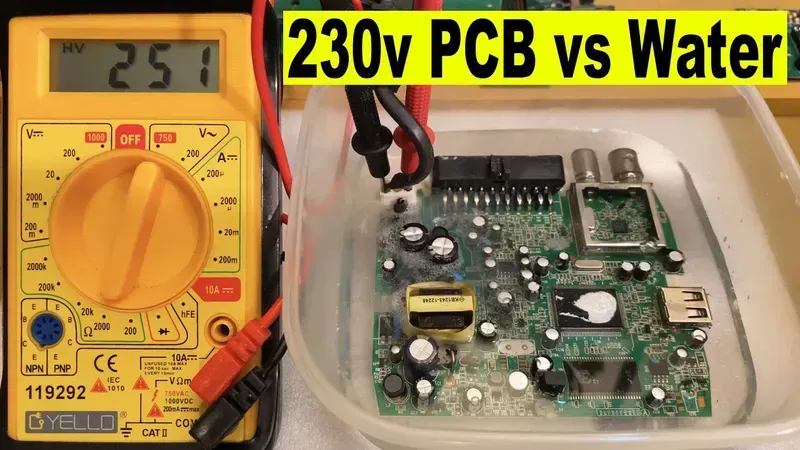
PCB Board in Saltwater
Designing Printed Circuit Boards (PCBs) for ocean data buoys presents an intricate set of challenges primarily due to the relentlessly harsh marine environment. Unlike standard electronic applications, PCBs in ocean buoys must withstand constant exposure to saltwater, extreme temperatures, dynamic wave forces, and the insidious threat of biofouling. These formidable factors necessitate a specialized approach to material selection, design methodologies, and protective measures to ensure long-term reliability and accurate data acquisition, making robust PCB engineering paramount for mission success.
Environmental Factor
Impact on PCB Design
Zero One Solution Approach
Saltwater Corrosion
Accelerated degradation of traces, pads, and component leads; compromised electrical conductivity and signal integrity.
Utilize marine-grade FR-4 laminates with low moisture absorption, specify immersion gold (ENIG) or electroless nickel palladium immersion gold (ENEPIG) surface finishes, and apply robust conformal coatings (e.g., silicone, acrylic, urethane).
Extreme Temperatures
Thermal cycling can induce stress on solder joints and components, leading to fatigue failures; operational performance degradation at very low or high temperatures.
Select components rated for extended industrial temperature ranges (-40°C to +85°C or wider), implement thermal management strategies in layout, and use materials with matched CTE (Coefficient of Thermal Expansion) to minimize stress.
Wave Forces & Vibration
Mechanical stress on components, solder joints, and board structure; potential for component detachment or board fracture.
Employ robust mechanical mounting, consider thicker PCB substrates, reinforce critical areas with potting compounds, and ensure secure component placement with appropriate land patterns and solder mask defined pads where beneficial for shock and vibration.
Biofouling
Growth of microorganisms, algae, and barnacles can obstruct sensors, insulate heat, and potentially bridge electrical contacts or cause material degradation.
While primarily an external buoy issue, for the PCB, select materials and coatings that resist microbial growth if direct exposure is possible (e.g., certain encapsulants). Ensure sealed enclosures to prevent ingress.
What are the primary material considerations for Ocean Data Buoy PCBs? The primary material considerations include selecting substrates with low moisture absorption and excellent dielectric properties, such as specific grades of FR-4 or high-performance laminates like polyimide or ceramic-filled hydrocarbons. Surface finishes like ENIG or ENEPIG are crucial for corrosion resistance, offering superior protection compared to HASL in marine environments. Additionally, solder masks and conformal coatings must be highly resistant to moisture, salt spray, and UV radiation, ensuring long-term integrity against environmental degradation.
Zero One Solution's Expertise in PCB Solutions for Ocean Data Buoys
Ocean Data Buoy PCB Prototype
Zero One Solution Limited stands at the forefront of providing high-quality, reliable PCB solutions specifically engineered for the demanding environment of ocean data buoys. Our deep understanding of marine challenges, combined with our robust expertise in rapid prototyping, manufacturing, and assembly, positions us as an invaluable partner for organizations pushing the boundaries of oceanographic research and environmental monitoring. We empower our clients to accelerate product development and deploy resilient, high-performance buoy systems crucial for critical data acquisition.
Comprehensive PCB Design and Engineering We offer end-to-end PCB design services, meticulously engineering layouts and schematics that account for the unique demands of ocean data buoys, including robust signal integrity for sensor data and efficient power management for extended deployment.
Rapid Prototyping for Accelerated Development Our rapid prototyping capabilities enable quick iteration and validation of PCB designs, significantly reducing the development cycle for new ocean data buoy control boards. This agility allows for faster testing and refinement in real-world conditions, ensuring optimal performance before full-scale production.
Advanced Manufacturing for Harsh Environments Leveraging state-of-the-art manufacturing processes, we produce PCBs that withstand extreme marine conditions. This includes the use of specialized substrates, advanced material selection for corrosion resistance, and precise fabrication techniques to ensure durability and longevity in saltwater, temperature fluctuations, and high pressures.
Service Aspect
Zero One Solution's Offering
Benefit for Ocean Data Buoy PCBs
Design for Reliability
IPC Class 2/3 compliant designs, DFM/DFA analysis
Ensures high operational reliability and ease of assembly in challenging marine applications
Material Selection
Selection of high-Tg laminates, ceramic-filled materials, and specialized coatings (e.g., epoxy, acrylic, silicone)
Provides superior resistance to moisture, salt spray, and extreme temperatures
Rapid Turnaround
Industry-leading lead times for prototypes and small-batch production
Accelerates research and development cycles, enabling quicker deployment and data collection
Quality Assurance
Rigorous testing protocols including AOI, X-ray inspection, and functional testing
Guarantees the performance and integrity of PCBs in critical ocean monitoring applications
Integrated Assembly Services
Full PCBA services, including component sourcing and final assembly
Streamlines the supply chain, reduces time-to-market, and ensures seamless integration and functionality
Key Considerations for PCB Design in Ocean Data Buoys
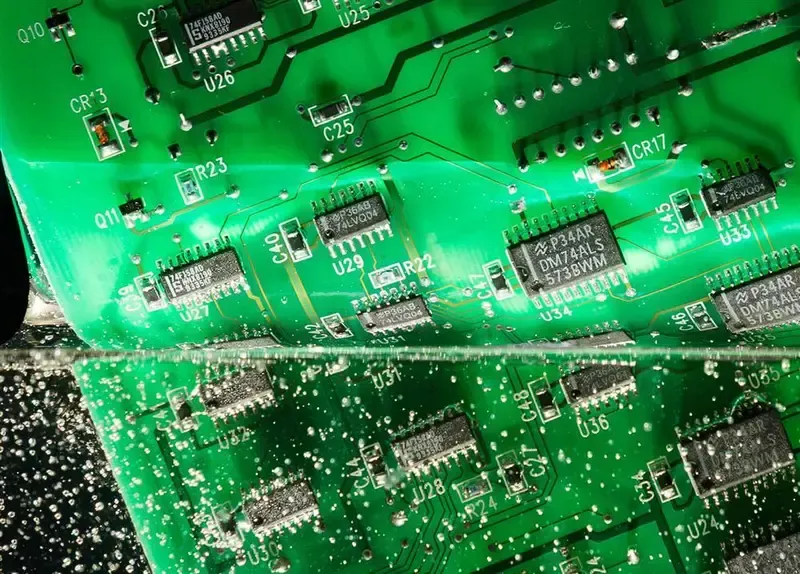
PCB Conformal Coating
Designing Printed Circuit Boards (PCBs) for ocean data buoys demands a meticulous approach to ensure unwavering performance and longevity in one of the planet's most challenging environments. Beyond standard electronics design, the unique stressors of deep-sea deployment necessitate specialized considerations from material selection to power management. Each design decision directly impacts the buoy's reliability, the accuracy of its data collection, and its operational lifespan, making these considerations paramount for successful oceanographic missions and the integrity of the data collected for critical applications like climate modeling and maritime safety.
Material Selection for Corrosion Resistance The relentless corrosive nature of saltwater mandates the use of highly resistant PCB substrates and finishes. FR-4, while common, requires enhanced protective layers. Specialized materials like High-Tg laminates with superior moisture resistance, or even ceramic substrates for critical components, coupled with electroless nickel immersion gold (ENIG) or immersion silver (ImAg) finishes, offer enhanced defense against oxidation and ion migration. Trace routing should minimize sharp angles where stress concentrations can lead to micro-cracks and subsequent corrosion pathways.
Conformal Coatings and Encapsulation Beyond the substrate, a robust secondary layer of protection is essential. Conformal coatings, such as acrylic, epoxy, silicone, or parylene, provide a barrier against moisture, salt spray, and extreme temperatures. Parylene, applied via chemical vapor deposition, offers an exceptionally uniform and pinhole-free coating, making it ideal for the most demanding marine applications. For critical areas, full encapsulation with potting compounds can provide an additional layer of mechanical and environmental protection, though thermal management must be carefully considered for encapsulated components.
Optimized Component Placement and Layout Strategic component placement is critical for thermal management, structural integrity, and signal integrity. Heavier components should be securely anchored to withstand constant wave-induced vibrations and shocks. Grouping sensitive analog components away from noisy digital circuits minimizes electromagnetic interference (EMI). Adequate spacing between components is necessary for effective conformal coating application and heat dissipation. Consider component thermal characteristics and proximity to heat sinks or natural convection paths within the buoy's enclosure.
Robust Power Management Systems Ocean data buoys often operate autonomously for extended periods, making efficient and reliable power management paramount. Designs must incorporate low-power consumption components, efficient DC-DC converters, and robust battery management systems capable of handling charge/discharge cycles from solar panels or other energy harvesting mechanisms. Over-voltage and under-voltage protection, along with surge suppression, are vital to protect sensitive electronics from power fluctuations and lightning strikes, especially given their exposure to the elements.
Ensuring Signal Integrity and Data Reliability Accurate data acquisition and transmission rely heavily on maintaining signal integrity. This involves careful impedance matching for high-speed data lines, proper grounding techniques to minimize noise, and differential pair routing for sensitive sensor signals. Shielding for communication lines (e.g., satellite modems, acoustic transducers) is essential to prevent external interference. Designing for redundancy in critical communication paths can also enhance overall data reliability, ensuring continuous and accurate information flow from the buoy to shore-based stations.
Rapid Prototyping: Accelerating Innovation in Ocean Monitoring
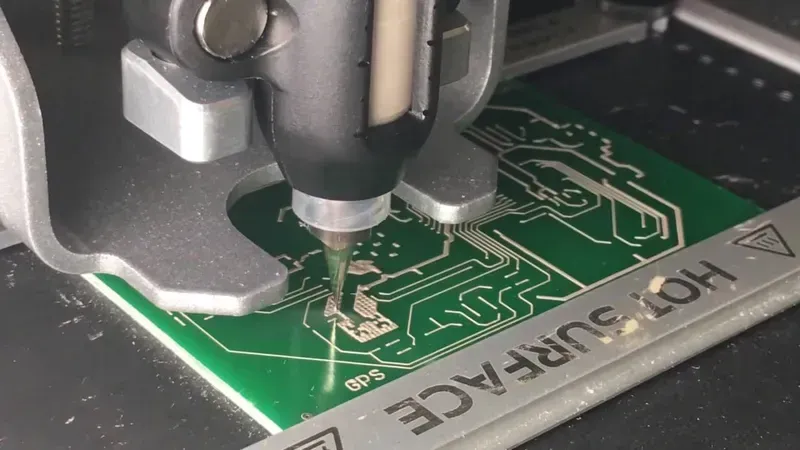
PCB Rapid Prototyping
Rapid prototyping is a cornerstone of innovation, particularly in the complex and demanding field of ocean data buoy development. It dramatically accelerates the design-test-iterate cycle for control boards, allowing engineers to quickly validate hypotheses, identify potential flaws, and optimize performance before committing to mass production. This agility is crucial for bringing cutting-edge ocean monitoring technologies to market faster, ensuring that critical data collection systems are deployed efficiently and effectively.
Faster Iteration and Design Validation Rapid prototyping enables engineers to quickly produce physical iterations of PCB designs. This allows for immediate testing of electrical characteristics, mechanical fit, and environmental resilience, significantly shortening the design validation phase and enabling faster adjustments based on real-world performance data. This iterative approach minimizes costly errors later in the development cycle.
Reduced Time-to-Market By compressing the design and testing phases, rapid prototyping directly contributes to a reduced time-to-market for ocean data buoy control boards. In a rapidly evolving field like oceanography, deploying new or upgraded monitoring capabilities quickly can provide a significant advantage, ensuring that data collection remains at the forefront of scientific and commercial needs.
Cost Efficiency in Development While initial rapid prototyping costs exist, they are often offset by significant savings in the long run. Identifying and correcting design flaws early in the prototyping phase is far less expensive than rectifying issues after mass production has begun. This approach minimizes material waste, rework, and potential recall costs, leading to overall project cost efficiency.
Aspect
Traditional PCB Development
Rapid Prototyping Approach
Design Cycle
Lengthy, sequential steps with limited feedback loops
Agile, iterative with quick feedback and adjustments
Error Correction
Expensive and time-consuming, often requiring full redesigns
Minor adjustments, identified and resolved early in the process
Time-to-Market
Extended due to extensive validation and re-tooling
Significantly reduced, enabling faster deployment
Cost Implications
Higher risk of costly late-stage corrections and re-runs
Lower overall development costs by mitigating early risks
Case Studies: Zero One Solution's Success in Oceanographic Projects
Custom PCB Solutions
Zero One Solution Limited has a proven track record of delivering robust and reliable PCB solutions for the demanding field of oceanographic research. Our expertise in navigating the complexities of harsh marine environments, coupled with our rapid prototyping and manufacturing capabilities, has enabled numerous clients to achieve their critical ocean monitoring objectives. These case studies underscore our commitment to engineering excellence and client-centric solutions.
Project Name
Challenge
Zero One Solution's Contribution
Outcome
Deep-Sea Acoustic Monitoring Buoy
Required ultra-low power consumption and extreme pressure resistance for PCBs operating at depths over 2000 meters, with minimal maintenance cycles.
Designed and manufactured a multi-layer PCB with specialized conformal coating (parylene type) and optimized power management circuitry. Utilized high-Tg materials for structural integrity under pressure.
Successfully deployed for 3+ years, providing continuous, accurate acoustic data. Achieved 30% reduction in power consumption compared to previous designs, extending battery life significantly.
Arctic Ice Floe Tracking System
Needed PCBs capable of enduring cryogenic temperatures (-40°C), extreme thermal cycling, and high shock/vibration from ice movement, while maintaining GPS and satellite communication integrity.
Developed rigid-flex PCBs integrating robust connection points and selected specific low-CTE (Coefficient of Thermal Expansion) laminates. Implemented advanced EMI shielding to protect sensitive GPS modules.
System maintained stable operation and data transmission throughout two Arctic winters, providing vital data for climate modeling and navigation. No reported failures due to environmental stress.
Coastal Water Quality Sensor Network
Required cost-effective, highly reliable PCBs for distributed sensor nodes exposed to constant saltwater spray, UV radiation, and biological fouling in shallow coastal areas.
Provided rapid prototyping and mass production of double-sided PCBs with marine-grade ceramic-filled epoxy laminates and a multi-layer protective coating system. Optimized layout for sensor interface and wireless data transmission.
Over 100 units deployed across the network. Achieved 98% operational uptime over 18 months, enabling real-time monitoring of pollution levels and algal blooms, significantly improving response times for environmental agencies.
The Future of Ocean Data Buoys and PCB Technology
The trajectory of ocean data buoy technology is inextricably linked to advancements in Printed Circuit Board (PCB) solutions, which are the foundational elements enabling more sophisticated, efficient, and resilient marine environmental monitoring. The future promises a convergence of enhanced sensor integration, advanced communication protocols, and AI-driven data processing at the edge, all underpinned by cutting-edge PCB innovation designed for the harshest marine conditions. This evolution will lead to an unprecedented depth and breadth of oceanic insight, crucial for climate modeling, sustainable resource management, and maritime safety.
Miniaturization and High-Density Integration Future PCBs will feature even smaller footprints and higher component densities, facilitating the integration of more sensors and computational power into compact buoy designs. This allows for multi-parameter monitoring from a single, less obtrusive platform, reducing deployment costs and environmental impact. Advanced materials and manufacturing techniques will support these high-density designs while maintaining robustness against marine degradation.
Enhanced Energy Harvesting and Management The longevity and autonomy of ocean data buoys are paramount. Future PCB technology will prioritize highly efficient power management circuits and seamless integration with diverse energy harvesting systems (e.g., solar, wave, thermal gradients). Innovations in ultra-low power components and smart power routing on PCBs will extend operational periods, reducing the frequency of costly and logistically challenging maintenance missions at sea.
Edge Computing and AI Integration To reduce data transmission bandwidth and enable real-time anomaly detection, future buoys will incorporate more powerful edge computing capabilities directly on their control boards. PCBs will be designed to accommodate specialized AI accelerators and processors, allowing for in-situ data analysis, intelligent sensor calibration, and adaptive sampling strategies, providing immediate actionable insights and optimizing data quality before transmission.
Zero One Solution Limited remains at the forefront of this evolution, continuously pushing the boundaries of PCB design and manufacturing to meet the demanding requirements of next-generation ocean data buoys. Our commitment to rapid prototyping and advanced material science ensures that our clients are equipped with solutions that are not only robust and reliable but also future-proof, enabling groundbreaking discoveries and more effective stewardship of our oceans.
FAQ: Addressing Common Questions about Ocean Data Buoy PCBs
For engineers and researchers navigating the complexities of ocean data buoy systems, understanding the intricate details of their Printed Circuit Boards (PCBs) is paramount. These FAQs delve into critical aspects of designing, manufacturing, and maintaining PCBs for the challenging marine environment, offering precise, authoritative insights to optimize performance and longevity.
What are the primary material considerations for Ocean Data Buoy PCBs? The primary material considerations for Ocean Data Buoy PCBs involve selecting substrates and components that can withstand extreme environmental stressors. This includes using high-Tg (Glass Transition Temperature) laminates like FR-4 or polyimide for temperature stability, and materials with low moisture absorption rates to resist saltwater ingress. Conformal coatings, often silicone, acrylic, or epoxy-based, are crucial for providing an impermeable barrier against corrosion, humidity, and fungal growth. Component selection prioritizes marine-grade, hermetically sealed, or IP-rated parts to ensure long-term reliability in corrosive and high-pressure conditions.
How does Zero One Solution ensure signal integrity in Ocean Data Buoy PCB designs? Zero One Solution ensures signal integrity in Ocean Data Buoy PCB designs through meticulous layout strategies and advanced simulation. This includes precise impedance control for high-speed data lines, minimizing trace lengths to reduce signal attenuation, and strategic grounding techniques to mitigate noise and crosstalk. Differential routing is employed for sensitive signals, and power planes are designed to provide stable voltage distribution. Furthermore, our engineers leverage electromagnetic compatibility (EMC) best practices to prevent interference from external sources and ensure reliable data transmission even in electromagnetically noisy marine environments. We utilize sophisticated CAD tools for pre-layout and post-layout analysis to identify and rectify potential signal integrity issues proactively.
What testing protocols are essential for Ocean Data Buoy PCBs? Essential testing protocols for Ocean Data Buoy PCBs extend beyond standard functional tests to include rigorous environmental stress screening. This encompasses accelerated life testing (ALT) to simulate long-term exposure to marine conditions, salt spray corrosion tests to validate material and coating resistance, and thermal cycling tests to assess performance under extreme temperature fluctuations. Vibration and shock tests are also critical to ensure mechanical integrity against wave forces and deployment impacts. Additionally, ingress protection (IP) testing verifies the enclosure's ability to prevent water and particle penetration, ensuring the PCB's operational integrity in submerged or splash-prone conditions. Comprehensive data logging during these tests helps identify any performance degradation or potential failure points.
What are the common failure modes for PCBs in marine environments, and how are they mitigated? Common failure modes for PCBs in marine environments include corrosion, delamination due to moisture ingress, component failure from thermal cycling, and short circuits caused by biofouling or water intrusion. Mitigation strategies involve the aggressive application of robust conformal coatings and potting compounds to encapsulate the PCB. Utilizing corrosion-resistant solder masks and finishes, such as ENIG (Electroless Nickel Immersion Gold), further enhances protection. Thermal management solutions, including optimized component placement and heat sinks, prevent overheating. Regular inspection and maintenance protocols, along with modular design for easier field replacement, are also crucial for long-term operational success and reduced downtime.
In conclusion, the Ocean Data Buoy Control Board is the cornerstone of modern oceanographic research, demanding the highest levels of reliability and performance from its PCB. Zero One Solution Limited stands at the forefront, offering comprehensive PCB solutions that empower researchers and engineers to unlock the ocean's secrets. By leveraging our expertise in rapid prototyping, design, and manufacturing, we accelerate the development of innovative ocean monitoring systems. Ready to elevate your ocean data collection capabilities? Contact Zero One Solution Limited today to discuss your specific PCB requirements and embark on a journey of discovery.