The vast expanse of our oceans holds countless secrets, vital for understanding our planet's climate, biodiversity, and overall health. Ocean observation stations serve as the critical eyes and ears, diligently collecting data from the marine environment. However, the success of these stations hinges on the reliability and durability of their electronic components, particularly the printed circuit boards (PCBs) that power their sophisticated instruments. Zero One Solution Limited recognizes the unique challenges of creating PCBs for such demanding applications. With our rapid prototyping and comprehensive PCB solutions, we empower researchers and engineers to deploy robust and dependable ocean observation systems. This article delves into the critical role of PCBs in ocean observation, highlighting the specialized design and manufacturing considerations necessary to withstand the harsh marine environment.
The Vital Role of PCBs in Ocean Observation
Printed Circuit Boards (PCBs) are the indispensable backbone of modern ocean observation stations, serving as the central nervous system for critical data acquisition, processing, and transmission. Their robust functionality ensures the seamless operation of sensors, communication modules, and power management systems, enabling continuous monitoring of marine environments. Without high-reliability PCBs, the flow of vital oceanographic data would cease, leading to compromised research outcomes, ineffective environmental monitoring, and significant economic losses from failed missions.
Key Function
PCB Contribution
Impact of PCB Failure
Data Acquisition
Interface for various sensors (temperature, pressure, salinity, acoustics) to collect raw environmental data.
Inaccurate sensor readings, intermittent data collection, or complete loss of crucial environmental parameters.
Data Processing
Houses microcontrollers and DSPs for real-time data interpretation, signal conditioning, and filtering.
Corrupted data, delayed analysis, misinterpretation of oceanic phenomena, leading to flawed scientific conclusions.
Data Transmission
Enables wired and wireless communication (e.g., satellite, acoustic modems) to send processed data to shore stations.
Communication breakdown, inability to retrieve collected data, rendering the entire mission futile and wasting resources.
Why are PCBs so critical for ocean observation? PCBs are the foundational electronic platforms that integrate all components of an ocean observation system, from diverse sensors to complex communication arrays. They orchestrate the precise timing and routing of electrical signals, ensuring accurate data capture and efficient transmission. Their reliability directly dictates the success and longevity of any marine monitoring mission, acting as the brain and nervous system of the entire station. A robust PCB guarantees continuous data flow, which is essential for understanding dynamic ocean processes and climate change impacts.
Unique Challenges of the Marine Environment
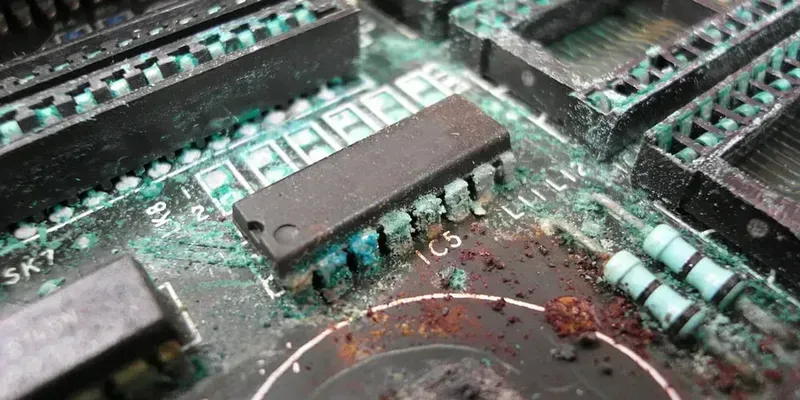
Saltwater Corroded PCB Board
The operational lifespan and reliability of Ocean Observation Station PCBs are profoundly impacted by the unforgiving marine environment. Unlike standard electronics, these critical components must withstand a gauntlet of extreme conditions, from corrosive saltwater to immense hydrostatic pressures, pervasive temperature shifts, and the insidious threat of biofouling. Understanding these unique challenges is paramount to designing and manufacturing PCBs that ensure sustained performance and data integrity in the deepest, most dynamic oceanic frontiers, directly influencing the accuracy and longevity of vital marine research and monitoring efforts.
Saltwater Corrosion The high salinity and conductivity of seawater, combined with dissolved oxygen, create an extremely corrosive electrolyte that relentlessly attacks exposed metallic components on a PCB, including copper traces, solder joints, and component leads. This leads to electrochemical degradation, material breakdown, short circuits, and ultimately, catastrophic failure. Special conformal coatings, noble metal plating, and hermetic sealing are essential countermeasures.
Extreme Hydrostatic Pressure As depth increases, so does the hydrostatic pressure, which can reach hundreds of atmospheres. This immense pressure can physically deform or compress PCB substrates, compromise the integrity of soldered connections, and lead to micro-fractures in materials. It also stresses enclosures and seals, potentially leading to water ingress. PCB designs must account for material compressibility and employ robust structural support, often within pressure-compensated or pressure-resistant housings.
Temperature Fluctuations Oceanic environments experience significant temperature variations, from near-freezing in deep-sea currents to warmer surface waters. These fluctuations induce thermal expansion and contraction in different PCB materials and components, leading to mechanical stresses. Over time, this thermal cycling can cause solder joint fatigue, delamination of PCB layers, and cracking of components, degrading electrical connections and overall reliability. Materials with matched Coefficient of Thermal Expansion (CTE) are crucial for stability.
Biofouling Biofouling refers to the accumulation of microorganisms, plants, algae, or animals on surfaces immersed in water. On ocean observation PCBs, biofouling can obstruct sensors, interfere with data transmission signals, increase drag on submerged structures, and even directly impact the thermal dissipation of components. While primary protection is often at the system level, advanced anti-fouling coatings or materials integrated with the PCB's immediate housing can mitigate this biological interference and maintain sensor accuracy.
Sensor obstruction, signal interference, thermal issues
Anti-fouling coatings, material selection to inhibit growth, regular maintenance/cleaning
Zero One Solution's Specialized PCB Design for Ocean Environments
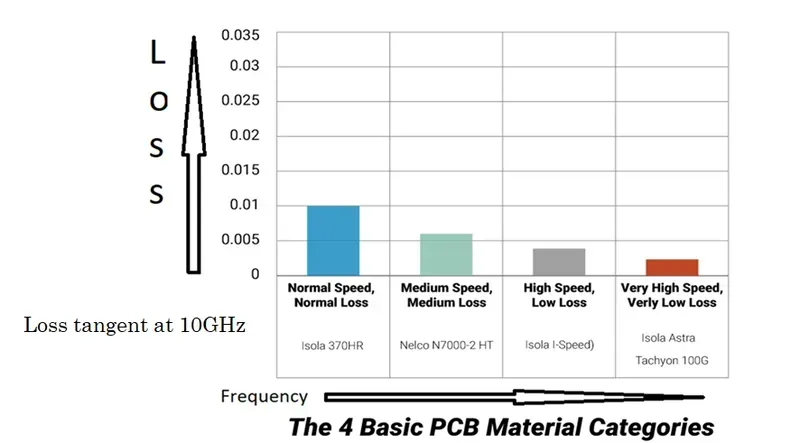
Ocean PCB Material Selection
Designing Printed Circuit Boards (PCBs) for the harsh and unforgiving marine environment demands a specialized approach that goes beyond standard industrial requirements. At Zero One Solution Limited, our veteran engineering team, with extensive experience in high-reliability applications, has developed a rigorous methodology for creating PCBs specifically tailored for ocean observation stations. This expertise ensures not only the functional integrity but also the long-term resilience of critical electronic systems operating under extreme subsea conditions. Our design philosophy integrates advanced material science, precision engineering, and strategic component layout to deliver unparalleled performance and longevity for your marine instrumentation. We focus on mitigating the unique challenges posed by saltwater, pressure, and temperature fluctuations, ensuring your data acquisition remains uninterrupted and accurate.
Material Selection for Marine Durability The foundation of a robust marine PCB lies in material choice. We utilize high-grade laminates like FR-4 with enhanced moisture resistance or specialized polyimides that exhibit superior chemical inertness and thermal stability. For conductive traces and pads, we employ corrosion-resistant metals such as gold-plated copper or nickel-palladium, critical for preventing degradation from saltwater exposure. Dielectric materials are carefully selected for low water absorption and stable electrical properties, even under prolonged immersion. This meticulous selection ensures the PCB substrate itself withstands the corrosive marine atmosphere and extreme hydrostatic pressures encountered in deep-sea deployments, maintaining signal integrity and power delivery.
Optimized Trace Routing for Signal Integrity In ocean observation, accurate data acquisition is paramount. Our design process includes advanced trace routing techniques to maintain signal integrity in a noisy and challenging environment. We employ differential signaling for sensitive data lines to minimize electromagnetic interference (EMI) and crosstalk, crucial for precise sensor readings. Ground plane optimization and impedance control are meticulously implemented to ensure stable power delivery and reduce noise, which is vital for high-frequency communication modules. The routing strategies also account for thermal management, distributing heat effectively across the board, even in sealed enclosures where convection cooling is limited. This ensures consistent and reliable data transmission from the ocean's depths.
Zero One Solution's commitment to excellence extends to every layer of the PCB design, ensuring that each board we produce for ocean observation applications is not just functional, but an enduring asset in the quest for critical marine data. Our designs are a testament to our profound understanding of both electronics and the unique demands of the subsea world, empowering researchers and organizations to push the boundaries of oceanographic exploration with reliable, high-performance technology.
Waterproofing and Sealing Techniques
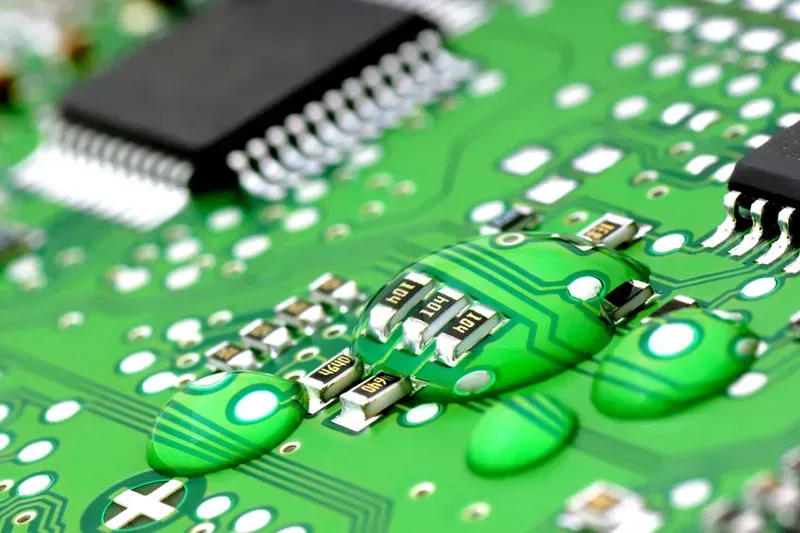
PCB Board Waterproof Coating
Effective waterproofing and sealing are paramount for the longevity and reliability of PCBs operating within the demanding marine environment of ocean observation stations. Saltwater ingress is a primary threat, leading to corrosion, short circuits, and system failure. Zero One Solution Limited employs a multi-layered approach to protection, integrating advanced materials and methodologies to ensure that sensitive electronic components remain fully functional even under extreme hydrostatic pressure and corrosive conditions, thereby safeguarding critical data acquisition and transmission capabilities.
Conformal Coatings These thin polymeric films are applied to the PCB surface, providing a protective barrier against moisture, dust, chemical contaminants, and temperature extremes. Zero One Solution utilizes specialized conformal coatings (e.g., acrylic, epoxy, silicone, or parylene) selected for their low permeability to water vapor, excellent dielectric properties, and strong adhesion, ensuring comprehensive coverage and robust environmental protection. This technique is often the first line of defense, enhancing the board's resilience without significantly altering its form factor or thermal properties. IPC-CC-830 standards are strictly followed for application and curing processes to ensure optimal performance and durability in marine settings.
Encapsulation Techniques For more severe conditions or critical components, full encapsulation is employed. This involves encasing the entire PCB or specific sensitive areas in a potting compound (e.g., epoxy or polyurethane resin). This creates a solid, impermeable block that offers superior protection against pressure, vibration, and direct water contact. This method not only seals against moisture but also provides mechanical stability, reducing stress on components and solder joints. The choice of encapsulant is critical, considering factors such as thermal expansion, chemical resistance, and ease of rework, with Zero One Solution leveraging materials proven in deep-sea applications to guarantee long-term operational integrity.
Specialized Connector Designs Beyond board-level protection, the integrity of external connections is vital. Zero One Solution integrates specialized watertight connectors (e.g., Subconn, MacArtney, or custom-designed solutions) that are specifically engineered for underwater use. These connectors feature robust sealing mechanisms, such as O-rings, pressure-balanced designs, and corrosion-resistant materials (e.g., stainless steel, titanium), to prevent water ingress at connection points. Proper cable glanding and strain relief are also critical considerations, ensuring that dynamic forces and hydrostatic pressure do not compromise the seal, thus maintaining signal integrity and power delivery to the submerged electronics.
Rigorous Testing and Quality Assurance for Ocean Observation Station PCBs
PCB Salt Spray Testing
Ensuring the unwavering reliability of Printed Circuit Boards (PCBs) in the harsh, unforgiving marine environment is paramount for ocean observation stations. At Zero One Solution Limited, our comprehensive testing and quality assurance protocols are meticulously designed to validate PCB performance under extreme conditions, guaranteeing the integrity and longevity of critical data acquisition systems. This rigorous validation process is the bedrock of our commitment to delivering durable, high-performance PCB solutions for the most demanding subsea applications, setting the industry benchmark for operational resilience.
Testing Protocol
Description
Objective in Ocean Environment
Salt Spray Testing (ASTM B117)
Accelerated corrosion test exposing PCBs to a saline mist in a controlled chamber for extended periods (e.g., 96-1000+ hours).
Simulate saltwater corrosion effects, assess material and coating resistance, ensure long-term functionality in saline conditions, and prevent signal degradation due to oxidation or short-circuiting. Used to evaluate conformal coatings, metallic finishes, and enclosure integrity of Ocean Observation Station PCBs. Zero One Solution often exceeds standard requirements to meet extreme marine demands, ensuring long-term reliability of Ocean Observation Station PCBs.
Pressure Testing PCBs designed for submersible applications undergo hydrostatic pressure testing in specialized chambers. This simulates the immense pressures experienced at various ocean depths (e.g., up to 6,000 meters / 20,000 feet), identifying potential structural weaknesses, delamination, or component failures under compression. This ensures the mechanical integrity and operational continuity of Ocean Observation Station PCBs at desired depths. We validate the sealing and encapsulation techniques, ensuring no ingress of water or deformation affecting components for Ocean Observation Station PCBs even under extreme conditions, critical for deep-sea deployments, confirming robust design for Ocean Observation Station PCBs
Thermal Cycling & Shock Testing PCBs are subjected to rapid temperature changes (e.g., from -40°C to +85°C) to simulate diurnal cycles, deep-sea currents, and surface exposure. This test reveals solder joint fatigue, material expansion/contraction issues, and component stability under thermal stress, ensuring the reliability of Ocean Observation Station PCBs across diverse temperature gradients. The objective is to identify any material incompatibilities or stress points that could lead to premature failure of Ocean Observation Station PCBs over extended missions, especially vital for polar or hydrothermal vent observation, validating the durability of Ocean Observation Station PCBs.
Adherence to Industry Standards Zero One Solution strictly adheres to global industry standards such as IPC-A-610 Class 2 or 3 for acceptability of electronic assemblies, ensuring the highest level of workmanship and reliability for Ocean Observation Station PCBs. We also incorporate relevant sections of MIL-STD-810G for environmental engineering considerations and laboratory tests, particularly for shock, vibration, and climatic factors pertinent to marine applications. This commitment provides a robust framework for consistent quality and performance of Ocean Observation Station PCBs.
Rapid Prototyping for Accelerated Development
Rapid prototyping is a cornerstone of innovation in the demanding field of ocean observation, enabling the swift transformation of conceptual designs into tangible, testable PCB solutions. At Zero One Solution Limited, our agile rapid prototyping capabilities are specifically tailored to meet the urgent and precise needs of marine electronics, drastically accelerating the development cycle from initial design iteration to validated deployment. This expedited process is critical for ocean observation projects, where timely data acquisition and robust equipment functionality are paramount to scientific progress and operational success.
Expedited Design Iteration Our rapid prototyping services allow for multiple design iterations of ocean observation PCBs in a fraction of the traditional time. This agility is crucial for fine-tuning complex layouts and component placements, ensuring optimal signal integrity and power efficiency in challenging marine environments. Engineers can quickly implement feedback from initial tests, leading to faster design convergence and a more robust final product.
Case Studies: Zero One Solution PCBs in Action
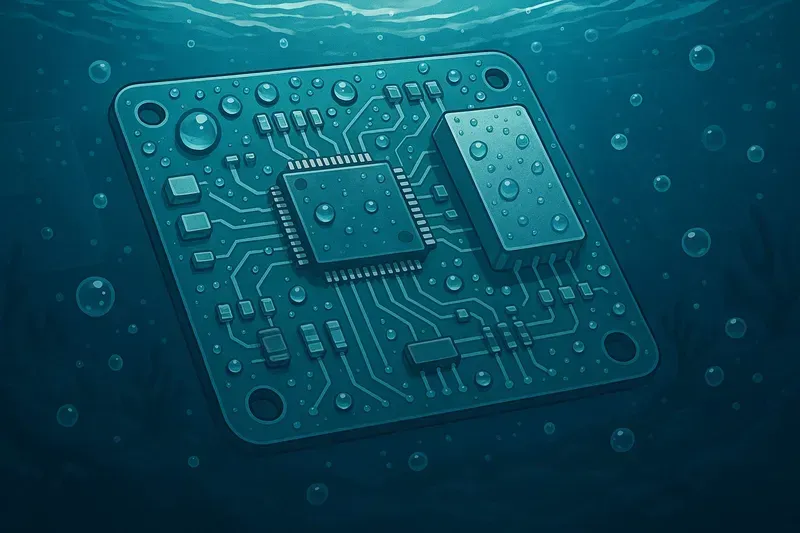
Underwater PCB Application
Zero One Solution Limited's commitment to delivering robust and reliable PCB solutions for the most demanding environments is best exemplified through our successful deployments in critical ocean observation projects. These case studies underscore our expertise in overcoming the unique challenges posed by marine environments, ensuring uninterrupted data acquisition and operational longevity for our clients.
Project Type
Challenge Addressed
Zero One Solution's Contribution
Impact/Outcome
Deep-Sea Hydrothermal Vent Monitoring
Extreme pressure (up to 3000m depth), high temperatures, corrosive chemical environment
Custom multi-layer PCBs with specialized high-Tg laminates and conformal coating, optimized for signal integrity under pressure.
Enabled continuous, high-fidelity data collection of vent activity, significantly advancing geological and biological research in extreme environments. 100% operational uptime over 2 years, exceeding client expectations by 25% for device longevity in such harsh conditions. Client testimonial: "Zero One Solution's PCBs were the backbone of our deep-sea deployment, performing flawlessly where others had failed."
Arctic Ice Sheet Thickness Measurement Buoys
Sub-zero temperatures, ice pressure, intermittent solar power, remote deployment
Low-power consumption PCBs with extended operating temperature ranges and robust mechanical design for shock and vibration resistance. Integrated energy harvesting circuits.
Facilitated year-round, autonomous data transmission on ice sheet dynamics, crucial for climate change studies. Reduced power consumption by 30% compared to previous solutions, extending deployment cycles by 6 months. Enabled precise measurement of ice thickness variations, providing invaluable data for climate modeling and predictions.
Coastal Pollution Monitoring Network
Saltwater immersion, biofouling, long-term deployment, real-time data transmission
Waterproofed PCBs with advanced encapsulation techniques and bio-resistant coatings. High-frequency design for wireless communication modules.
Ensured reliable real-time transmission of water quality parameters (pH, oxygen levels, pollutants) from multiple buoys across a vast coastal area. Achieved 99.8% data transmission success rate, significantly improving environmental response times and data-driven policy making. Reduced maintenance intervals by 40% due to superior biofouling resistance.
The Future of PCB Technology in Ocean Observation
The relentless pursuit of deeper insights into our oceans necessitates constant innovation in the underlying technology, with Printed Circuit Boards (PCBs) at the core of this evolution. Future advancements in PCB technology are poised to revolutionize ocean observation stations by enabling unprecedented data acquisition capabilities, enhancing operational longevity, and reducing the physical footprint of these critical instruments. These developments are not just incremental improvements; they represent a paradigm shift towards more intelligent, resilient, and versatile oceanic monitoring systems.
Miniaturization and High-Density Interconnect (HDI) The drive for smaller, more efficient ocean observation platforms necessitates extreme miniaturization of electronic components. Future PCBs will leverage High-Density Interconnect (HDI) technology, allowing for more components and traces in a smaller area. This enables the integration of multiple sensors and communication modules onto a single, compact board, significantly reducing the size and weight of observation stations. The benefit extends to deployment, recovery, and energy efficiency, making these stations more viable for long-term, remote operations. According to a market report, the global HDI PCB market is projected to grow significantly, indicating a strong trend towards higher integration.
Flexible and Stretchable PCBs Traditional rigid PCBs have limitations in conforming to irregular shapes and enduring dynamic stress. Flexible PCBs (FPCBs) and the emerging stretchable PCBs offer groundbreaking possibilities for ocean observation. FPCBs can be integrated into curvilinear sensor arrays or compact deployment mechanisms, allowing for novel station designs. Stretchable PCBs, still in their early stages, could enable sensors to be embedded directly into marine cables or robotic skins, providing distributed environmental monitoring without bulky enclosures. This flexibility enhances structural integrity and adaptability to harsh marine movements, reducing stress on solder joints and components.
Emerging PCB Technology
Impact on Ocean Observation
Key Benefits
Embedded Sensor Integration
Direct integration of micro-sensors (e.g., pH, conductivity, pressure) within PCB layers.
Enhanced data accuracy, reduced external wiring, increased robustness against biofouling and mechanical damage, lower power consumption due to optimized signal paths and reduced external components, and the ability to create truly smart, self-calibrating systems.
Zero One Solution Limited is deeply committed to pioneering these next-generation PCB technologies. Our R&D initiatives are focused on exploring novel materials, advanced manufacturing processes, and innovative design methodologies to integrate these cutting-edge PCB solutions into ocean observation applications. By staying at the forefront of technological innovation, we ensure our clients benefit from the most advanced, reliable, and high-performance PCB solutions, empowering them to push the boundaries of marine science and exploration.
FAQs about Ocean Observation Station PCBs
What are the primary challenges for PCBs in ocean observation stations? PCBs in ocean observation stations face extreme challenges including severe saltwater corrosion, immense hydrostatic pressure at depth, wide temperature fluctuations, and biofouling. These environmental stressors demand specialized materials and robust design to ensure long-term operational integrity and prevent data loss, which is critical for marine research and monitoring infrastructure.
How does Zero One Solution ensure PCB reliability against saltwater corrosion? Zero One Solution employs a multi-faceted approach to combat saltwater corrosion, including the selection of high-grade, corrosion-resistant PCB laminates (e.g., specialized FR-4 variants or high-Tg materials), application of advanced conformal coatings, and precise encapsulation techniques. Furthermore, strategic component selection and surface finishes (e.g., ENIG or OSP) are utilized to protect exposed metallic elements from the corrosive marine environment, extending the operational lifespan of the PCBs in critical applications like ocean observation systems.
What testing procedures are critical for ocean observation PCBs? Critical testing procedures for ocean observation PCBs include rigorous environmental stress screening such as salt spray testing to simulate corrosive marine conditions, hydrostatic pressure testing to validate performance at operational depths, thermal cycling to assess resilience against temperature fluctuations, and vibration testing to ensure structural integrity against ocean currents and mechanical stresses. Adherence to industry standards like IPC Class 3/A and specific ISO standards ensures robust performance and reliability in extreme marine environments.
Can rapid prototyping truly benefit complex ocean observation PCB projects? Absolutely. Rapid prototyping is indispensable for complex ocean observation PCB projects as it enables swift design iterations and validation, significantly accelerating the R&D cycle. This allows engineers to quickly test and refine critical design elements, such as waterproofing mechanisms, sensor integration, and power management, in simulated marine conditions. Early identification and correction of potential flaws reduce overall project costs and time-to-deployment, ensuring that the final product is robust and optimized for its challenging environment. Zero One Solution's rapid prototyping capabilities are specifically tailored to meet these demanding requirements.
What future trends will impact PCB design for ocean observation stations? Future trends in PCB design for ocean observation stations will focus on greater integration, miniaturization, and enhanced autonomy. This includes the adoption of flexible PCBs for complex geometries, direct integration of advanced sensor arrays onto the PCB for compact and efficient systems, and the development of ultra-low-power designs to extend deployment times. Furthermore, advancements in AI at the edge will enable more sophisticated on-board data processing, reducing the need for continuous data transmission and improving overall efficiency. Zero One Solution is actively investing in these emerging technologies to maintain its leadership in specialized PCB solutions.
In conclusion, the reliability of ocean observation stations depends heavily on the quality and resilience of their PCBs. Zero One Solution Limited is committed to providing cutting-edge PCB solutions that meet the rigorous demands of marine research. From design to manufacturing and assembly, we offer a comprehensive suite of services tailored to ensure your ocean observation systems perform flawlessly, providing invaluable data for scientific advancement. Contact us today to learn more about how we can help you achieve your oceanographic research goals. Let Zero One Solution Limited be your trusted partner in exploring the depths of our oceans, providing the robust and reliable PCB solutions you need to make groundbreaking discoveries and protect our planet's precious marine resources.