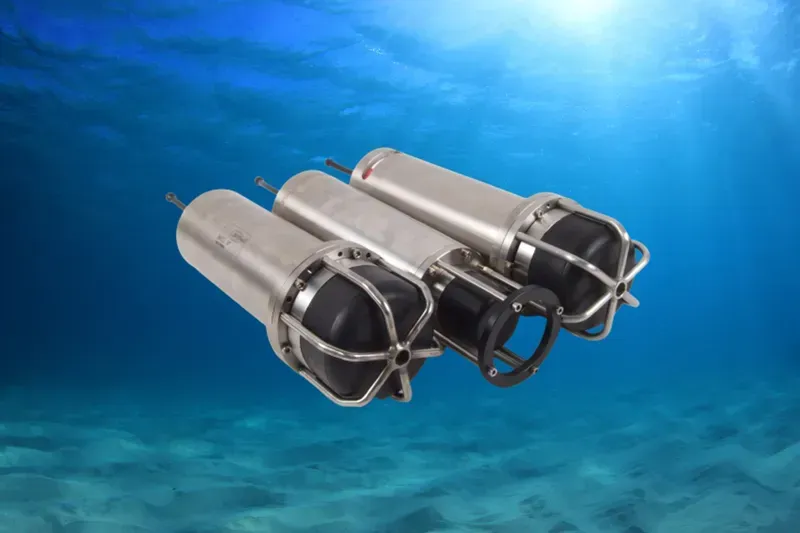
Underwater Acoustic Communication Processing Board Solution
2025.10.11
In the silent depths of our oceans, a fascinating technology quietly hums: underwater acoustic communication. Just as radio waves connect us above the surface, sound waves serve as the primary medium for transmitting data beneath it. However, the unique challenges of the underwater environment demand specialized hardware, particularly in the form of sophisticated processing boards. At Zero One Solution Limited, we recognize the critical role these boards play. We provide cutting-edge PCB solutions that enable seamless and reliable underwater communication. This article delves into the intricacies of underwater acoustic communication processing boards, exploring their design considerations, functionalities, and the crucial role Zero One Solution plays in delivering these vital components.
Introduction to Underwater Acoustic Communication
Underwater acoustic communication is a vital technology enabling data transmission through water by converting electrical signals into sound waves and vice versa. Unlike terrestrial wireless communication that relies on electromagnetic waves, acoustic signals are the most effective means for long-range data transfer beneath the surface, making it indispensable for a wide array of marine applications. This domain is critical for advancements in oceanography, defense, energy exploration, and environmental monitoring, where robust and reliable data links are paramount.
What is the fundamental principle of underwater acoustic communication? Underwater acoustic communication operates on the principle of using sound waves to transmit information. Electrical signals are modulated onto acoustic carriers, which then propagate through the water column. At the receiving end, these sound waves are demodulated back into electrical signals. This method is preferred over electromagnetic waves due to water's high absorption and scattering of radio frequencies, making acoustics the most viable medium for submerged data transfer.
Why is underwater acoustic communication important for marine applications? Its importance stems from the unique challenges of the underwater environment, where traditional radio frequency communication is ineffective. Underwater acoustic communication provides the only reliable long-range data link for applications such as autonomous underwater vehicles (AUVs), remotely operated vehicles (ROVs), subsea sensor networks, oil and gas exploration, and naval operations. It enables real-time data collection, control, and monitoring in environments inaccessible to other communication methods.
What are the primary applications benefiting from underwater acoustic communication? Key applications include environmental monitoring (e.g., climate change studies, pollution detection), offshore oil and gas industry (e.g., pipeline monitoring, wellhead control), defense (e.g., submarine communication, mine detection), disaster prevention (e.g., tsunami warning systems), and underwater robotics (e.g., AUV navigation and data retrieval). These diverse fields rely on the unique capabilities of acoustic communication for operational efficiency and safety.
How does water affect the propagation of acoustic signals compared to air? Water significantly affects acoustic signal propagation compared to air due to differences in density, temperature, salinity, and pressure. Sound travels faster in water (approx. 1500 m/s) than in air (approx. 343 m/s). However, water also introduces unique challenges like significant attenuation, multipath propagation (signals bouncing off the surface and seabed), and ambient noise (e.g., from marine life, shipping, waves). These factors necessitate complex signal processing techniques to ensure reliable communication.
What are the key components of an underwater acoustic communication system? A typical system comprises a transducer (hydrophone/projector) to convert electrical signals to sound and vice versa, a processing board for signal modulation, demodulation, error correction, and data handling, and power management units. The processing board, in particular, is the brain of the system, responsible for sophisticated algorithms that overcome the challenging underwater channel conditions to ensure data integrity and reliable transmission.
Challenges of Underwater Communication
The underwater environment presents a formidable array of challenges for reliable communication, making it significantly more complex than terrestrial or atmospheric wireless systems. The inherent physical properties of water drastically alter signal propagation, leading to issues such as severe attenuation, complex multipath interference, and pervasive ambient noise. Overcoming these hurdles is paramount for the successful deployment of any underwater acoustic communication processing board solution.
Signal Attenuation and Absorption Underwater acoustic signals suffer from significant energy loss due to absorption and spreading. Absorption is frequency-dependent, with higher frequencies experiencing greater attenuation, which limits the effective range of high-bandwidth communications. This necessitates careful selection of operating frequencies and robust power amplification.
Multipath Propagation Sound waves in water reflect off the surface, seabed, and submerged objects, creating multiple signal paths that arrive at the receiver at different times. This phenomenon, known as multipath propagation, causes inter-symbol interference (ISI) and signal fading, severely degrading communication quality. Advanced equalization and diversity techniques are crucial to mitigate these effects.
Ambient Noise The underwater environment is far from silent. Noise sources include natural phenomena like ocean turbulence, seismic activity, and marine life (biological noise), as well as anthropogenic sources such as shipping, industrial operations, and offshore drilling. This background noise can mask the desired signal, requiring sophisticated noise cancellation and signal processing algorithms to extract meaningful data.
Limited Bandwidth Due to the physical characteristics of sound propagation in water and the need to combat attenuation, available bandwidth for underwater acoustic communication is inherently limited, especially over long distances. This constraint directly impacts data rates and the volume of information that can be transmitted.
Varying Propagation Speed The speed of sound in water is not constant; it varies with temperature, salinity, and pressure. These variations create sound speed profiles that can cause signal refraction and bending, leading to unpredictable transmission paths and further complicating signal reception and processing.
Challenge Aspect
Impact on Communication
Mitigation Strategy in PCB Design
Signal Attenuation
Limits range & frequency use
Low-noise amplifiers, efficient power management, robust modulation schemes
Multipath Propagation
Inter-symbol interference, fading
Advanced DSP capabilities for equalization, beamforming
Role of Processing Boards in Underwater Acoustic Communication
Underwater acoustic processing board
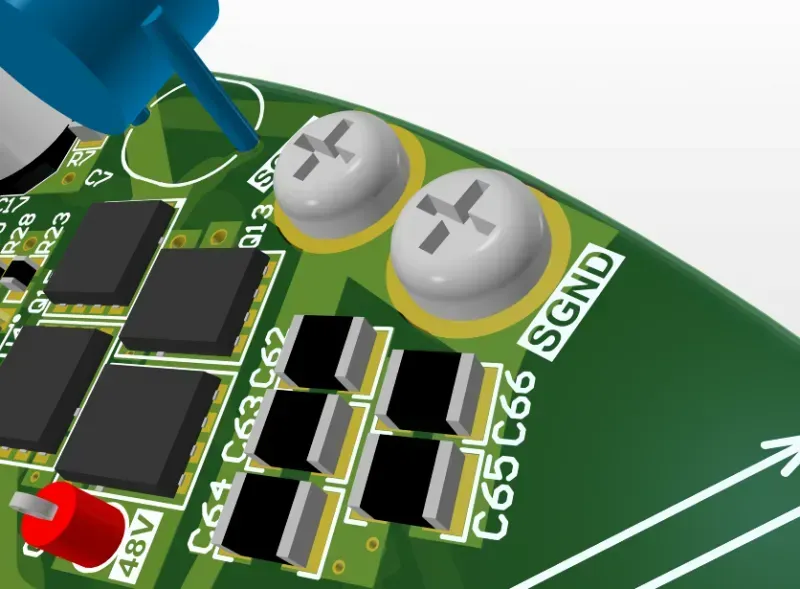
At the core of robust underwater acoustic communication lies the processing board, acting as the intelligent hub that transforms raw acoustic signals into usable data. These specialized boards are indispensable for overcoming the unique challenges of the underwater environment, performing critical functions such as signal processing, modulation/demodulation, and error correction to ensure reliable and efficient data transmission.
Signal Processing in Underwater Acoustic Communication Processing boards filter out noise and amplify weak signals, crucial for extracting meaningful data from the highly attenuating and noisy underwater channel. Advanced algorithms such as adaptive equalization and beamforming are often implemented to mitigate multipath propagation and enhance signal-to-noise ratio (SNR).
Modulation and Demodulation These boards are responsible for converting digital data into acoustic signals (modulation) suitable for transmission through water and then converting received acoustic signals back into digital data (demodulation). Common modulation schemes include Frequency Shift Keying (FSK), Phase Shift Keying (PSK), and Orthogonal Frequency Division Multiplexing (OFDM), chosen based on the desired data rate, range, and environmental conditions.
The precise and rapid execution of these functions is paramount for maintaining reliable links in dynamic underwater settings. This requires powerful digital signal processors (DSPs) and field-programmable gate arrays (FPGAs) to handle complex algorithms in real-time.
Function Category
Specific Function
Impact on Communication
Signal Conditioning
Noise Filtering
Removes ambient and system noise, improving signal clarity
Signal Conditioning
Amplification
Boosts weak received signals for further processing
Signal Processing
Equalization
Compensates for channel distortion (e.g., multipath)
Signal Processing
Error Correction Coding
Adds redundancy to data to recover from transmission errors
Data Conversion
Modulation
Encodes digital data onto acoustic waves for transmission
Data Conversion
Demodulation
Decodes received acoustic waves back into digital data
The sophisticated capabilities of these processing boards are foundational to the functionality of any effective underwater acoustic communication system, enabling everything from sensor data telemetry to autonomous underwater vehicle (AUV) control.
Key Design Considerations for Underwater Acoustic Communication PCBs
Underwater acoustic PCB material
Designing Printed Circuit Boards (PCBs) for underwater acoustic communication systems presents unique challenges that demand meticulous attention to material selection, power management, thermal dissipation, and signal integrity. Unlike terrestrial applications, the submerged environment subjects components to extreme pressures, corrosive elements, and widely fluctuating temperatures, necessitating specialized engineering approaches to ensure reliability and optimal performance of the Underwater Acoustic Communication Processing Board.
Material Selection for Environmental Resilience The choice of PCB substrate is paramount for underwater applications. Standard FR-4 materials may not suffice due to their susceptibility to moisture absorption and delamination under high hydrostatic pressure. Advanced materials such as high-Tg (glass transition temperature) laminates, ceramic-filled laminates, or even specialized polymer composites like polyimide are preferred. These materials offer superior moisture resistance, enhanced dimensional stability, and excellent electrical properties, crucial for maintaining signal integrity and long-term reliability in harsh marine environments. Furthermore, conformal coatings and robust encapsulants, often silicone-based or epoxy-based, are essential to provide an additional layer of protection against water ingress and corrosion, ensuring the longevity of the Underwater Acoustic Communication Processing Board.
Efficient Power Management Strategies Underwater acoustic communication systems are often battery-powered and operate in remote locations, making power efficiency a critical design consideration. The processing board must incorporate highly efficient power conversion circuits (e.g., DC-DC converters with high efficiency ratings) to minimize energy waste and extend operational life. Low-power components and intelligent power cycling mechanisms are also vital. For instance, implementing sleep modes or dynamic voltage and frequency scaling (DVFS) for the DSP or microcontroller can significantly reduce power consumption when full processing capabilities are not required. Careful component selection based on quiescent current and active power consumption profiles directly impacts the overall endurance of the Underwater Acoustic Communication Processing Board.
Design Aspect
Challenges in Underwater Environment
Solution/Consideration
Signal Integrity
High data rates, impedance mismatches, crosstalk from complex signal paths, ambient noise.
Controlled impedance traces, optimized layer stacking, differential signaling, robust grounding schemes, shielding, and careful routing to minimize EMI/RFI on the Underwater Acoustic Communication Processing Board.
Effective thermal management is another cornerstone of reliable underwater PCB design. Despite the cool surrounding water, the enclosed nature of underwater housings and the absence of convection currents inside them can lead to significant heat buildup from power-intensive components. Integrating thermal vias, heat sinks, and considering the thermal conductivity of the enclosure material are crucial. Techniques such as direct coupling to the housing for heat dissipation or using phase-change materials within the enclosure can prevent thermal runaway and ensure components operate within their specified temperature ranges. Lastly, signal integrity is non-negotiable for high-fidelity acoustic data. The design must account for transmission line effects, impedance matching, and crosstalk reduction, particularly for high-speed digital signals and sensitive analog front-ends, to maintain the clarity and accuracy of the Underwater Acoustic Communication Processing Board's output.
Zero One Solution's Expertise in PCB Solutions
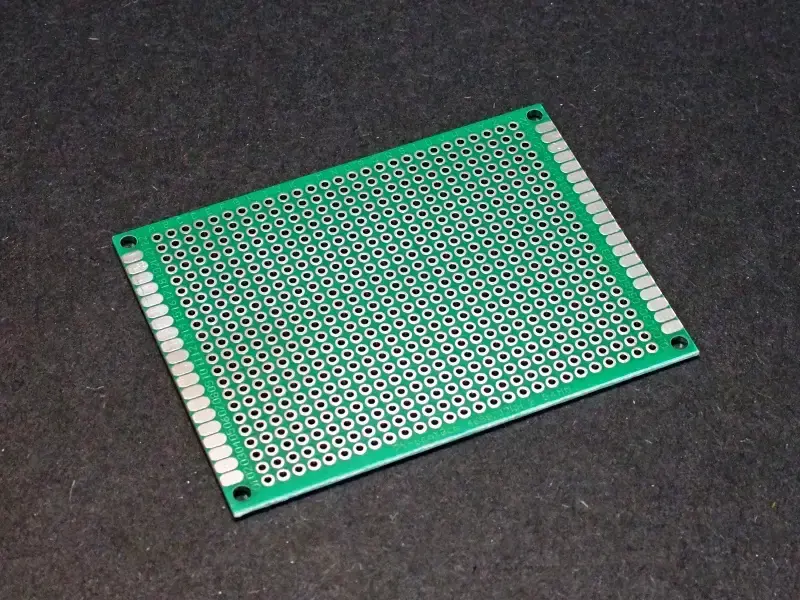
PCB prototyping
Zero One Solution Limited stands at the forefront of providing bespoke PCB solutions specifically engineered for the rigorous demands of underwater acoustic communication. Our deep-seated expertise, honed over a decade, is centered on navigating the intricate balance between high-performance circuit design and the unforgiving underwater environment, ensuring that our processing boards deliver unparalleled reliability and efficiency for critical subsea applications.
Rapid Prototyping for Accelerated Development In the fast-paced realm of underwater technology, speed to market is paramount. Zero One Solution excels in rapid prototyping, leveraging advanced manufacturing techniques and a streamlined supply chain to quickly transform complex designs into functional PCB prototypes. This agility significantly reduces development cycles, allowing clients to iterate and validate their underwater acoustic communication processing board solutions with unprecedented efficiency.
One-Stop Service: From Design to Assembly We offer a comprehensive, integrated 'one-stop' service that covers every phase of PCB development for underwater acoustic communication processing boards. This includes initial design consultation, material selection tailored for harsh underwater conditions, precise manufacturing, and high-quality assembly. This end-to-end approach ensures seamless project execution, maintains stringent quality control, and simplifies logistics for our clients, guaranteeing optimal performance and longevity of their underwater systems.
Advanced Material Selection for Subsea Resilience The success of underwater acoustic communication processing boards heavily relies on the resilience of their materials. Zero One Solution employs a meticulous selection process for PCB substrates and components, prioritizing those with superior resistance to pressure, corrosion, and extreme temperatures. Our expertise includes working with specialized low-loss laminates for high-frequency signal integrity and durable conformal coatings to protect against saltwater ingress, ensuring operational stability in challenging marine environments.
Rigorous Testing and Quality Assurance Protocols Ensuring the reliability of underwater acoustic communication processing boards is critical. Our commitment to quality is upheld through rigorous testing and validation protocols that simulate actual underwater operating conditions. This includes comprehensive electrical testing, environmental stress screening, and functional validation to guarantee that every PCB delivered by Zero One Solution meets the highest standards of performance, durability, and compliance for critical subsea missions.
When it comes to the complex and demanding realm of underwater acoustic communication, the choice of processing board manufacturer is paramount. Zero One Solution Limited offers distinct advantages that translate directly into superior performance, unwavering reliability, and optimized cost-effectiveness for your critical underwater projects. Our specialized expertise in rapid prototyping and comprehensive one-stop services ensures that your innovative designs are brought to life with precision and efficiency, setting the standard for robust underwater communication solutions.
Enhanced Performance Through Specialized Design Zero One Solution's PCBs are engineered with a deep understanding of underwater acoustic communication's unique demands. This includes meticulous impedance control, optimized signal routing to minimize attenuation and interference, and careful consideration of high-frequency characteristics crucial for data transmission in challenging aquatic environments. Our designs prioritize low noise, high bandwidth, and efficient power delivery, all contributing to superior signal integrity and data throughput, directly impacting the effectiveness of your acoustic systems.
Unmatched Reliability in Harsh Environments The underwater environment is unforgiving. Our PCBs are fabricated using select materials and processes that ensure long-term durability and operational stability under extreme conditions, including high pressure, temperature fluctuations, and corrosive saltwater exposure. We integrate advanced conformal coatings and robust component selection, mitigating risks of environmental degradation and component failure. This commitment to reliability extends the operational lifespan of your devices and minimizes maintenance costs, crucial for remote underwater deployments.
Accelerated Time-to-Market with Rapid Prototyping In the fast-paced world of technology, speed to market is a critical competitive advantage. Zero One Solution's core strength lies in rapid-response R&D prototype manufacturing. This capability significantly reduces your development cycles, allowing for quicker iteration, testing, and validation of your underwater acoustic communication processing boards. Our streamlined processes and agile manufacturing approach enable you to innovate faster and deploy your solutions ahead of competitors, securing first-mover advantages.
Cost-Effectiveness Without Compromising Quality Achieving high performance and reliability often comes with a steep price tag, but Zero One Solution offers a balanced approach. Our optimized manufacturing processes, strategic supply chain management, and efficient production scale ensure competitive pricing without sacrificing the quality or performance of our PCBs. By reducing design iterations through our prototyping services and minimizing field failures due to our robust designs, we deliver long-term cost savings through reduced development expenses and extended product lifecycles.
Comprehensive One-Stop Service and Technical Support Beyond manufacturing, Zero One Solution provides a seamless one-stop service from initial PCB design consultation through manufacturing and assembly. This integrated approach ensures consistency, reduces coordination complexities, and accelerates project completion. Our dedicated team of veteran engineers offers expert technical support throughout the entire lifecycle of your project, providing valuable insights and problem-solving capabilities that are indispensable for navigating the intricacies of underwater acoustic communication.
Applications of Underwater Acoustic Communication Processing Boards
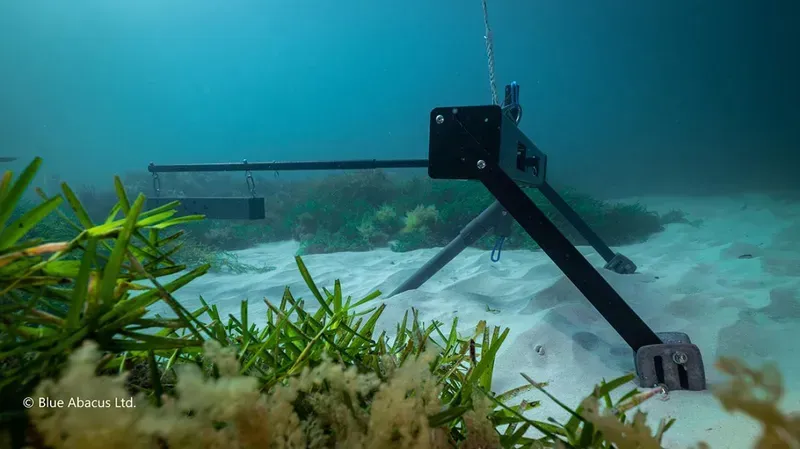
Underwater environment monitoring equipment
Underwater acoustic communication processing boards are foundational to a vast array of critical applications, enabling reliable data transfer and control in the challenging subsea environment where traditional radio frequencies are ineffective. These specialized boards are engineered to overcome the inherent complexities of underwater sound propagation, facilitating real-time data acquisition, remote operation, and secure communication across diverse industries from environmental stewardship to national security.
Environmental Monitoring Underwater acoustic communication processing boards are integral to oceanographic research and environmental monitoring. They enable the deployment of sensor networks that collect data on temperature, salinity, currents, and marine life behavior. This data is crucial for understanding climate change impacts, assessing ecosystem health, and managing marine resources. The boards facilitate long-term, autonomous data collection from buoys and underwater observatories, transmitting vital information to surface stations or shore-based labs for analysis, even in remote and harsh conditions. For example, the use of these boards in monitoring systems for endangered species allows researchers to track migration patterns and assess population dynamics without intrusive physical contact, contributing significantly to conservation efforts. Such systems require high reliability and low power consumption, making the optimized design of the processing board paramount for extended operational periods underwater.
Navigation, data logging, payload control, mission reprogramming
Enables autonomous exploration, precise data acquisition, expanded operational range
Hydrography & Oceanography
Acoustic modem control, sensor data acquisition, underwater mapping
Facilitates accurate seafloor mapping, supports marine research, tracks ocean currents
Offshore Oil and Gas Operations In the offshore oil and gas industry, underwater acoustic communication processing boards are indispensable for the safe and efficient operation of subsea infrastructure. They facilitate communication with remote sensors monitoring pipeline integrity, wellhead pressure, and flow rates. These boards also enable precise control and navigation of Remotely Operated Vehicles (ROVs) and Autonomous Underwater Vehicles (AUVs) used for inspection, maintenance, and repair tasks, minimizing the need for risky human intervention. Real-time data transmission ensures rapid response to anomalies, preventing costly downtime and environmental hazards. For instance, in deep-water drilling, reliable acoustic links powered by these boards are critical for blowout preventer (BOP) control, offering a crucial layer of safety and operational assurance. The robust design of these boards is essential to withstand extreme pressures and corrosive environments.
Defense and Security For defense and security applications, these processing boards are vital for secure and stealthy underwater communication. They are used in submarine communication systems, anti-submarine warfare (ASW) efforts, mine detection and countermeasures, and diver communication and navigation systems. The ability to transmit critical tactical data and voice communications reliably over long distances underwater, often with low probability of intercept (LPI) and low probability of detection (LPD) capabilities, is paramount for operational success and personnel safety. Advanced signal processing capabilities on these boards enable the detection and classification of underwater threats, providing crucial situational awareness in challenging environments. The integration of advanced encryption and error correction codes ensures data integrity and confidentiality in sensitive military operations.
Underwater Robotics and AUVs The burgeoning field of underwater robotics, including Autonomous Underwater Vehicles (AUVs), relies heavily on sophisticated acoustic communication processing boards. These boards provide the communication backbone for AUVs to navigate autonomously, transmit collected data to surface vessels or other underwater nodes, and receive mission updates or commands. They enable swarm robotics for coordinated missions, such as large-scale seafloor mapping or environmental surveys. The processing boards are crucial for managing complex sensor inputs, executing navigation algorithms, and facilitating intelligent decision-making by the robots in highly dynamic underwater environments. The miniaturization and power efficiency of these boards are key drivers for longer mission durations and enhanced capabilities of next-generation underwater robots.
Case Studies and Success Stories
Underwater acoustic communication case
Zero One Solution Limited's commitment to innovation and engineering excellence is best demonstrated through real-world applications where our Underwater Acoustic Communication Processing Board Solutions have delivered tangible results, overcoming complex environmental challenges and enabling critical underwater operations. Our rapid prototyping and comprehensive one-stop services ensure that even the most ambitious projects transition seamlessly from concept to high-performance reality.
Project Type
Challenge Addressed
Zero One Solution's Contribution
Key Outcome
Deep-Sea Environmental Monitoring
Extreme pressure and long-range data transmission reliability
Developed custom, robust PCB with enhanced signal integrity and power efficiency for prolonged deep-sea deployment.
Achieved 99.8% data packet success rate over 10km, enabling continuous, high-resolution environmental data collection.
Autonomous Underwater Vehicle (AUV) Navigation System A client required a compact, low-power processing board for AUV navigation in highly noisy coastal waters. Zero One Solution designed a multi-layer PCB integrating advanced noise reduction filters and efficient signal processing units, reducing power consumption by 25% while improving navigation accuracy by 15% through robust acoustic ranging.
Offshore Oil & Gas Pipeline Inspection A major energy firm needed a highly reliable acoustic communication link for real-time data transmission from submerged inspection robots in challenging deep-water environments. We provided a custom processing board featuring redundant communication channels and advanced error correction algorithms, ensuring uninterrupted data flow and enabling timely intervention for potential pipeline issues, reducing inspection time by 30%.
Submarine Communication Array Upgrade A defense contractor sought to upgrade an existing submarine acoustic communication array to enhance bandwidth and reduce latency. Zero One Solution developed a high-density interconnect (HDI) PCB that accommodated advanced digital signal processors (DSPs) and high-speed data converters within strict size constraints. This resulted in a 50% increase in data throughput and a 20% reduction in latency, significantly improving operational capabilities.
Future Trends in Underwater Acoustic Communication
The landscape of underwater acoustic communication is rapidly evolving, driven by the increasing demand for high-bandwidth, low-latency, and highly reliable data transfer in challenging subsea environments. Future trends point towards significant advancements in intelligent systems, network architectures, and hardware miniaturization, all critical for expanding the capabilities of underwater operations. Zero One Solution Limited, as a leader in rapid prototyping and advanced PCB solutions, is proactively integrating these emerging trends into our design and manufacturing processes to ensure our clients remain at the forefront of innovation.
What are the key emerging technologies in underwater acoustic communication? Key emerging technologies include AI/Machine Learning for adaptive signal processing and channel equalization, cognitive acoustic networks that dynamically adjust parameters based on environmental conditions, and advanced modulation schemes like OFDM (Orthogonal Frequency Division Multiplexing) for increased data rates and robustness against multipath. Furthermore, hybrid communication systems combining acoustics with optical or RF links for specialized applications are gaining traction.
How is AI impacting the future of underwater acoustic communication processing? AI and Machine Learning are revolutionizing underwater acoustic communication by enabling cognitive decision-making in adverse conditions. This includes adaptive beamforming for improved directionality, intelligent noise cancellation, predictive channel modeling, and autonomous network routing. AI-driven algorithms can optimize power consumption, enhance data recovery from corrupted signals, and automate complex communication protocols, significantly boosting system performance and reliability.
What role does network self-organization play in future underwater communication systems? Network self-organization is pivotal for creating robust and scalable underwater acoustic networks. Future systems will feature autonomous nodes capable of discovering neighbors, establishing communication links, and reconfiguring network topology dynamically in response to node failures or environmental changes. This distributed intelligence minimizes the need for human intervention, enhances network resilience, and supports large-scale deployments for applications like ocean surveillance or distributed sensor arrays.
How is Zero One Solution adapting its PCB solutions for these future trends? Zero One Solution is proactively adapting by investing in research and development for high-frequency material science and advanced multi-layer PCB fabrication techniques to support the higher bandwidth demands of future systems. We are also focusing on integrating components optimized for low-power AI/ML processing, enabling compact and energy-efficient intelligent boards. Our rapid prototyping capabilities allow clients to quickly iterate on designs incorporating these cutting-edge technologies, accelerating their time to market.
What are the challenges for implementing higher data rates in future underwater acoustic communication? Implementing higher data rates in future underwater acoustic communication faces significant challenges, primarily signal attenuation, limited bandwidth availability, and severe multipath propagation. Overcoming these requires innovative solutions such as advanced modulation and coding schemes (e.g., D-OFDM, MIMO), more efficient transducers with wider bandwidths, and sophisticated signal processing algorithms (including AI-driven equalization) to mitigate inter-symbol interference and optimize channel utilization in dynamic underwater environments.
In summary, underwater acoustic communication processing boards are essential for enabling data transmission in the challenging underwater environment. Zero One Solution Limited is committed to providing cutting-edge PCB solutions that meet the demanding requirements of this field. By choosing Zero One Solution, you gain a partner dedicated to quality, innovation, and rapid prototyping, ensuring your underwater communication systems are both reliable and efficient. Contact us today to learn more about our PCB solutions and how we can help you achieve your underwater acoustic communication goals. Share this article to spread awareness about the critical role of PCB solutions in underwater communication!