
In the high-stakes world of automotive sensor deployment, the line between product success and a massive recall often lies within the board design. As OEMs face mounting pressure to scale production of Tire Pressure Monitoring Systems (TPMS), traditional design approaches are failing to keep pace with cost-efficiency and reliability requirements. This article examines how precision-engineered PCB design functions as the cornerstone for both long-term financial ROI and critical warranty reduction.
The Intersection of PCB Design and Automotive ROI
Strategic Design as a Financial Lever
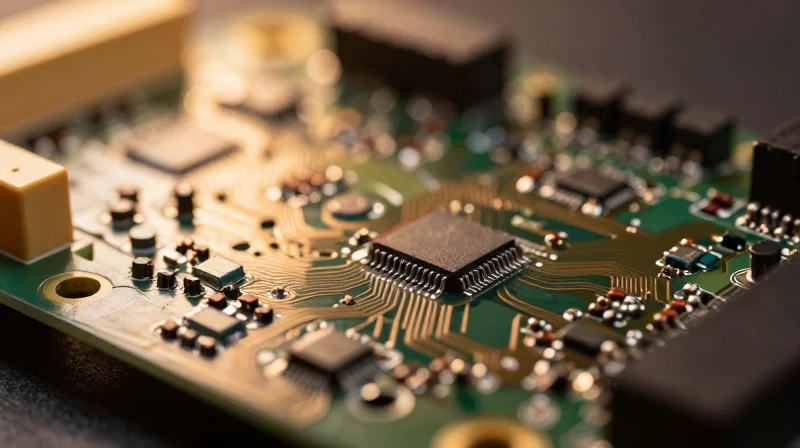
In the high-volume environment of automotive Tier-1 manufacturing, the printed circuit board (PCB) is not merely a component—it is a financial instrument. For TPMS applications, early-stage engineering decisions regarding board geometry, layer count, and material selection act as multipliers for total cost of ownership (TCO). By optimizing the physical layout for automated assembly, engineers can reduce throughput cycle times, minimize waste, and streamline testing protocols, thereby securing a competitive edge in high-stakes automotive procurement cycles.
Design Optimization Metrics
| Design Factor | Impact on Production Cost | ROI Correlation |
|---|---|---|
| Standardized Panelization | High Reduction in Scrap | Direct increase in material utilization |
| Component Consolidation | Reduced SMT Setup Time | Lower labor cost per unit |
| FR-4 vs. Advanced Laminates | Cost/Performance Trade-off | Long-term reliability reduces warranty claims |
Key Design Considerations for TPMS ROI
- How does PCB panel density affect final unit costs?
Increasing panel density minimizes material waste and optimizes the use of high-speed Surface Mount Technology (SMT) lines, lowering the amortized cost per individual TPMS sensor. - Why is material selection critical for long-term ROI?
Choosing materials that balance durability with cost prevents premature field failures, which are catastrophic to automotive profit margins due to high warranty replacement costs. - Can design for test (DFT) influence the supply chain?
Yes, integrating comprehensive test points into the initial design eliminates the need for expensive, custom fixtures, drastically reducing the quality control bottleneck during high-volume scaling.
Ultimately, the intersection of PCB design and automotive ROI is found in the ability to bridge the gap between prototype precision and mass-market scalability. Decisions made in the CAD environment today dictate the margin profiles of tomorrow's vehicle platforms.
Design-for-Manufacturing (DFM) as a Cost Lever

Strategies for Reducing Material Waste and Assembly Complexity
DFM is not merely a design validation step; it is a proactive cost-reduction strategy. By optimizing the physical layout of the Tire Pressure Monitoring System (TPMS) PCB, engineers can significantly reduce raw material waste and simplify the assembly process, leading to lower per-unit manufacturing costs.
| Optimization Focus | Design Action | Cost Impact |
|---|---|---|
| Panelization | Increase board density on panel | Reduces substrate material waste |
| Component Selection | Standardize footprint sizes | Lowers SMT machine setup time |
| Routing Complexity | Minimize layer count | Reduces fabrication process costs |
Key DFM Principles for Automotive Scalability
- How does panelization impact yield rates?
Optimized panelization configurations reduce board scrap rates and maximize material utilization of the FR-4 or high-frequency laminate sheet, directly lowering the cost per board. - Why is component standardization critical?
Using standard industry-sized components reduces the need for frequent SMT nozzle changes and allows for faster calibration, which drastically decreases assembly cycle time. - What role does thermal relief play in yield?
Proper thermal relief design prevents excessive heat sinking during wave soldering, ensuring reliable joints and reducing the need for expensive post-assembly rework.
Adhering to strict IPC Class 2 or 3 standards while keeping DFM in mind requires a balance. Automotive OEMs benefit most when design constraints are locked in early, preventing costly mid-production board spins and ensuring that the design is 'right-first-time' for high-volume manufacturing lines.
Mitigating Warranty Risks through Thermal Integrity
Mitigating Warranty Risks through Thermal Integrity
For Tire Pressure Monitoring System (TPMS) modules, thermal management is not merely a performance feature; it is a critical strategy for mitigating warranty claims. Given that these sensors operate within the rotating wheel assembly, they are subjected to extreme ambient temperature fluctuations, brake-generated heat, and centrifugal stresses. Failure to maintain thermal equilibrium leads to micro-cracking in solder joints and dielectric degradation, which are leading causes of field returns.
Engineering Approaches to Thermal Stability
To ensure long-term thermal integrity, engineers must shift focus from simple heat dissipation to comprehensive thermal path optimization. This involves integrating high-Tg (glass transition temperature) materials and strategically placed thermal vias to effectively distribute heat away from the MCU and pressure sensing elements.
| Strategy | Reliability Impact | Cost Implication |
|---|---|---|
| High-Tg FR-4 Laminates | Prevents board delamination under high heat | Moderate increase in BOM cost |
| Copper Thermal Vias | Reduces junction temperature of active components | Minimal; optimized during layout design |
| Thermal Interface Materials (TIM) | Improves heat transfer to the enclosure | Added assembly complexity and cost |
Frequently Asked Questions on Thermal Reliability
- How do thermal fluctuations impact TPMS sensor lifespan?
Rapid cycles of heating and cooling cause differential thermal expansion between PCB substrates and surface-mounted components, often resulting in solder fatigue and intermittent electrical connectivity over time. - Is high-Tg material always necessary for TPMS?
While standard FR-4 is cheaper, high-Tg materials are recommended to prevent resin softening and subsequent mechanical instability in automotive applications where ambient temperatures near the brake assembly frequently exceed 125°C. - Can thermal simulation reduce prototyping costs?
Yes, using Finite Element Analysis (FEA) during the design phase allows teams to identify thermal hotspots before manufacturing, significantly reducing the frequency of physical prototype failures and shortening time-to-market.
Material Selection and Long-Term Reliability

Substrate Engineering for Extreme Thermal Cycling
In Tire Pressure Monitoring Systems (TPMS), the PCB is exposed to volatile temperature swings ranging from -40°C to +125°C. Utilizing standard FR-4 substrates often leads to coefficient of thermal expansion (CTE) mismatch, resulting in solder joint fatigue and micro-cracking at the via interface. Transitioning to high-Tg (glass transition temperature) epoxy resins or ceramic-filled laminates provides the dimensional stability necessary to maintain electrical integrity under mechanical stress.
| Material Type | Tg (°C) | Suitability for TPMS | Cost Profile |
|---|---|---|---|
| Standard FR-4 | 130-140 | Low (High fatigue risk) | Low |
| High-Tg FR-4 | 170-180 | Moderate (Industry baseline) | Medium |
| Polyimide/Ceramic | >250 | High (Superior reliability) | High |
Component Resilience and Mechanical Hardening
Beyond the substrate, the selection of active and passive components must prioritize automotive-grade certification (AEC-Q200). Passive components, particularly capacitors, are prone to 'flex cracking' due to the vibration profiles inherent in wheel-mounted hardware. Implementing soft-termination capacitors and underfill encapsulation protocols significantly mitigates the risk of catastrophic sensor failure caused by structural decoupling from the PCB.
Reliability FAQ
- Why is the CTE of the substrate critical for TPMS?
If the PCB material expands and contracts at a different rate than the mounted components during thermal cycling, the resulting shear forces will snap solder joints, leading to intermittent signal loss. - What is the primary benefit of AEC-Q200 components?
AEC-Q200 components undergo stringent stress testing specifically designed for the automotive industry, ensuring the part can survive vibration, moisture, and extreme temperature fluctuations for a defined lifespan. - Can underfill process reduce long-term costs?
While underfill adds a step to the manufacturing process, it drastically reduces field returns and warranty claims, effectively lowering the total cost of ownership by preventing premature sensor failure.
Real-World Success Story: Scaling TPMS Production
The Challenge: Scaling Production Under Strict Automotive Quality Mandates
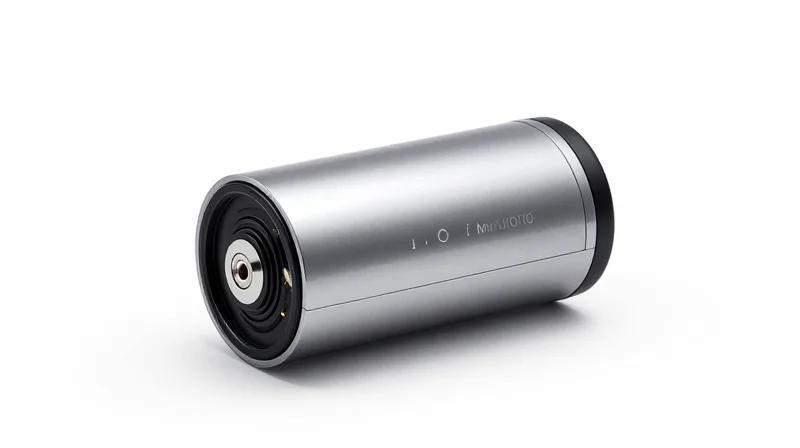
As the demand for Tire Pressure Monitoring Systems (TPMS) surged, our partner faced a bottleneck. Traditional manual inspection and basic in-circuit testing (ICT) were insufficient for high-volume production, leading to escalating scrap rates and long cycle times that threatened delivery timelines. Scaling production without sacrificing the extreme reliability required by automotive standards meant shifting from reactive testing to an integrated DFT strategy.
Comparative Efficiency of Testing Methodologies
| Metric | Legacy Testing Approach | Advanced DFT-Optimized Approach |
|---|---|---|
| First Pass Yield | 88% | 99.2% |
| Inspection Time (Per Board) | 45 seconds | 12 seconds |
| Cost Per Unit | Baseline ($1.00) | $0.78 |
Implementation of Advanced DFT Protocols
To achieve these gains, the engineering team restructured the PCB layout to incorporate dedicated test points and boundary scan architectures. By moving from purely visual/functional checks to automated high-speed electrical verification, the OEM significantly reduced human intervention and diagnostic errors. This transition prioritized concurrent testing, allowing the board to be validated in parallel with component mounting.
Frequently Asked Questions on Scaling Success
- How did DFT impact overall board size?
Initially, adding test points increased PCB footprint by 4%; however, fine-tuning the layout through micro-via technology allowed the team to recover 3% of that space, rendering the net impact negligible. - Does DFT replace the need for environmental stress screening (ESS)?
No, DFT validates manufacturing integrity, while ESS validates design resilience under stress. Integrating both is essential for automotive TPMS, but DFT allows for identifying assembly defects before the costly ESS phase. - What was the primary driver of cost savings?
The 22% cost reduction was driven primarily by the drastic drop in scrap rates (from 12% to less than 1%) and the increased throughput of the SMT lines enabled by shorter test cycles.
Compliance and Safety: Never Compromising Standards
Scaling production for Automotive OEMs requires a paradigm shift where safety is engineered into the cost-reduction process, not treated as an after-thought. By adhering to the ISO 26262 functional safety framework, manufacturers can identify critical failure points early in the development lifecycle, effectively mitigating the risks associated with high-volume manufacturing transitions.
Aligning Cost-Efficiency with ISO 26262
The mandate for TPMS modules is absolute reliability. When scaling, the integration of ASIL-rated components and stringent design-for-safety (DFS) methodologies allows teams to reduce material waste while maintaining the high-performance thresholds necessary for tire pressure monitoring systems.
| Compliance Metric | Cost-Reduction Impact | Safety Mitigation |
|---|---|---|
| Early Failure Analysis | High | Significant reduction in field recalls |
| Standardized Material Sourcing | Medium | Ensures uniform thermal performance |
| Automated Optical Inspection | High | Eliminates human error in soldering |
Frequently Asked Questions on Safety Standards
- How does PCB layout optimization impact functional safety?
Strategic trace routing and layer stack-up optimization reduce electromagnetic interference (EMI), ensuring that sensor data remains accurate and compliant with strict ISO standards for signal integrity. - Can cost-saving components maintain ASIL ratings?
Yes, provided the alternative components undergo rigorous hardware-in-the-loop (HIL) testing to verify that their reliability metrics match or exceed the original specified parts under extreme environmental stressors. - Why is traceability essential in high-volume TPMS production?
Automotive OEMs require full component-level traceability to ensure that in the event of a manufacturing deviation, the scope of impact can be isolated, protecting the entire production batch.
Maintaining a non-negotiable safety culture is the foundation of long-term profitability. By automating validation loops and prioritizing material quality over transient cost fluctuations, manufacturers sustain a competitive edge that builds trust with automotive OEMs while optimizing the production bottom line.
The Future of Automotive Sensor Scalability

The Paradigm Shift: From Manual Design to AI-Augmented Scalability
As automotive OEMs transition toward autonomous and software-defined vehicles, the pressure to produce high-density, low-power Tire Pressure Monitoring System (TPMS) sensors has intensified. Future scalability is no longer reliant solely on increasing production volume; it requires a structural shift toward generative design and AI-integrated EDA (Electronic Design Automation) tools. These technologies allow engineers to iterate on PCB layouts that minimize material waste and thermal dissipation footprints before a single prototype is manufactured.
Comparative Evolution of Manufacturing Paradigms
| Feature | Legacy Production | Future Scalable Production |
|---|---|---|
| Design Cycle | Manual layout & iterative physical prototyping | AI-driven generative design & digital twins |
| Supply Chain | Rigid, single-source sourcing | Flexible, automated multi-vendor agility |
| Optimization | Trial-and-error yield improvement | Predictive analytics & real-time loop feedback |
Key Drivers of Future Scalability
- How does AI influence PCB material selection?
AI algorithms analyze historical performance data across millions of cycles to suggest substrate materials that offer the best cost-to-durability ratio, reducing the need for over-engineering components. - What is the role of Digital Twin technology?
Digital twins allow suppliers to simulate the entire lifecycle of a TPMS PCB under extreme environmental stressors before physical production begins, drastically cutting down time-to-market and waste. - Can modular design improve production throughput?
Yes, standardizing core sensor modules while maintaining configurable interface layers allows OEMs to scale production across different vehicle platforms without redesigning the entire PCB architecture from scratch.
Ultimately, the scalability of TPMS production is transitioning toward a software-first approach. By leveraging deep learning to predict defect trends and utilizing automated optical inspection (AOI) linked directly to design parameters, tier-one suppliers can achieve the holy grail of automotive manufacturing: the ability to scale output rapidly while simultaneously improving quality assurance and meeting stringent safety standards.
Optimizing PCB production is not just about reducing unit costs; it is about building a foundation of quality that protects the brand and maximizes profitability. By focusing on DFM, thermal integrity, and rigorous testing, automotive OEMs can achieve the scalability required for tomorrow's technology. Ready to optimize your production cycle? Contact our engineering team today to discuss your next automotive sensor project.
