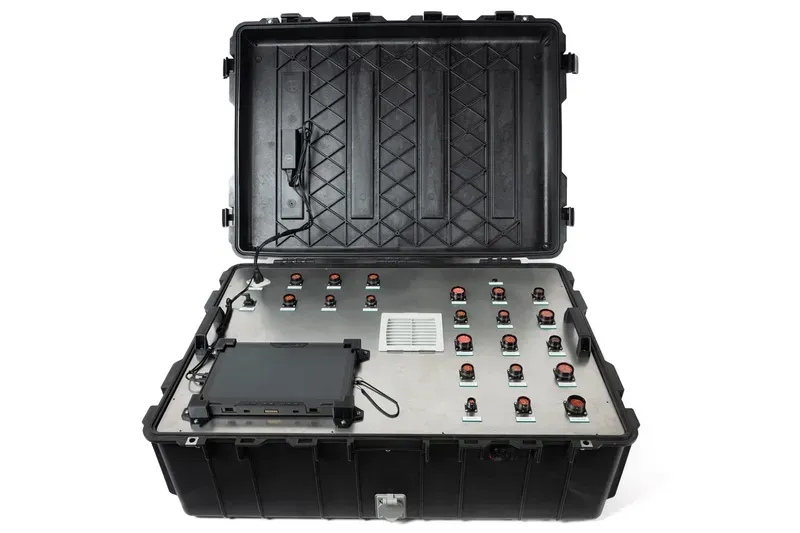
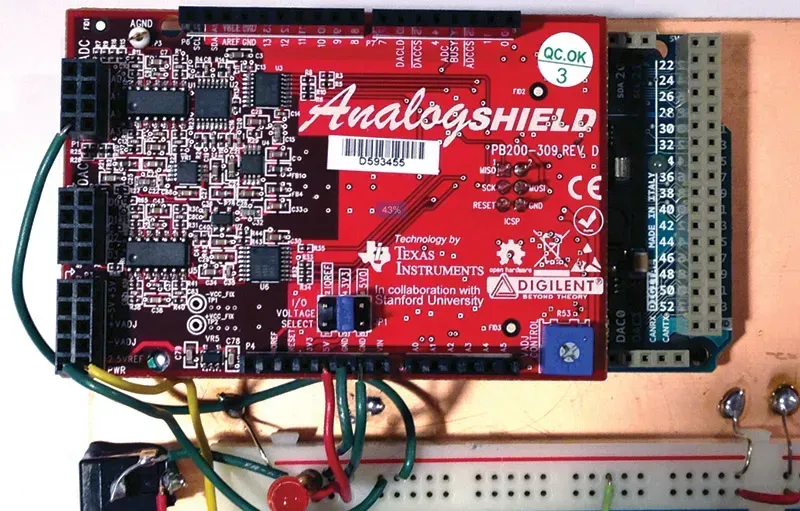
In today's data-driven world, the ability to efficiently acquire and process large volumes of information is paramount. From scientific research and industrial automation to financial analysis and healthcare monitoring, the demand for robust and reliable data acquisition systems is constantly growing. Power Big Data Acquisition Boards serve as the cornerstone of these systems, enabling the capture of real-world signals and their conversion into digital data for analysis and decision-making. But how can you ensure the design and manufacturing of these boards meet the stringent requirements of high-speed, high-volume data acquisition? Zero One Solution Limited offers comprehensive PCB solutions tailored to the unique challenges of power big data acquisition, ensuring performance, reliability, and scalability.
Introduction to Power Big Data Acquisition Boards
Power Big Data Acquisition Boards are specialized printed circuit board (PCB) solutions engineered to precisely capture, digitize, and transmit vast quantities of analog and digital signals from high-power environments. These boards are fundamental to modern data-intensive applications, serving as the critical interface between physical phenomena and digital analysis, thereby enabling real-time monitoring, advanced analytics, and informed decision-making across industries such as industrial automation, energy management, automotive, and aerospace. Their robust design and high-fidelity signal processing capabilities are paramount for extracting actionable insights from complex power systems.
What exactly is a Power Big Data Acquisition Board? A Power Big Data Acquisition Board is a sophisticated electronic circuit board designed to convert continuous analog signals (like voltage, current, temperature, or pressure) from high-power sources into discrete digital data. It also manages the acquisition of digital signals. These boards are optimized for high throughput, accuracy, and noise immunity, making them suitable for environments where large volumes of precise data from powerful systems are critical for operational analysis and control. They typically integrate high-performance Analog-to-Digital Converters (ADCs), digital signal processors (DSPs), and robust communication interfaces to handle the demands of big data acquisition.
Key Design Considerations for High-Performance Data Acquisition PCBs
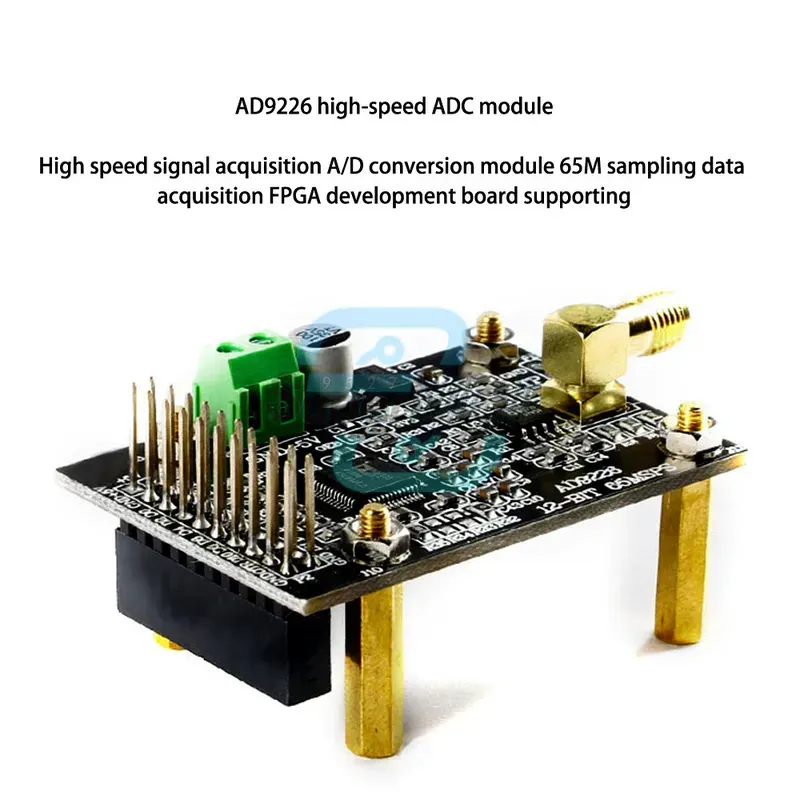
High-speed data acquisition PCB
Designing high-performance data acquisition (DAQ) PCBs for big data applications demands meticulous attention to several critical factors beyond basic circuit functionality. The integrity of the captured data, the longevity of the board, and the stability of the entire system hinge on optimizing signal integrity, managing thermal loads, and ensuring robust power distribution. These considerations are paramount for engineers seeking to develop reliable and accurate big data acquisition solutions, directly impacting the precision and consistency of collected information.
Signal Integrity Optimization Achieving pristine signal integrity is fundamental for accurate data acquisition. This involves minimizing reflections, crosstalk, and electromagnetic interference (EMI). Key techniques include impedance matching, controlled impedance routing, careful layer stack-up design, and strategic placement of components to reduce coupling. For instance, maintaining consistent trace widths and spacing, especially for high-speed differential pairs, is crucial to prevent signal degradation, ensuring that the acquired data accurately reflects the physical phenomena being measured.
Thermal Management Efficiency High-performance data acquisition boards often contain power-hungry components like ADCs, FPGAs, and high-speed processors, which generate significant heat. Inadequate thermal management can lead to component failure, reduced performance, and data inaccuracies due to temperature-induced drift. Effective strategies include integrating thermal vias, utilizing copper pours for heat spreading, selecting appropriate substrate materials with good thermal conductivity, and, for extreme cases, incorporating heat sinks or active cooling solutions. Simulating thermal performance during the design phase is vital to identify and mitigate hot spots proactively.
Robust Power Distribution Network (PDN) A stable and low-noise power supply is indispensable for the accurate operation of sensitive analog-to-digital converters (ADCs) and high-speed digital circuits. The Power Distribution Network (PDN) must deliver clean power with minimal voltage ripple and transient fluctuations. This is achieved through careful design of power planes and ground planes, strategic placement and sizing of decoupling capacitors near IC power pins, and proper selection of voltage regulators. A well-designed PDN minimizes noise propagation, which could otherwise corrupt sensitive analog signals and introduce errors into the acquired digital data.
Design Aspect
Key Challenge
Zero One Solution Approach
Signal Integrity
Minimizing reflections, crosstalk, and EMI at high speeds.
High-Speed Signal Routing Techniques for Data Acquisition
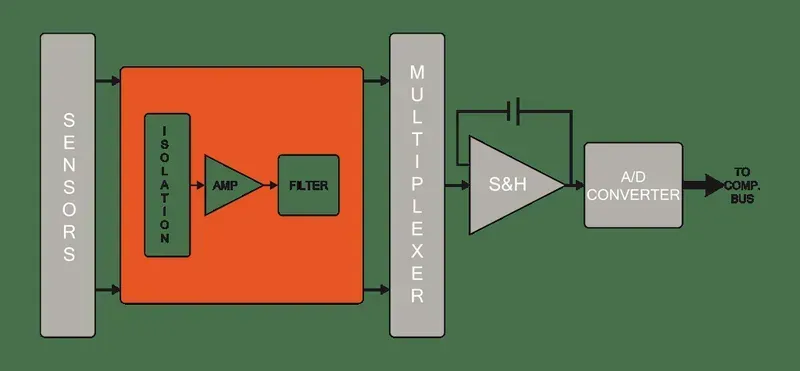
Signal routing for data acquisition
Achieving accurate and reliable data transmission in Power Big Data Acquisition Boards hinges critically on mastering high-speed signal routing. Improper routing can lead to signal integrity issues, data loss, and reduced system performance, especially at high frequencies where parasitic effects become significant. Effective routing strategies are paramount to minimize distortion, mitigate crosstalk, and ensure the fidelity of acquired data, thereby underpinning the overall success of the data acquisition system.
Why is controlled impedance crucial for high-speed signal routing? Controlled impedance ensures that the characteristic impedance of a transmission line matches the source and load impedances, preventing signal reflections that can cause waveform distortion and data errors. This is particularly vital in high-speed data acquisition to maintain signal integrity and maximize data transfer rates.
What are the best practices for minimizing crosstalk in data acquisition board routing? To minimize crosstalk, employ differential routing for sensitive signals, maintain adequate spacing between traces (3W rule or more), use ground planes for shielding, and keep trace lengths balanced. Additionally, avoid routing parallel traces over long distances and utilize blind/buried vias to isolate signal layers.
How does layer stack-up impact high-speed signal routing performance? An optimized layer stack-up provides clear reference planes for signals and power, reducing electromagnetic interference (EMI) and improving signal integrity. A common strategy involves placing signal layers adjacent to ground planes, which provides a controlled impedance environment and acts as a return path, minimizing inductance and noise.
What considerations are important for routing clock signals on a data acquisition board? Clock signals are critical for timing and synchronization, so they require careful routing to maintain signal integrity. Route clock signals as short as possible, use dedicated clock nets, and consider differential routing if frequencies are very high. Ensure proper termination to prevent reflections and minimize skew between related clock lines.
How can vias affect high-speed signal integrity and what mitigation strategies exist? Vias introduce impedance discontinuities, parasitic capacitance, and inductance, which can degrade signal integrity at high speeds. To mitigate this, minimize the number of vias, use back-drilling for unused via stubs, and select appropriate via types (e.g., blind or buried vias) to reduce their impact on signal paths.
Component Selection for Power and Precision in Data Acquisition
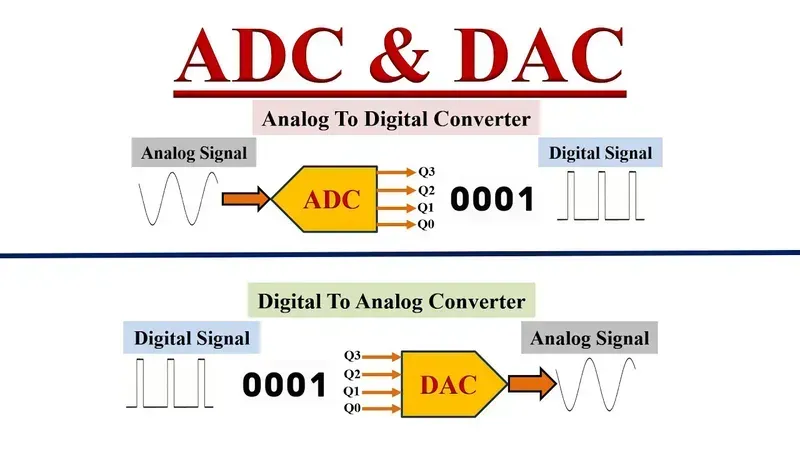
ADC DAC Components
The backbone of any robust Power Big Data Acquisition Board lies in the meticulous selection of its components, where power delivery meets signal precision. Achieving reliable data capture, especially in high-speed and high-resolution scenarios, demands more than just meeting specifications; it requires a deep understanding of component interactions and their impact on overall system performance. This section delves into the critical considerations for choosing high-quality Analog-to-Digital Converters (ADCs), Digital-to-Analog Converters (DACs), and essential signal conditioning circuits, ensuring both robust power handling and unparalleled data fidelity.
Why are high-quality ADCs and DACs crucial for data acquisition? High-quality ADCs (Analog-to-Digital Converters) and DACs (Digital-to-Analog Converters) are critical because they directly dictate the accuracy, resolution, and speed of the data conversion process. Inferior components can introduce noise, distortion, and non-linearity, leading to corrupted data and unreliable analysis in big data acquisition systems. Precision ADCs and DACs with high ENOB (Effective Number of Bits) and low INL/DNL (Integral Non-Linearity/Differential Non-Linearity) ensure that analog signals are digitized and reconstructed with the utmost fidelity, preserving the integrity of the collected data. For example, in a sensor network monitoring critical infrastructure, even minor inaccuracies from low-grade converters could lead to catastrophic misinterpretations.
What specific characteristics should be prioritized when selecting ADCs for power big data acquisition? When selecting ADCs for power big data acquisition, prioritize high resolution (e.g., 16-bit or 24-bit for high precision), high sampling rates (to capture transient events and wide bandwidths), low noise density (to prevent signal corruption), excellent linearity, and robust input protection. Crucially, consider their power consumption, as efficient ADCs minimize heat generation and extend battery life in portable or remote big data acquisition units. Specialized features like simultaneous sampling for multi-channel synchronization are also vital for complex power monitoring applications, ensuring all data points are time-aligned for accurate analysis.
How do signal conditioning circuits impact the overall accuracy of a data acquisition board? Signal conditioning circuits, including amplifiers, filters, and attenuators, are indispensable as they prepare the raw analog signals for optimal conversion by the ADC. They amplify weak signals to maximize the ADC's dynamic range, filter out unwanted noise and aliasing components, and attenuate high-voltage signals to protect the ADC's input. Without proper signal conditioning, even the most precise ADC would be overwhelmed by noise or operate outside its optimal input range, leading to significant errors and loss of crucial information. The quality of these circuits directly impacts the signal-to-noise ratio (SNR) and total harmonic distortion (THD) of the entire data acquisition chain, making them as critical as the converters themselves.
What are the considerations for power management components in a high-precision data acquisition system? For high-precision data acquisition, power management components must ensure an ultra-stable, low-noise power supply to all sensitive analog and digital circuits. This involves selecting low-dropout (LDO) regulators with high power supply rejection ratio (PSRR) to filter out ripple from switching power supplies, and choosing robust bypass capacitors with low equivalent series resistance (ESR) and equivalent series inductance (ESL) for effective high-frequency decoupling. Isolation components (e.g., digital isolators, isolated DC-DC converters) are also critical in industrial or high-voltage environments to protect sensitive circuitry and prevent ground loops, which can introduce significant noise and undermine data integrity.
Why is thermal stability important for component selection in data acquisition boards? Thermal stability is paramount for components in data acquisition boards because temperature variations can cause drift in component parameters, directly impacting measurement accuracy. For instance, the offset voltage and gain of op-amps, or the reference voltage of ADCs, can change with temperature, leading to errors. Selecting components with low temperature coefficients (tempco) and ensuring effective thermal management at the PCB level (as discussed in Section 5) helps maintain stable performance across varying operational temperatures, guaranteeing consistent and precise data capture over time. This is especially vital in applications where the environment might experience significant temperature fluctuations.
Thermal Management Strategies for Data Acquisition Boards
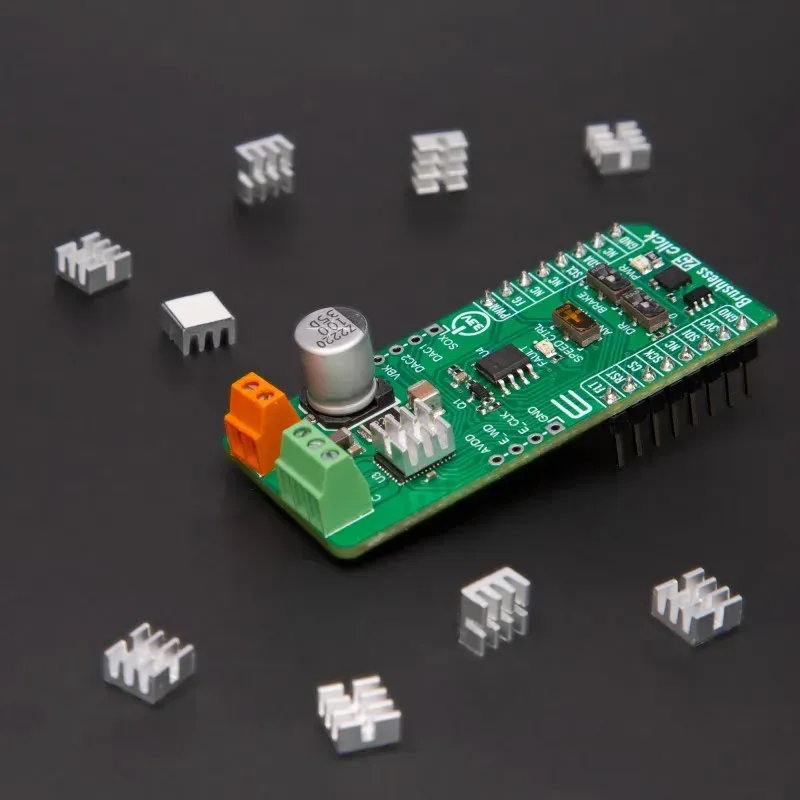
Data Acquisition Board Cooling
Effective thermal management is paramount for the long-term reliability and performance of Power Big Data Acquisition Boards, especially given the high-speed data processing and power dissipation inherent in such systems. Without robust heat dissipation strategies, components can suffer from accelerated aging, reduced accuracy, and even catastrophic failure, directly impacting the integrity and consistency of acquired big data. Therefore, a comprehensive approach to thermal design is not merely a design consideration but a critical enabler for sustained operational excellence and data fidelity.
Why is thermal management critical for data acquisition boards? Thermal management is critical because high operating temperatures can significantly degrade the performance and lifespan of sensitive components like Analog-to-Digital Converters (ADCs), Field-Programmable Gate Arrays (FPGAs), and power management ICs. Elevated temperatures lead to increased noise, drift in analog circuits, and reduced accuracy in data conversion, directly compromising the quality of the acquired big data. Furthermore, excessive heat accelerates material degradation, leading to premature component failure and reduced system reliability, crucial for continuous data streams in big data applications.
Strategy
Description
Advantages
Disadvantages
Conduction (Heat Sinks)
Attaching metal heat sinks to hot components to transfer heat away through direct contact to ambient air or a secondary cooling medium.
Passive, no moving parts, reliable, cost-effective for moderate heat.
Limited by ambient temperature, space-consuming, less effective for high power densities without airflow assistance.
How does Zero One Solution approach thermal design for high-density PCBs? Zero One Solution employs a multi-faceted approach to thermal design for high-density Power Big Data Acquisition Boards. This includes early-stage thermal simulation and analysis during PCB layout to identify hotspots, strategic component placement for optimized airflow, and the integration of thermal vias and copper pours for efficient heat spreading. We also leverage advanced materials with higher thermal conductivity and recommend appropriate cooling solutions, such as custom heat sinks or forced air cooling, based on the specific power dissipation and environmental conditions of the application to ensure optimal operational temperatures and sustained performance.
Strategy
Description
Advantages
Disadvantages
Convection (Forced Air)
Using fans or blowers to create directed airflow over components and heat sinks, enhancing heat transfer.
Highly effective for high heat loads, flexible in design.
What are the common challenges in thermal management for big data acquisition boards? Common challenges include high power dissipation from multiple high-speed ICs, miniaturization of boards leading to increased power density, managing localized hotspots, and maintaining precise temperature stability for analog components. Additionally, environmental factors such as confined enclosures or high ambient temperatures can exacerbate thermal issues, requiring more sophisticated and often active cooling solutions. Balancing performance, cost, and reliability while adhering to space constraints is a constant design challenge.
Strategy
Description
Advantages
Disadvantages
Thermal Vias and Copper Pours
Utilizing an array of vias to connect copper planes/pads, drawing heat from components down into internal copper layers for spreading.
Cost-effective, enhances heat spreading, integral to PCB design.
Limited by PCB layer count, requires careful layout to be effective, less impactful than active cooling for extreme heat.
Can passive cooling be sufficient for Power Big Data Acquisition Boards? For some Power Big Data Acquisition Boards with moderate power dissipation and adequate enclosure ventilation, passive cooling (e.g., heat sinks, thermal vias, natural convection) can be sufficient. However, for high-performance boards with densely packed, power-hungry components or demanding environmental conditions, passive cooling often falls short. In such cases, active cooling solutions like forced air (fans) or even liquid cooling become necessary to maintain optimal operating temperatures and prevent performance degradation or thermal runaway.
Power Integrity Analysis and Optimization for Data Acquisition Systems
Data Acquisition Power Integrity
Achieving impeccable power integrity (PI) is paramount for any high-performance data acquisition system, as it directly impacts the accuracy, reliability, and overall stability of captured data. Unstable or noisy power delivery can introduce significant errors, particularly in the sensitive analog front-end and high-speed digital sections of a Power Big Data Acquisition Board. Effective PI analysis and optimization involve a holistic approach, focusing on meticulous power plane design, strategic decoupling capacitor placement, and rigorous impedance control across the entire power delivery network (PDN). This meticulous attention ensures that every component receives clean, stable power, minimizing voltage ripple and ground bounce, which are critical for preserving signal integrity and achieving the highest data acquisition performance.
Why is power integrity crucial for Power Big Data Acquisition Board Solutions? Power integrity is crucial because it ensures a stable and clean power supply to all components, especially sensitive analog-to-digital converters (ADCs) and high-speed digital logic. Any noise or fluctuation in the power supply can directly translate into errors in the acquired data, leading to reduced accuracy, increased noise floor, and potential system instability. For big data acquisition, where vast amounts of precise data are processed, compromised power integrity can render the entire system unreliable.
What are the common challenges in optimizing power integrity for high-speed data acquisition boards? Key challenges include managing transient current demands from high-speed switching components, mitigating simultaneous switching noise (SSN), controlling power plane impedance across a wide frequency range, effectively placing and selecting decoupling capacitors, and ensuring proper thermal management that impacts power delivery. Miniaturization and increased component density further complicate maintaining optimal PI.
How does power plane design impact the power integrity of data acquisition systems? Power plane design is fundamental to PI. Well-designed power and ground planes act as low-impedance current return paths and effective charge reservoirs, distributing power uniformly and minimizing voltage drops. Conversely, poorly designed planes (e.g., fragmented planes, narrow traces, or excessive anti-pads) can lead to high impedance, localized voltage drops, and increased noise, severely degrading data acquisition performance.
What role do decoupling capacitors play in Power Big Data Acquisition Board optimization? Decoupling capacitors are vital for maintaining power integrity by providing localized charge reservoirs close to active components. They suppress high-frequency noise and mitigate transient current demands by supplying instantaneous current, thus preventing voltage sag and ground bounce. Proper selection of capacitance values, equivalent series inductance (ESL), and equivalent series resistance (ESR), along with optimal placement, is critical for effective decoupling.
What tools and techniques are used for power integrity analysis? Power integrity analysis typically involves a combination of simulation and measurement techniques. Simulation tools like SPICE, S-parameter extraction, and electromagnetic (EM) field solvers are used to model the Power Delivery Network (PDN) and predict voltage drops, current densities, and impedance profiles. Measurement techniques include network analyzers for impedance measurement, oscilloscopes for ripple and noise assessment, and thermal cameras for hotspot identification.
Zero One Solution's Expertise in Data Acquisition PCB Solutions
Data Acquisition Board Prototype
Zero One Solution Limited stands at the forefront of providing comprehensive PCB solutions for Power Big Data Acquisition Boards, leveraging over a decade of industry leadership since our founding in 2011. Our deep-rooted expertise, combined with a strategic global presence from Shenzhen to Dubai, enables us to deliver unparalleled rapid prototyping, manufacturing, and assembly services that accelerate your product development cycle and bring cutting-edge data acquisition solutions to market with remarkable efficiency. We understand the critical demands of high-performance data acquisition, offering bespoke services tailored to meet the stringent requirements of signal integrity, power management, and thermal dissipation inherent in these complex systems.
Rapid Prototyping for Data Acquisition Boards We specialize in expedited prototype manufacturing, significantly reducing time-to-market for your data acquisition board designs. Our agile processes and advanced equipment ensure quick turnarounds without compromising on quality or performance, enabling rapid iteration and validation of your innovations. This rapid prototyping capability is crucial for complex Power Big Data Acquisition Boards, where design adjustments often lead to significant performance improvements and cost savings in later stages. Our approach minimizes risks associated with product development by allowing for early detection and rectification of potential design flaws, ensuring that the final product is robust and reliable from the outset. We also offer DFM (Design for Manufacturability) feedback during the prototyping phase to optimize your design for efficient mass production.
Service Area
Key Capability
Benefit for Data Acquisition Boards
PCB Design Review
Signal integrity analysis, power integrity simulation, thermal modeling
Ensures optimal performance and reliability from the initial design phase, preventing costly redesigns and enhancing data accuracy. Reduces noise and crosstalk, critical for high-resolution data capture.
Precision Manufacturing for High-Performance Boards Our state-of-the-art manufacturing facilities are equipped to produce high-density, multi-layer PCBs essential for advanced data acquisition applications. We adhere to rigorous quality control standards, ensuring the precise fabrication of boards that can withstand demanding operational environments and deliver consistent, accurate data. Our manufacturing processes are optimized for components used in Power Big Data Acquisition Boards, including high-speed ADCs and DACs, ensuring their optimal performance. We employ advanced techniques such as controlled impedance routing, blind and buried vias, and fine-pitch component placement to meet the exacting specifications of your designs, guaranteeing signal integrity and minimizing data loss.
Service Area
Key Capability
Benefit for Data Acquisition Boards
Advanced PCB Manufacturing
High-layer count PCBs, fine line/space, impedance control, material selection
Provides the necessary foundation for complex high-speed designs, ensuring minimal signal loss and interference, critical for precision data acquisition. Enables integration of dense componentry for compact solutions.
Expert Assembly for Complex Data Acquisition Systems From high-speed surface mount technology (SMT) to intricate through-hole assembly, our experienced technicians handle the complexities of integrating sensitive components onto your data acquisition boards. We ensure robust and reliable connections, critical for maintaining signal integrity and long-term operational stability. Our assembly services are complemented by comprehensive testing, including X-ray inspection and AOI (Automated Optical Inspection), to verify every connection and component placement, guaranteeing the integrity and functionality of the assembled board. This meticulous attention to detail is paramount for Power Big Data Acquisition Boards, where even minor assembly imperfections can lead to significant performance degradation.
Ensures accurate component placement and robust connections, vital for the stable operation and data integrity of high-frequency and sensitive data acquisition systems. Accelerates time to market with fully tested units.
Case Studies: Successful Data Acquisition Board Implementations
Successful Power Big Data Acquisition Board implementations are a testament to meticulous engineering and deep domain expertise. At Zero One Solution Limited, we pride ourselves on transforming complex data acquisition challenges into robust, high-performance PCB solutions, enabling our clients to achieve unparalleled accuracy and efficiency in their data-intensive applications. Our comprehensive one-stop services, from rapid prototyping to manufacturing and assembly, ensure that innovative concepts are brought to market swiftly and reliably.
High-Channel-Count Industrial Sensor Network A client required a data acquisition board capable of simultaneously monitoring thousands of sensors across a large industrial facility. Zero One Solution designed and manufactured a multi-layer PCB featuring advanced signal conditioning, high-density connectors, and optimized power delivery, ensuring precise data synchronization and minimal crosstalk. The solution enabled real-time anomaly detection and predictive maintenance, leading to a significant reduction in operational downtime and maintenance costs, demonstrating a 30% improvement in data throughput compared to their previous system.
Medical Imaging Data Capture System For a leading medical device manufacturer, we developed a high-resolution data acquisition board critical for a new generation of diagnostic imaging equipment. This required extremely low noise, high linearity, and precise analog-to-digital conversion. Our engineers meticulously optimized impedance matching, employed advanced EMI shielding techniques, and integrated specialized low-noise power regulation, resulting in a board that consistently delivered data with sub-nanovolt precision, crucial for accurate medical diagnoses. This collaboration accelerated their product's time-to-market by 25%.
Renewable Energy Grid Monitoring A project focused on optimizing smart grid efficiency demanded a rugged data acquisition board capable of operating in harsh outdoor environments while accurately capturing voltage, current, and frequency data from various renewable energy sources. Zero One Solution developed a robust board with enhanced thermal management, conformal coating for environmental protection, and integrated isolation circuits. The resulting solution provided reliable data under extreme temperature fluctuations and humidity, contributing to a 15% increase in grid stability and energy management efficiency for the client.
Automotive Telemetry System We assisted an automotive R&D firm in designing a compact, high-speed data acquisition board for in-vehicle telemetry, capturing critical parameters like engine performance, acceleration, and GPS data. The design prioritized miniaturization, vibration resistance, and high-speed data transfer. By leveraging advanced flex-rigid PCB technology and optimized component placement, we delivered a solution that withstood harsh automotive conditions and enabled real-time data streaming for performance analysis, reducing testing cycles by 20%.
Future Trends in Power Big Data Acquisition Board Technology
The landscape of Power Big Data Acquisition Board technology is rapidly evolving, driven by the insatiable demand for higher data rates, increased precision, and enhanced processing capabilities. Key innovations are focusing on integrating advanced sensor technologies, leveraging AI/ML at the edge, and optimizing for more compact, energy-efficient designs to meet the rigorous demands of next-generation big data applications across various industries.
How will Artificial Intelligence and Machine Learning impact future data acquisition boards? AI and ML are set to transform data acquisition boards by enabling intelligent data pre-processing at the edge. This includes real-time anomaly detection, predictive maintenance, and optimized data compression, reducing the burden on central processing units and network bandwidth. Future boards will likely incorporate dedicated AI accelerators for localized inferencing, making systems more autonomous and responsive, particularly in critical infrastructure monitoring and industrial IoT applications. This shift moves from mere data collection to intelligent data understanding at the source, offering actionable insights much faster than traditional methods.
What role will 5G and beyond play in big data acquisition? 5G and future wireless technologies will be pivotal for power big data acquisition by providing unprecedented bandwidth and ultra-low latency connectivity. This enables real-time transmission of massive datasets from distributed sensors to centralized or cloud-based analytics platforms. For applications like smart grids, autonomous vehicles, and remote industrial control, reliable high-speed wireless communication is crucial for timely data processing and decision-making, facilitating the deployment of acquisition boards in previously inaccessible or highly mobile environments.
How are miniaturization and power efficiency being addressed in future designs? Future big data acquisition boards will prioritize miniaturization and power efficiency through the adoption of advanced semiconductor processes (e.g., smaller node sizes for ASICs and FPGAs), highly integrated System-on-Chip (SoC) solutions, and sophisticated power management ICs. Techniques like adaptive voltage scaling and dynamic power management will become standard. The goal is to enable deployment in space-constrained environments and extend battery life for portable or remote monitoring applications, while simultaneously increasing processing density without compromising performance.
What advancements are expected in sensor integration and multi-modal data acquisition? Future acquisition boards will increasingly feature tight integration of diverse sensor types, allowing for multi-modal data acquisition (e.g., simultaneous capture of electrical, thermal, acoustic, and vibration data). This requires advanced mixed-signal front-ends and sophisticated synchronization mechanisms to ensure data coherence. The trend is towards comprehensive environmental or system monitoring from a single, highly integrated platform, providing a more complete picture for complex analytics and diagnostic purposes, critical for applications in structural health monitoring and industrial process control.
How will cybersecurity and data privacy be handled in next-gen acquisition systems? Cybersecurity and data privacy will be paramount in future big data acquisition systems. This involves integrating hardware-level security features such as secure boot, hardware root-of-trust, and encrypted data paths directly onto the acquisition board. Implementing robust authentication protocols, access controls, and data anonymization techniques at the data source will be crucial. The focus will be on ensuring data integrity, confidentiality, and availability from the point of acquisition through transmission and storage, complying with evolving regulatory frameworks like GDPR and industry-specific security standards.
In conclusion, Zero One Solution Limited provides unparalleled expertise in designing and manufacturing Power Big Data Acquisition Boards. Our comprehensive PCB solutions ensure high-speed, reliable data acquisition, enabling you to unlock the full potential of your data-driven applications. Partner with us to accelerate your product development and gain a competitive edge in the market. Contact Zero One Solution today to discuss your specific requirements and discover how our PCB solutions can empower your big data initiatives. Share this article to help others discover the power of effective data acquisition!