
The automotive landscape is undergoing a massive transformation as electrification becomes the industry standard. As we move away from the traditional, mechanical-heavy architectures of the past, the HVAC system—once a simple cabin comfort feature—has evolved into a mission-critical component of vehicle thermal management. This transition demands smarter, more efficient electronics that can handle the complex thermal needs of modern EVs.
The Evolution of HVAC: From Mechanical Relays to Smart ECUs
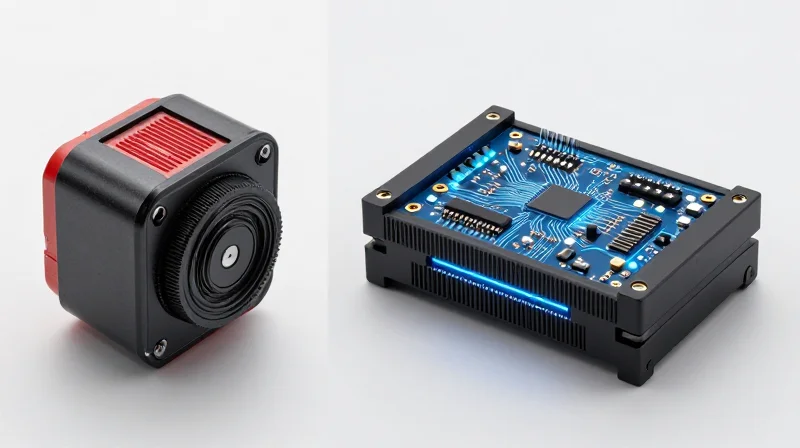
The Legacy of Mechanical Relay Architecture
For decades, automotive climate control relied on rudimentary mechanical relays to actuate blowers, compressors, and blend doors. These systems operated primarily on binary logic—on or off—lacking the capacity for granular modulation. Drivers adjusted physical knobs or sliders, which mechanically linked to cables or simple electrical circuits, resulting in high latency, significant mechanical wear, and inefficient power draw. The lack of feedback loops meant that the system could not dynamically respond to changing external temperatures, leading to frequent cabin temperature fluctuations.
The Rise of Intelligent Control Units (ECUs)
Modern HVAC systems represent a fundamental shift toward software-defined thermal management. By integrating advanced Electronic Control Units (ECUs), today's vehicles leverage sensor fusion—processing data from humidity, sun-load, and cabin temperature sensors—to modulate components in real-time. This transition from binary state switching to Pulse Width Modulation (PWM) allows for near-infinite control over airflow volume and thermal output, significantly reducing parasitic loss on the drivetrain while enhancing occupant comfort.
| Feature | Legacy Relay Systems | Modern Smart ECUs |
|---|---|---|
| Switching Logic | Binary (On/Off) | Modulated (PWM/Variable) |
| Efficiency | Low (Frequent Cycling) | High (Precision Control) |
| Responsiveness | Slow/Mechanical | Instant/Electronic |
| Sensor Integration | Minimal or None | Multi-parameter Fusion |
Frequently Asked Questions
- Why is PWM preferred over mechanical relay switching?
PWM allows for variable power delivery, preventing the harsh start-stop cycle that shortens component lifespan and wastes energy. - How does sensor fusion improve HVAC performance?
By combining external humidity data with cabin temperature inputs, the ECU can adjust airflow to prevent windshield fogging before it occurs, a task impossible for legacy relay systems. - What is the primary benefit for EV range?
Intelligent control reduces the electrical load on the high-voltage battery by only drawing the exact amount of power required to maintain temperature, directly extending vehicle range.
The Critical Role of Advanced PCB Materials in EV Climate Control
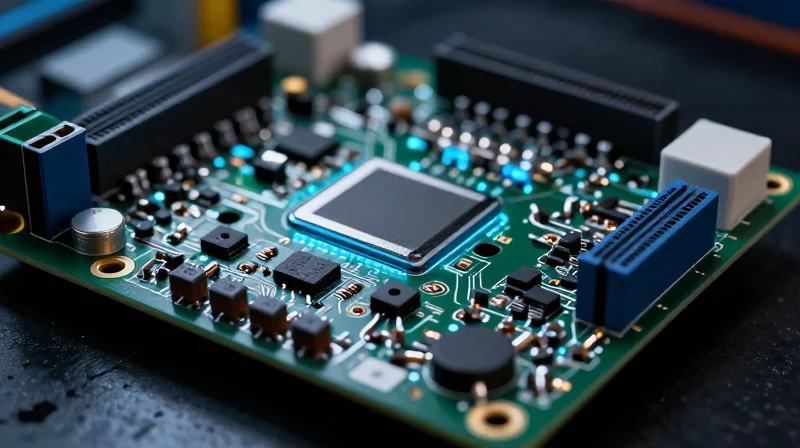
The Thermal Challenge of EV Climate Control
Electric vehicle HVAC systems require higher power efficiency than traditional combustion engines, as thermal management directly impacts battery range. Modern climate control modules must process high currents to drive compressors and heating elements, often within constrained physical spaces. This necessitates advanced PCB materials capable of superior heat dissipation and electrical stability under continuous thermal stress.
Material Selection for High-Power Reliability
Standard FR-4 substrates often fall short in high-current automotive applications due to their thermal conductivity limits. Engineers are transitioning to specialized materials to ensure board longevity and system performance.
| Material Class | Key Property | EV Application |
|---|---|---|
| IMS (Insulated Metal Substrate) | High Thermal Conductivity | Power Inverters/Heating Drivers |
| Ceramic Substrates | High Temp Stability | High-Voltage Climate Modules |
| High-Tg FR-4 | Thermal Resistance | General Control Logic |
Frequently Asked Questions
- Why is thermal conductivity critical for EV HVAC boards?
Efficient heat dissipation prevents premature aging of semiconductor components, ensuring the reliability of cabin comfort systems despite the heat generated by rapid switching currents. - How do these materials support miniaturization?
Advanced thermal materials allow for higher power density, enabling designers to shrink control boards without exceeding critical operating temperatures. - Does switching frequency impact material choice?
Yes; higher switching frequencies in modern smart ECUs introduce dielectric loss and additional heating, requiring materials with low dissipation factors to maintain signal integrity and efficiency.
Integrating Smart Sensors for Predictive Comfort
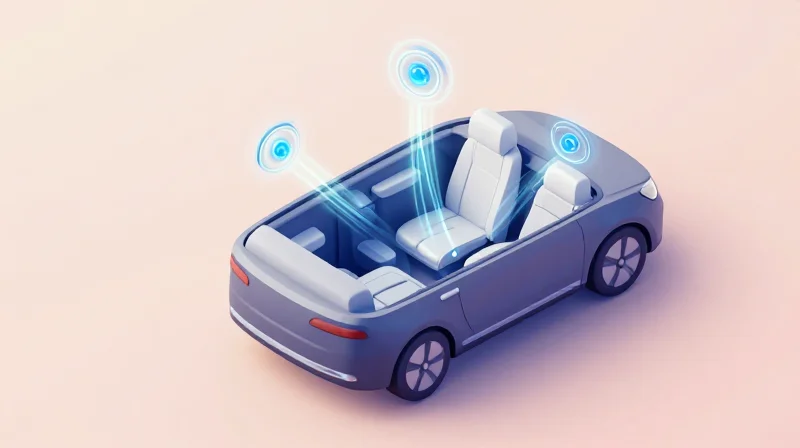
The Shift Toward Predictive Climate Intelligence
Traditional HVAC systems operate on static setpoints, which often result in energy inefficiency and thermal discomfort as cabin conditions fluctuate. By integrating a network of environmental sensors—including infrared body temperature detectors, solar intensity monitors, and humidity transducers—modern smart control boards can predict thermal needs before occupants feel discomfort. This proactive approach relies on sophisticated edge processing, where data from cabin occupancy and external ambient conditions are synthesized to adjust airflow and thermal output in real-time.
Sensor Fusion and Power Management
To minimize power drain, particularly in battery-electric vehicles, control units employ sensor fusion techniques. Rather than running all climate components at maximum capacity, the system identifies localized thermal zones. By combining occupancy data with precise heat-map readings, the controller directs airflow exclusively toward passenger extremities, reducing the overall workload on the heat pump or HVAC compressor.
| Sensor Type | HVAC Application | Efficiency Impact |
|---|---|---|
| Infrared Occupancy | Zonal Cooling | High: Prevents cooling empty seats |
| Humidity Transducers | Defogging Control | Medium: Optimized compressor cycling |
| Solar Load Sensors | Predictive Pre-conditioning | High: Reduces cabin heat gain |
Key Considerations for Smart Integration
- How do sensors impact battery range?
By shifting to demand-based, localized cooling instead of ambient cabin-wide cooling, predictive systems can reduce HVAC power consumption by up to 20%. - What is the role of the ECU in sensor integration?
The ECU serves as the central processing hub, filtering noise from environmental sensors to execute complex control logic without introducing significant latency. - Is real-time data processing feasible for current hardware?
Yes, modern automotive-grade microcontrollers are now specifically architected with hardware-accelerated sensor fusion blocks to handle high-frequency climate data streams.
Thermal Efficiency: Why HVAC is the New Range Extender
The HVAC-Range Nexus
In internal combustion engine vehicles, cabin heating is essentially a waste byproduct of the engine's inefficiency. In electric vehicles, however, the HVAC system must actively draw from the high-voltage battery pack. As manufacturers strive for longer ranges and smaller, more efficient battery packs, the HVAC system has evolved from a simple comfort feature into a critical component of the vehicle's total energy management architecture.
Technology Efficiency Comparison
| Technology | Energy Consumption | Impact on Range | Best Use Case |
|---|---|---|---|
| PTC Heating | High | Significant Reduction | Low-cost entry-level EVs |
| Heat Pump | Low | Minimal Reduction | Cold-climate performance |
| Radiant Heating | Very Low | Negligible | Luxury/Personalized zones |
Intelligent Energy Management Strategies
The transition to smart control boards allows for granular control over climate elements. By integrating heat pump technology with predictive software, vehicles can now prioritize heating surfaces that touch the occupants—such as seats and steering wheels—before attempting to condition the entire cabin volume. This targeted approach preserves battery energy while maintaining the same perceived level of comfort.
- How does a heat pump benefit EV range?
A heat pump moves thermal energy rather than generating it via resistance, allowing the system to consume up to 60% less energy than traditional Positive Temperature Coefficient (PTC) heaters in moderate conditions. - Why is zonal climate control essential?
By utilizing smart sensors to detect occupancy, the HVAC system can disable airflow to empty zones, significantly reducing the fan power and thermal load required for cabin comfort. - What is the relationship between HVAC efficiency and battery life?
Efficient climate control reduces the frequency and depth of battery discharge cycles, mitigating thermal stress and ensuring the battery pack operates within its optimal temperature window for longer lifespan.
Navigating Challenges: Heat Dissipation and Electromagnetic Compatibility
The miniaturization of HVAC control electronics within increasingly compact dashboard architectures presents significant engineering hurdles. Specifically, high-density power electronics required to drive efficient blowers and heat pumps generate substantial heat in confined volumes, while the proliferation of wireless communication interfaces elevates the risk of electromagnetic interference (EMI) that can compromise sensor precision and vehicle network integrity.
Thermal Management Strategies for High-Density Electronics
Effective heat dissipation in modern HVAC controllers requires a multi-layered approach. Beyond traditional heat sinks, engineers are increasingly turning to advanced thermal interface materials (TIMs) and direct-to-chassis cooling pathways. By utilizing the metal housing of the HVAC unit as a primary heat sink, designers can achieve superior thermal resistance profiles, preventing performance throttling during extreme operating temperatures.
| Thermal Management Strategy | Primary Benefit | Implementation Complexity |
|---|---|---|
| Ceramic Substrates | Superior Thermal Conductivity | High |
| Phase Change Materials | Localized Heat Spreading | Medium |
| Thermal Vias | Board-level Heat Transfer | Low |
Ensuring Electromagnetic Compatibility (EMC)
With the integration of IoT sensors and high-frequency communication protocols, EMC has become a critical design pillar. Uncontrolled switching noise from power stages can easily degrade the signal-to-noise ratio of cabin sensors, leading to erratic climate adjustments. Implementing robust PCB layout strategies—such as dedicated shielding layers, differential signal routing, and optimized component placement—is vital to maintaining compliance with stringent automotive standards.
Frequently Asked Questions
- How does EMI specifically impact HVAC performance?
EMI can induce noise into high-impedance sensor lines, leading to inaccurate temperature readings and false adjustments in the cabin climate, which disrupts the user experience. - What is the role of PCB stack-up in heat management?
Optimizing the layer stack-up allows for the strategic placement of ground and power planes that function as heat spreaders, effectively distributing thermal energy away from critical sensitive components. - Why is shielding more important now than in legacy systems?
Modern HVAC controllers now incorporate high-speed microprocessors and sensitive wireless transceivers in close proximity to high-power motor drivers, creating a dense environment prone to electromagnetic cross-talk.
Software-Defined Climate Systems: The Future of Cabin Comfort

The Shift to Software-Defined Climate Architectures
Transitioning from traditional hardware-locked controllers to software-defined climate systems allows OEMs to treat HVAC performance as a dynamic asset. By decoupling thermal control logic from static hardware cycles, engineers can deploy sophisticated machine learning models via Over-the-Air (OTA) updates to refine thermal comfort algorithms in real-time based on actual fleet-wide data and user feedback.
Continuous Optimization through OTA
Firmware-based climate control enables rapid iteration of heating and cooling strategies without the need for physical vehicle recalls. Modern control boards now support modular software architectures that allow for the remote adjustment of compressor load, fan curves, and vent distribution. This ensures that the vehicle remains optimized throughout its lifecycle, adapting to changing environmental conditions or even mitigating premature component degradation through proactive control adjustments.
| Feature | Legacy HVAC Systems | Software-Defined HVAC |
|---|---|---|
| Optimization | Static, factory-defined | Dynamic, cloud-updated |
| Feature Deployment | Hardware iteration only | OTA software patches |
| Adaptability | Limited to sensor input | Learns user patterns/AI |
Frequently Asked Questions
- How do OTA updates improve battery range?
Software updates can refine the PID control loops governing heat pumps and resistive heaters, reducing unnecessary power consumption by modulating thermal output more precisely based on vehicle thermal mass. - Can software changes impact HVAC noise levels?
Yes, firmware updates can adjust fan motor PWM frequencies and compressor ramp-up speeds to minimize acoustic noise while maintaining desired cabin temperature targets. - Is personal climate preference data stored in the cloud?
Most advanced systems use localized processing for privacy, while anonymized, aggregated thermal behavior data is sent to the cloud to improve global thermal comfort models for all vehicles in the fleet.
Regulatory Standards and Safety Compliance in Automotive Electronics
ISO 26262 and Functional Safety in HVAC Design
As automotive HVAC systems evolve from simple mechanical loops to sophisticated, software-controlled electronic architectures, they fall under the scrutiny of ISO 26262, the international standard for functional safety in road vehicles. Designers must classify HVAC components—specifically those affecting vehicle thermal management—according to Automotive Safety Integrity Levels (ASIL). Even though cabin climate control is often viewed as a comfort feature, its integration into high-voltage powertrain cooling and defogging operations necessitates compliance to prevent hazardous failures that could impact driver visibility or battery thermal stability.
Key Regulatory Compliance Frameworks
| Standard | Primary Focus | Application to HVAC |
|---|---|---|
| ISO 26262 | Functional Safety | Assessing risks in electronic climate control and cooling loops. |
| ISO 11452 | Electromagnetic Compatibility (EMC) | Ensuring HVAC controllers do not interfere with ADAS or telematics. |
| UN R155/156 | Cybersecurity and Software Updates | Protecting OTA climate control updates from unauthorized access. |
Frequently Asked Questions
- Why is an HVAC system subject to ISO 26262?
While basic comfort functions are not safety-critical, modern HVAC systems often manage high-voltage battery thermal regulation and windshield defogging, both of which are critical to vehicle safety and operation. - How does electromagnetic compatibility (EMC) affect HVAC design?
HVAC controllers must be shielded to prevent high-frequency noise from impacting sensitive vehicle sensors and communication buses, ensuring stable operation within a dense electromagnetic environment. - Does the move to OTA updates change compliance requirements?
Yes; software-defined HVAC systems must comply with UNECE R156, requiring manufacturers to demonstrate a secure, verified, and safe process for deploying remote firmware updates to cabin climate modules.
As automotive climate control continues to evolve, the integration of advanced PCBs and smart sensor networks remains at the heart of the next generation of comfort technology. Transitioning to these sophisticated systems is not just about luxury, but about maximizing efficiency in an electric-first world. Are you ready to upgrade your design standards? Contact our engineering team today to learn how our hardware solutions can drive the future of your automotive HVAC projects.
