
In the fast-paced world of medical device engineering, the heartbeat of an infusion pump is its printed circuit board (PCB). As healthcare facilities pivot toward fully integrated, IoT-ready environments, the limitations of traditional, siloed control architectures have become glaring. This guide examines the tectonic shift from legacy control systems to advanced AI-integrated architectures, defining the standards for the next generation of patient-centric, high-security infusion technology.
The Evolution of Infusion Pump Architecture
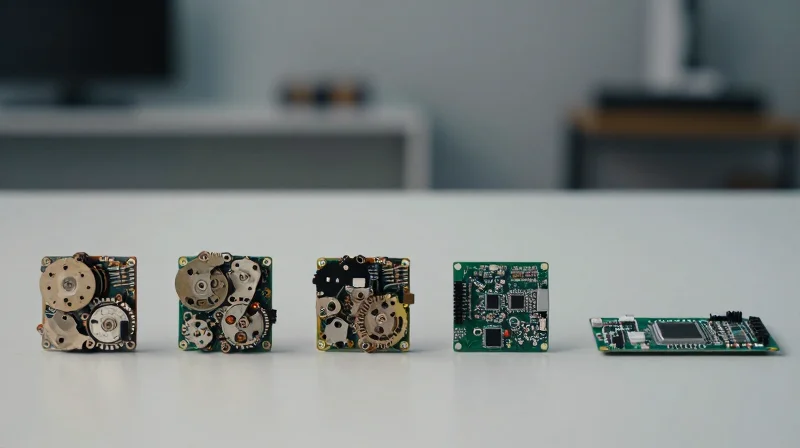
From Electromechanical Roots to Software-Defined Logic
The foundational architecture of infusion pumps began with strictly electromechanical control, relying on discrete analog circuits and simple stepper motor drivers to maintain flow rate. These legacy systems lacked advanced processing power, making them incapable of sophisticated dosing calculations or networked monitoring. As the industry transitioned toward smarter designs, architecture shifted to integrate high-speed microprocessors and complex software stacks. This shift enabled the implementation of Drug Error Reduction Systems (DERS), wireless connectivity, and real-time telemetry, fundamentally changing the pump from a standalone infusion tool into a pivotal node within the hospital's digital infrastructure.
Comparative Analysis: Legacy versus Next-Gen Architectures
| Feature | Legacy Architecture | Next-Gen Smart Design |
|---|---|---|
| Control Logic | Analog/Hardwired | Software-Defined/SoC |
| Connectivity | None/Serial Port | WLAN/Bluetooth/Cloud-Integrated |
| Safety Features | Manual Mechanical Alarms | Automated DERS & Interlocks |
| Maintenance | Reactive/Hardware-Focused | Predictive/Remote Diagnostics |
Key Considerations for Modern Design
- How does software modularity impact clinical safety?
Modern smart designs utilize modular software architectures, allowing developers to isolate safety-critical infusion logic from communication stacks, thereby reducing the risk of catastrophic system failures during firmware updates. - What is the role of the System-on-Chip (SoC) in current pumps?
The transition to SoC architectures enables the integration of multiple processors within a single chip, facilitating high-resolution graphical user interfaces, advanced battery management, and encrypted data transmission without increasing the device footprint. - Why is cybersecurity now a fundamental architectural pillar?
As infusion pumps connect to clinical networks, the architecture must now include hardware-level security, such as Trusted Execution Environments (TEE) and secure boot mechanisms, to protect patient data and prevent unauthorized device access.
Limitations of Legacy PCB Designs in Modern Healthcare
The Bottlenecks of Yesterday's Hardware
Legacy infusion pump designs were primarily built around localized control circuits, prioritizing mechanical reliability and simple motor regulation over digital intelligence. In a modern healthcare environment, these architectures represent a major bottleneck. Their inherent constraints—such as limited bus speeds, insufficient onboard memory for advanced encryption, and a lack of integrated wireless modules—prevent them from participating in the real-time data flows necessary for clinical decision support systems.
| Constraint | Legacy Limitation | Modern Requirement |
|---|---|---|
| Connectivity | Hardwired/Proprietary | Cloud-Native/Interoperable |
| Processing | 8-bit/16-bit Microcontrollers | ARM-based SoC/Multi-core |
| Security | Minimal Hardware Security | Trusted Execution Environments |
| Data Handling | Local Logging | Real-time Telemetry |
Key Limitations of Legacy Architectures
- Interoperability Silos
Legacy PCBs rely on aging communication protocols that struggle to integrate with modern Electronic Health Records (EHR) systems and interoperability standards like HL7 FHIR. - Processing Latency
Static architectures lack the high-performance computing capabilities required to run real-time drug library updates, clinical algorithms, and advanced sensor monitoring without compromising core infusion timing. - Scalability Issues
The fixed-function nature of older PCB designs prevents the addition of modular hardware features, such as advanced IoT sensor arrays or edge-computing capabilities, without a total system redesign. - Cybersecurity Vulnerabilities
Older chipsets often lack the cryptographic hardware acceleration needed for modern, multi-layered security protocols, leaving legacy infusion devices vulnerable to unauthorized access and network-based threats.
The transition toward 'smart' infusion pumps requires a move away from monolithic, static PCB designs toward modular, high-bandwidth architectures. Manufacturers that cling to legacy layouts risk obsolescence as the healthcare sector pivots toward full integration and data-driven patient safety outcomes.
The Role of AI Integration in Predictive Infusion

Embedded Intelligence: The Shift to Predictive Infusion
The integration of AI directly onto the infusion pump PCB represents a paradigm shift from simple motor control to intelligent patient care. By leveraging edge computing on specialized chipsets, these devices can process sensor telemetry—such as pressure fluctuations and bubble detection—in milliseconds. This enables the transition from standard alarm-based systems to predictive models that adjust flow rates dynamically to compensate for line occlusions or physiological changes before they trigger a critical failure.
Core AI Functions in Smart Infusion Architectures
| Feature | Legacy Capability | Next-Gen AI Capability |
|---|---|---|
| Error Detection | Post-event hard alarm | Pre-emptive anomaly prediction |
| Flow Regulation | Constant manual set-point | Dynamic adaptive adjustment |
| Maintenance | Schedule-based checks | Condition-based prognostics |
Implementation Benefits
Integrating neural processing units (NPUs) onto modern PCBs allows for decentralized intelligence. Rather than relying on a centralized hospital server, the pump autonomously interprets complex waveforms. This reduces latency, ensures continuous operation during network outages, and provides high-fidelity data logging for post-administration analysis.
Frequently Asked Questions
- How does AI detect occlusions faster than traditional sensors?
AI models analyze micro-fluctuations in pressure signals that traditional threshold-based logic typically ignores, identifying trends indicative of incipient blockages. - Does on-board AI consume too much power for battery-operated pumps?
Modern low-power AI accelerators (ASICs) are designed to minimize wattage, allowing for complex predictive modeling without significantly impacting the battery lifecycle. - Is cloud connectivity required for these AI features?
No; the core intelligence resides at the edge on the PCB. Cloud connectivity is primarily used for model updates and fleet-wide data aggregation rather than real-time infusion control.
IoT Connectivity and Security Standards

Establishing a Secure Connectivity Foundation
Transitioning infusion devices into the IoT ecosystem necessitates moving away from isolated, air-gapped systems. Modern smart pumps must support encrypted wireless communication protocols, such as Bluetooth Low Energy (BLE) 5.2 or secure Wi-Fi 6, which provide better power management and improved packet integrity. However, the connectivity required for real-time fleet management and data analytics expands the attack surface significantly, demanding hardware-level defenses embedded directly into the device's PCB design.
Hardware-Rooted Security Architecture
To secure next-gen infusion platforms, design engineers are moving beyond software-based patches to incorporate Hardware Security Modules (HSMs) and Trusted Execution Environments (TEEs) directly on the board. These components act as a hardware root of trust, ensuring that only authenticated, signed firmware can be executed. By isolating cryptographic keys from the main processor, the device remains resilient even if the primary communication stack is compromised.
| Feature | Legacy PCB Design | Next-Gen Smart Architecture |
|---|---|---|
| Connectivity | Hard-wired or proprietary serial | Secure BLE, Wi-Fi 6, 5G |
| Security Base | Software perimeter defense | Hardware-Root of Trust (HSM/TEE) |
| Firmware Updates | Manual physical interface | Over-the-Air (OTA) secure signing |
| Data Integrity | Basic parity checking | End-to-End AES-256 encryption |
Security Standards and FAQ
- How does hardware encryption improve infusion safety?
Hardware-level encryption prevents man-in-the-middle attacks on the infusion flow rate data being sent to hospital servers, ensuring that the instructions received by the pump remain untampered. - What role does Secure Boot play in medical hardware?
Secure Boot ensures that every piece of software loaded during the power-on sequence is digitally verified, preventing unauthorized or malicious code from controlling the motor drivers. - Are there specific standards for IoT medical devices?
Engineers must adhere to IEC 80001 for risk management of medical IT networks and NIST frameworks for IoT device cybersecurity to ensure compliance and patient safety.
Power Efficiency and Thermal Management in Compact Designs
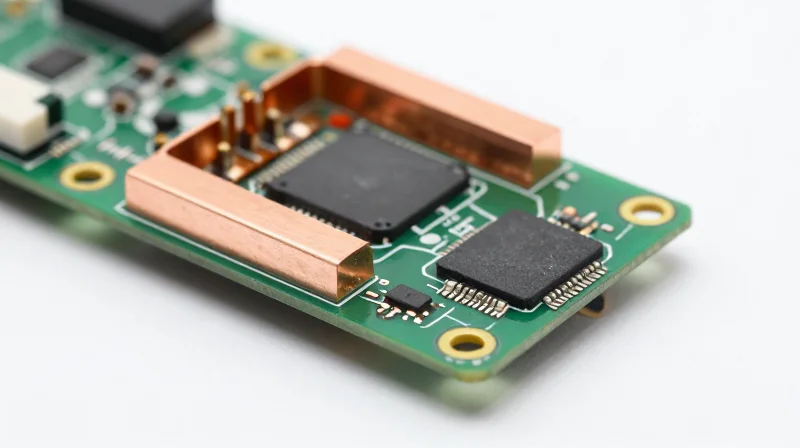
As infusion systems incorporate AI-driven edge processing and high-speed wireless telemetry, the power density of medical-grade PCBs has increased exponentially. Integrating these computational capabilities into portable, compact housings presents a significant engineering hurdle: managing the thermal envelope while maintaining stringent reliability standards mandated by clinical safety requirements.
Thermal Constraints in Next-Gen Architectures
Legacy PCB designs often relied on convective cooling through chassis vents; however, modern, IP-rated infusion pumps necessitate sealed, liquid-resistant enclosures. This lack of airflow forces engineers to move away from legacy FR4 substrates toward high-thermal-conductivity materials, such as metal-core PCBs (MCPCBs) or ceramic substrates, which act as primary heat spreaders.
| Parameter | Legacy PCB Approach | Next-Gen Smart Design |
|---|---|---|
| Thermal Dissipation | Passive convective venting | Integrated thermal vias and heat pipes |
| Power Delivery | Linear regulation | Multi-phase switching regulators |
| Substrate Material | Standard FR4 | High-Tg / Metal-Core / Ceramic |
| Component Density | Low/Moderate | High (HDI / Micro-vias) |
Optimizing Power Efficiency
Power efficiency is not merely about battery longevity; it is a critical thermal mitigation strategy. By reducing idle power consumption through advanced power-management integrated circuits (PMICs) and dynamic voltage and frequency scaling (DVFS), engineers can minimize heat generation at the source. This ensures that the device remains within safe touch-temperature limits without sacrificing the processing throughput required for real-time drug dosage monitoring.
Frequently Asked Questions
- Why is traditional convective cooling insufficient for new infusion pumps?
Modern devices require ingress protection (IP) ratings for clinical cleaning, which necessitates sealed enclosures that prevent passive airflow, requiring conduction-based thermal management instead. - How does AI integration impact thermal management?
AI processors introduce high transient current demands; using predictive power gating and optimized software-defined power states allows the system to remain cool during low-activity periods. - What is the role of High-Tg materials in modern medical designs?
High glass transition temperature (Tg) materials maintain structural integrity and dielectric reliability under the continuous, localized high-temperature stress typical of dense AI-accelerated circuits.
Ensuring Regulatory Compliance in Smart Hardware
Harmonizing IEC 60601-1 with Smart PCB Architectures
Transitioning from legacy analog-heavy boards to smart, AI-integrated PCBs introduces complex challenges in maintaining IEC 60601-1 compliance. While legacy designs often relied on discrete, static circuits that were easier to validate, modern smart infusion pumps utilize multi-core processors and complex firmware that necessitate a 'Compliance-by-Design' approach. Manufacturers must now ensure that intelligent flow-control algorithms and predictive maintenance software are treated as critical medical device software (SaMD), requiring stringent risk management protocols during the hardware architecture phase.
| Requirement Area | Legacy PCB Approach | Smart Medical Design Strategy |
|---|---|---|
| Safety Validation | Component-level testing | System-wide software/hardware integration testing |
| Risk Mitigation | Hardware redundancy | AI-driven predictive failure analysis |
| Cybersecurity | Physical tamper-proofing | Secure Boot, hardware encryption, and OTA update validation |
Addressing Emerging Regulatory Standards
As infusion technology evolves, global regulatory bodies are shifting focus toward dynamic risk profiles. Smart pumps connected via IoT are no longer just mechanical fluid delivery systems; they are high-risk network nodes. Developers must align hardware design with IEC 81001-5-1 standards for health software safety and security, ensuring that the hardware architecture supports encrypted communications and isolated memory partitions that prevent software errors from impacting critical infusion flow mechanics.
- How does AI complexity affect regulatory submission?
AI-driven decision-making components on a PCB must be transparent and predictable; regulatory bodies like the FDA require clear documentation of the training datasets and algorithm validation methods to ensure medical safety. - What role does hardware-level security play in compliance?
Hardware Security Modules (HSMs) are increasingly mandatory to store cryptographic keys, ensuring that firmware updates are authentic and preventing unauthorized software from accessing the infusion control logic. - Are legacy certification processes sufficient for smart devices?
No; legacy certification focuses on electrical and basic functional safety, whereas smart designs require additional certifications for data privacy, cybersecurity, and electromagnetic compatibility within congested wireless environments.
Case Study: Transitioning to Modular Smart Architectures
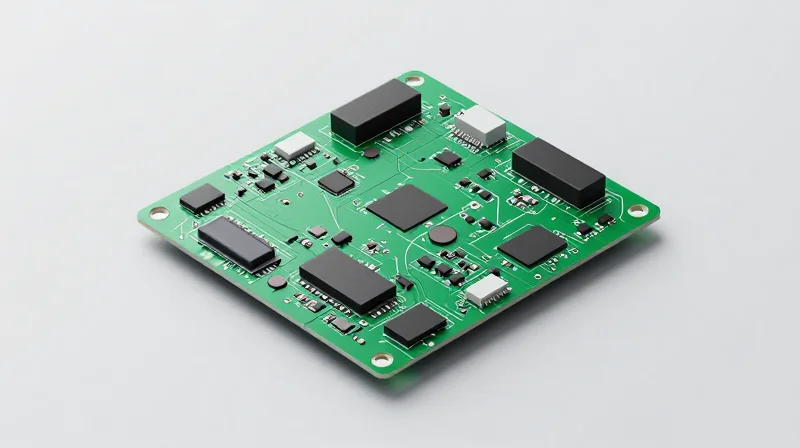
The Challenge: Breaking the Monolithic Barrier
Many legacy infusion pumps are built on monolithic PCB designs where the control logic, motor drivers, and connectivity interfaces are tightly coupled on a single board. When a hospital requires a new feature—such as upgraded wireless encryption or high-resolution graphical interfaces—the entire system often requires a redesign to accommodate the new components. This rigid architecture leads to significant technical debt, prolonged regulatory recertification cycles, and rapid product obsolescence.
Comparing Architectural Approaches
| Feature | Legacy Monolithic Design | Modular Smart Architecture |
|---|---|---|
| Hardware Upgradability | None, requires full board spin | High, via interchangeable modules |
| Obsolescence Risk | High due to fixed integration | Low due to isolated component lifecycles |
| Regulatory Effort | High per hardware revision | Localized to specific modified modules |
| Development Cost | Lower initial, high long-term | Higher initial, low lifecycle cost |
Implementation Strategy: The Modular Shift
In a successful transition, engineering teams decoupled the core processing unit—responsible for life-critical infusion parameters—from the communication and I/O modules. By utilizing high-speed mezzanine connectors and standardized backplanes, the design allowed for the independent replacement of the RF module to support future 6G or private 5G protocols without altering the validated therapy delivery engine.
Key Considerations for Transitioning
- How do we maintain safety validation during module swaps?
By implementing strict hardware-software abstraction layers, the safety-critical software stack remains isolated, allowing for modular updates while minimizing the need for full-system re-validation. - Does modularity increase the device footprint?
While traditional interconnects take space, modern high-density interconnect (HDI) technologies and micro-connectors allow modular architectures to maintain a footprint comparable to legacy designs. - Is the cost of modularity justified for infusion pumps?
Yes; although component costs increase, the ability to extend product life by five years or more through hardware refreshes provides a significant ROI for both the manufacturer and the hospital provider.
The Competitive Advantage of Next-Gen Infusion Tech
The Strategic Shift: From Passive Components to Intelligent Systems
The competitive advantage of next-gen infusion technology lies in the departure from static, hardware-defined legacy PCBs toward dynamic, software-defined modular architectures. By integrating low-latency processing and real-time telemetry directly onto the infusion pump's controller board, manufacturers can move beyond basic delivery metrics to actionable clinical intelligence.
| Feature | Legacy PCB Design | Next-Gen Smart Architecture |
|---|---|---|
| Integration | Discrete, siloed components | System-on-Chip (SoC) consolidation |
| Clinical Data | Basic flow rate logging | Real-time predictive analytics |
| Scalability | Rigid, fixed-function hardware | Modular firmware-over-the-air updates |
| Lifecycle ROI | High obsolescence, frequent replacement | Long-term value through feature expansion |
Driving Clinical Outcomes and Operational ROI
For clinicians, the transition to modern architecture means fewer pump alarm fatigues through edge-computed error detection, directly improving patient safety. For manufacturers, the shift offers significant long-term ROI. Intelligent hardware designs reduce the necessity for hardware recalls by enabling corrective software patches, significantly lowering the total cost of ownership while keeping the device at the cutting edge of clinical standards.
Frequently Asked Questions
- How do smart architectures reduce device obsolescence?
By utilizing modular PCB layouts and high-performance processors, devices can support future software enhancements and interoperability standards without requiring a complete hardware redesign. - Does advanced hardware increase the burden of regulatory compliance?
While more complex, modern modular designs allow for 'compartmentalized' compliance, where validated communication modules can be updated independently, streamlining the recertification process under standards like IEC 60601-1.
The transition to intelligent, secure PCB architectures is no longer optional; it is the fundamental requirement for surviving the next decade of medical innovation. By prioritizing AI-integrated security and robust connectivity, engineers can define the future of infusion safety. Contact our engineering consultancy team today to evaluate how your next-gen medical device can leverage these advanced architectural shifts.
