In our digitally driven world, the seemingly tiny 330 ohm resistor plays a pivotal role. From limiting the current in LEDs to enabling custom gaming experiences with Game Boy Macros, this unassuming component is essential. Understanding its characteristics, like its color code and applications, can empower both hobbyists and professionals in electronics. This article will guide you through all you need to know about the ubiquitous 330 ohm resistor, bridging the gap between theory and practical uses. We'll dive into real-world projects and provide practical tips.
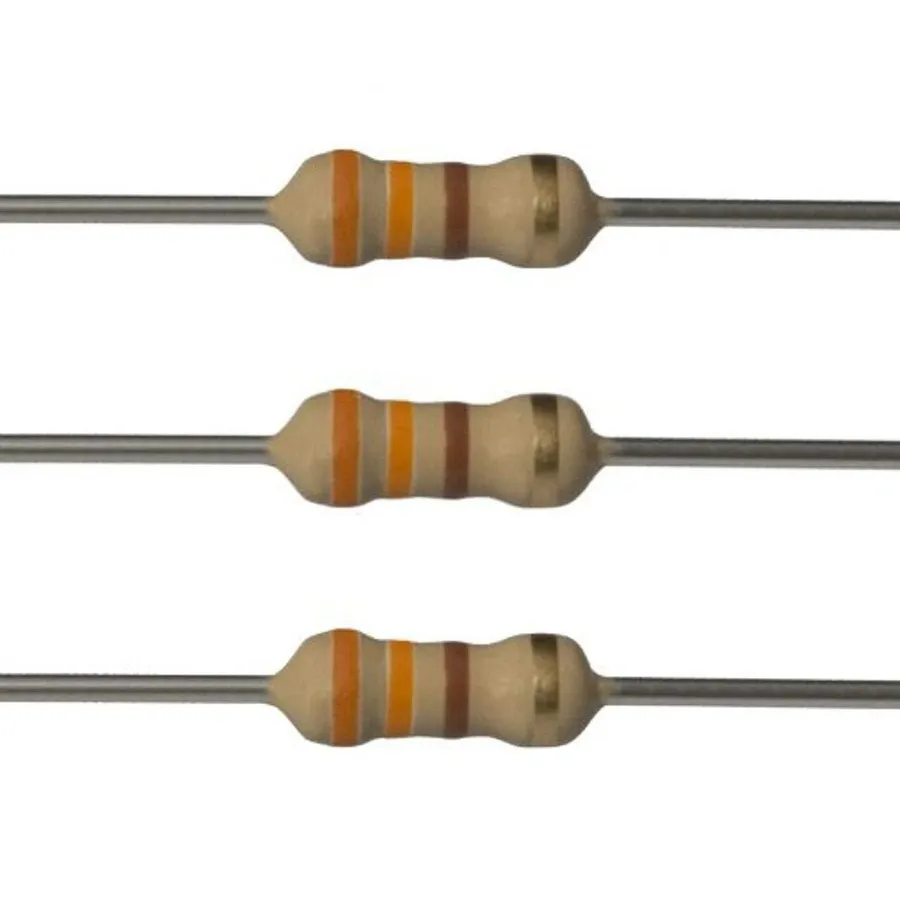
A 330 ohm resistor is a fundamental passive electronic component meticulously designed to impede the flow of electrical current within a circuit, characterized by its fixed resistance value of 330 ohms. It serves as a crucial element in controlling current and voltage levels. The core function of a resistor, in this case, a 330 ohm variant, lies in its ability to convert electrical energy into heat as current traverses through it, following Ohm's Law (V = IR), where V is voltage, I is current, and R is resistance. This conversion allows for the precise management and adjustment of electrical signals, making it an indispensable component in countless electronic applications. Unlike variable resistors or potentiometers, a 330 ohm resistor provides a static, consistent resistance.
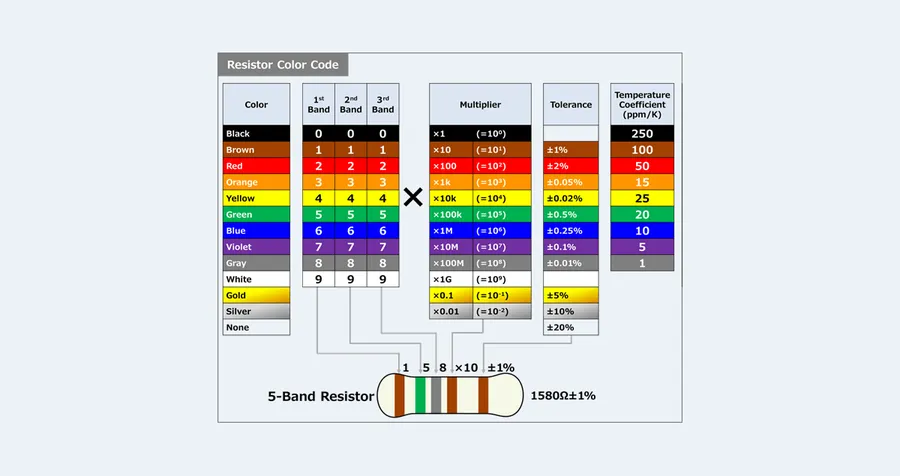
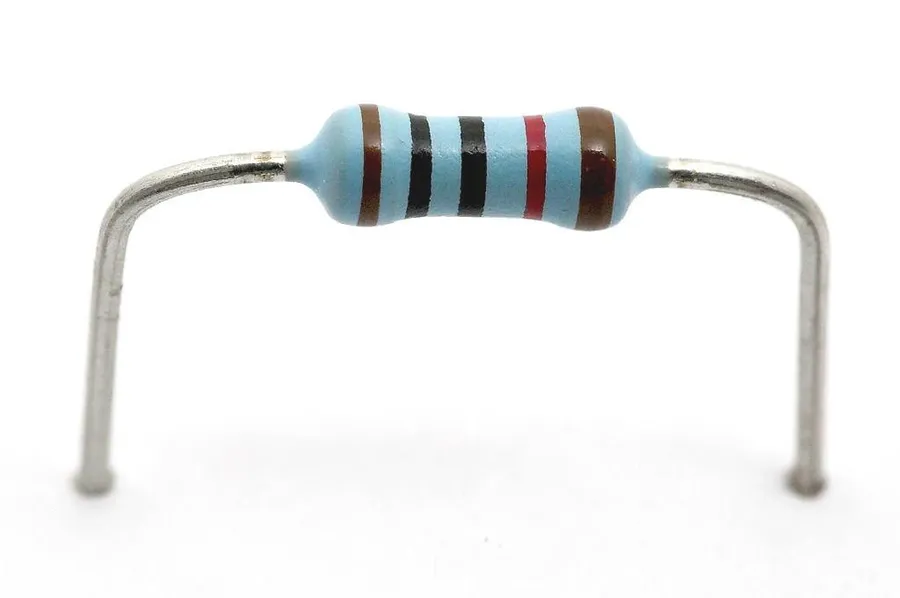
Accurately identifying a 330 ohm resistor is essential for proper circuit design and function, achieved by decoding the color bands printed on the resistor body. These color bands follow a standardized coding system that allows for quick and accurate identification of the resistance value.
The most common configurations are the four-band and five-band resistor. Each band represents a digit, a multiplier, and a tolerance value. The color code system is universally applied, ensuring consistent interpretation regardless of the manufacturer.
| Band | 4-Band Resistor Code | 5-Band Resistor Code | Meaning |
|---|---|---|---|
| Band 1 | Orange | Orange | First Digit |
| Band 2 | Orange | Orange | Second Digit |
| Band 3 | Brown | Black | Third Digit (5-band only) / Multiplier (4-band) |
| Band 4 | Gold | Black | Multiplier (5-band only) |
| Band 5 | N/A | Gold | Tolerance |
For a 330 ohm resistor, a four-band resistor will have the color bands: Orange-Orange-Brown-Gold, and the color code of a five-band resistor will be: Orange-Orange-Black-Black-Gold. The tolerance band indicates the accuracy of the resistor, with gold typically representing a ±5% tolerance.
Understanding these color codes is crucial for both selecting the correct resistor for your application and for troubleshooting circuits where components may not be marked with their numerical values.
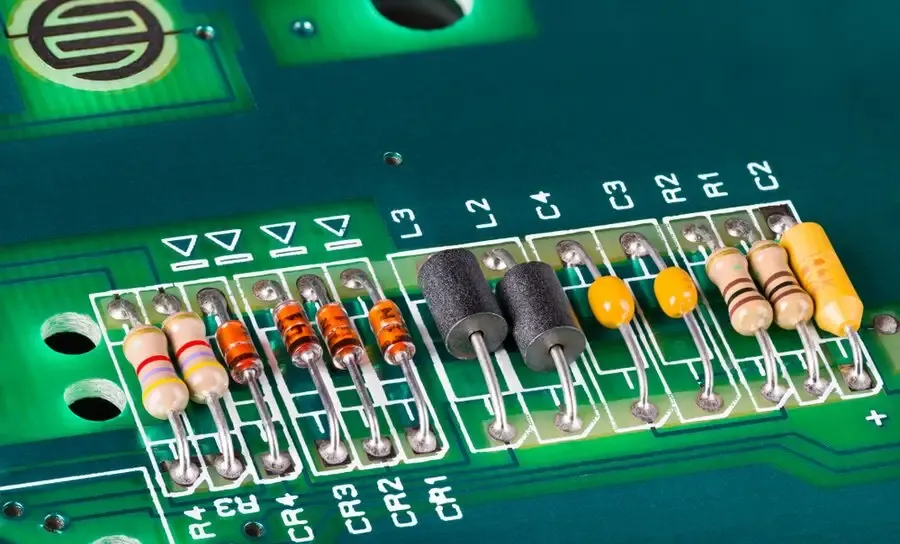
The 330 ohm resistor is a versatile component widely used in electronics for various purposes, primarily due to its ability to effectively control current flow. Its applications range from simple circuits to more complex setups, making it a fundamental element in many electronic designs.
Here are some common applications of 330 Ohm resistors:
The selection of a 330 ohm resistor is often influenced by several factors, including the application's voltage, current and power requirements. Proper planning and component selection are critical to ensure the long-term reliable operation of your electronic circuits.

The 330 ohm resistor plays a pivotal role in the popular Game Boy Macro modification, enabling the adaptation of the handheld console for single-screen operation. This modification repurposes a Nintendo Game Boy Advance (GBA) or GBA SP into a sleek, single-screen device by removing the top screen. The 330 ohm resistor is crucial for this conversion, ensuring proper electrical current flow and circuit stability.
Specifically, the resistor is used to replace the original screen load that's no longer present after removing the top screen and its backlight. The original backlight circuit needs a load to function properly, and the 330 ohm resistor provides this required load by mimicking the electrical characteristics of the original display, thereby preventing damage or malfunction of the GBA's backlight circuitry.
While 330 ohms is the most frequently used value, minor variations may be acceptable, however, deviating too far could cause unpredictable behavior or damage. Some modders have reported success using resistors in the approximate range of 700 ohms, for example. However, the 330 ohm value tends to provide the most stable performance across different units.
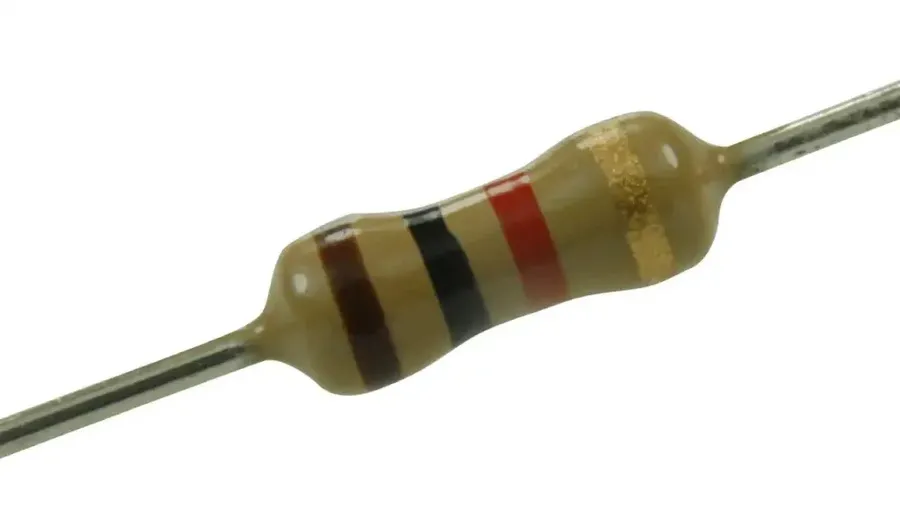
330 Ohm resistors are available in two primary mounting styles: Surface Mount Devices (SMD) and Through-Hole. Each type possesses distinct characteristics that make them suitable for different applications, primarily driven by Printed Circuit Board (PCB) design and assembly requirements. This section delineates the advantages and disadvantages of each, to guide selection based on project needs.
| Feature | Surface Mount Device (SMD) | Through-Hole |
|---|---|---|
| Size | Small, compact, various standardized sizes (e.g., 0805, 0603) | Larger, bulkier, axial or radial leads |
| Mounting | Soldered directly onto the PCB surface | Leads inserted into holes on the PCB and then soldered |
| PCB Design | Requires specialized pad design on PCB, more compact board layout possible | Requires holes to be drilled in PCB, less efficient space utilization |
| Assembly | Typically automated via pick-and-place machines and reflow soldering | Can be manually inserted and soldered, also automated wave soldering |
| Cost | Generally lower in large volumes | Generally higher in large volumes |
| Thermal Performance | Direct thermal path to PCB, generally good heat dissipation if properly mounted | Leads create a gap, sometimes less effective heat dissipation than SMDs |
| Durability | Less robust to physical stress after soldering | More robust and resistant to physical stress due to lead insertion |
| Ease of Use (Prototyping) | More challenging to solder manually, requires specific tools and experience | Easier to manually solder and prototype with, more beginner-friendly |
In essence, surface mount 330 ohm resistors are best suited for high-volume, automated manufacturing processes and compact designs where space is at a premium. Through-hole 330 ohm resistors are better for prototyping, small-batch production, and applications where physical robustness or manual assembly is needed. Choosing between the two depends heavily on production requirements, the complexity of the circuit design, and the available tools and expertise.
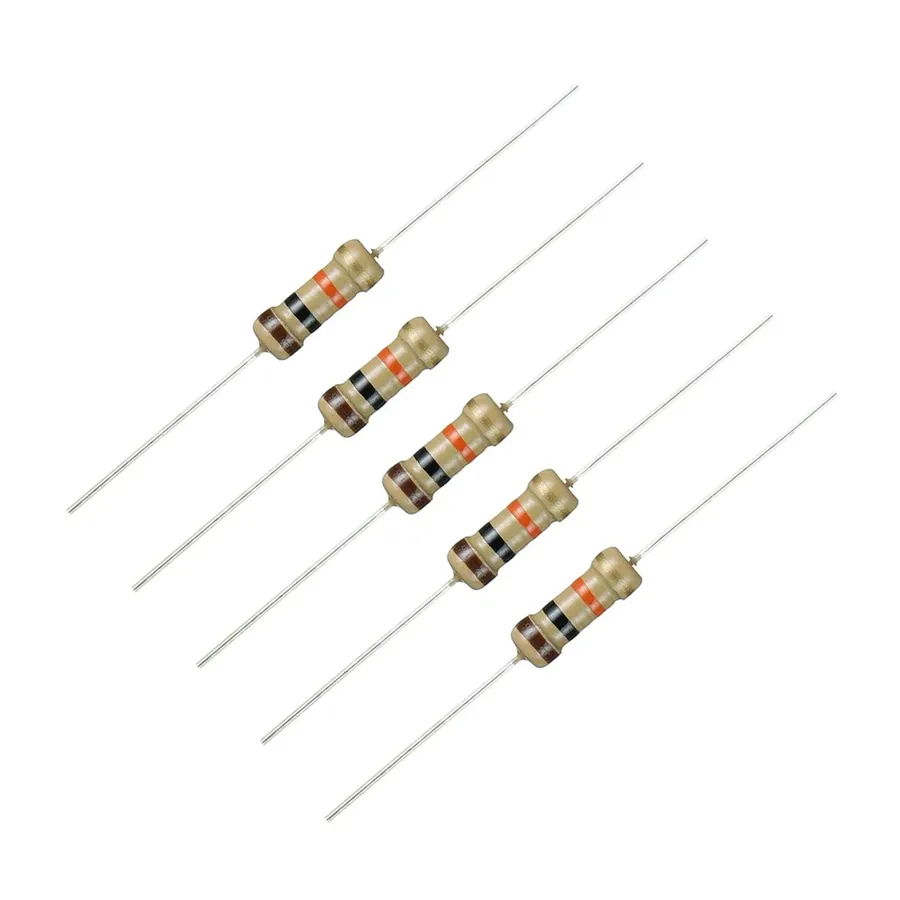
The power rating, measured in watts (W), of a 330 ohm resistor indicates its ability to dissipate heat without failing or altering its resistance value. Selecting the correct power rating is crucial for circuit safety and optimal performance. An under-rated resistor will overheat, potentially causing damage to itself and surrounding components, while an over-rated resistor may be physically larger and less efficient.
| Power Rating (W) | Typical Applications | Physical Size (approx.) | Heat Dissipation Capability |
|---|---|---|---|
| 1/8W (0.125W) | Low-power logic circuits, signal lines | Very small, often SMD | Very low |
| 1/6W (0.167W) | General signal processing, low power LEDs | Small, suitable for breadboards | Low |
| 1/4W (0.25W) | Most common, general purpose applications | Common, Through-hole and some SMD | Moderate |
| 1/2W (0.5W) | Higher power LEDs, small motor drivers | Larger through-hole, some SMD | Higher |
| 1W | Higher power applications, audio amplifiers | Larger through-hole | High |
| 2W | Demanding power needs, power circuits | Very large through-hole | Very High |
To calculate the required power rating, use the formula P = I²R, where P is the power in watts, I is the current in amperes, and R is the resistance in ohms. Always select a resistor with a power rating at least twice the calculated power to provide a safety margin and account for manufacturing tolerances. Considering the power dissipation capability is critical, as resistors generate heat when conducting current. A larger power rating means a greater capacity to dissipate heat effectively, thereby avoiding potential damage or failure.
This section addresses common queries regarding 330 ohm resistors, providing clear, concise answers to help you better understand their properties and applications.
Selecting the right 330 ohm resistor involves considering reputable vendors, crucial specifications like tolerance, and purchasing in quantities that align with project needs. This section provides guidance on how to navigate these factors to ensure you obtain quality components at a reasonable cost.
Effectively using 330 ohm resistors in electronic circuits requires careful attention to soldering techniques, component placement, and testing procedures to guarantee optimal circuit performance and longevity. Proper handling ensures that the resistor operates within its specifications and contributes to the reliability of the overall system.
The 330 ohm resistor, though a small component, is a versatile workhorse in the world of electronics. Its accurate resistance is essential for many circuits, including custom gaming hardware like the Game Boy Macro, where it plays a critical role, or in limiting the current for an LED. By understanding its color code, power rating, and appropriate applications, you can ensure successful implementation in your projects. The 330 ohm resistor's simplicity belies its importance, making it a fundamental piece in any electronics enthusiast's or professional's toolbox. As technology evolves, mastering these basic components like the 330 ohm resistor remains crucial for continued innovation and circuit design mastery.

