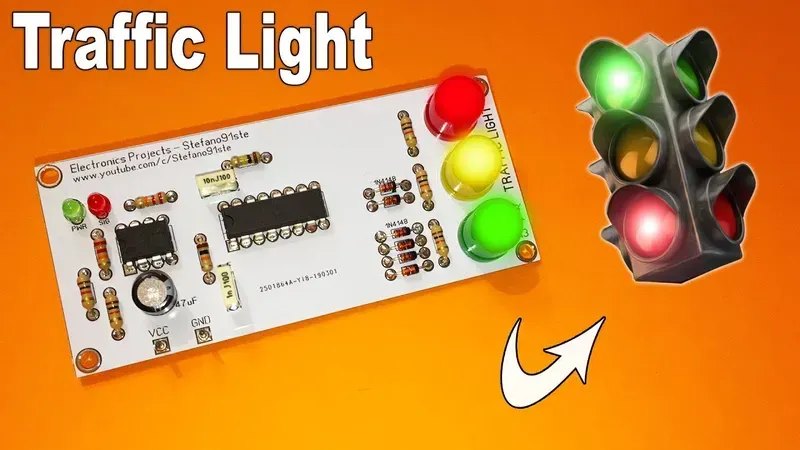
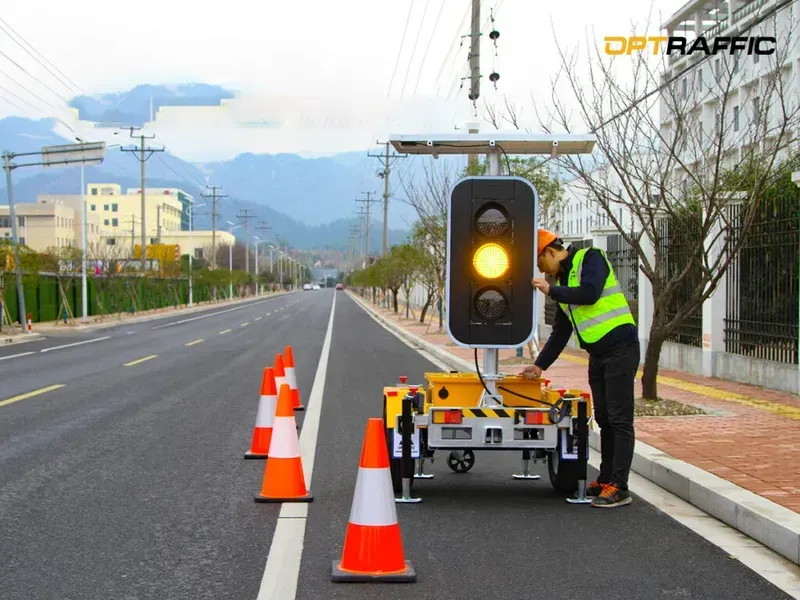
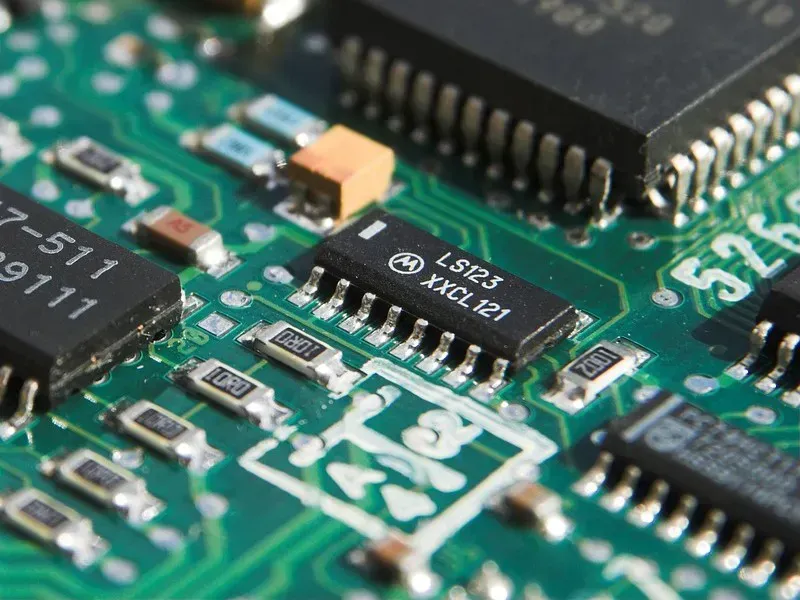
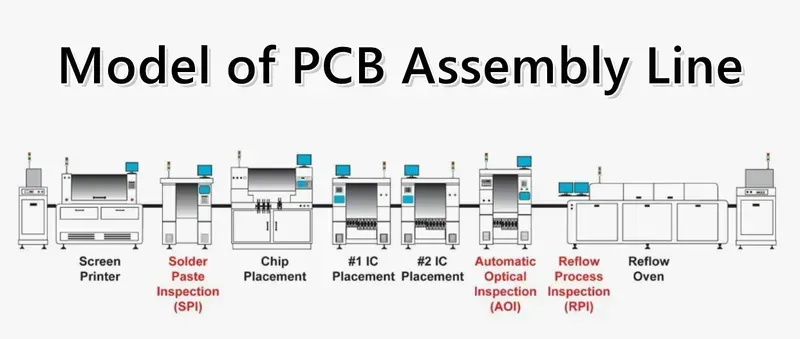
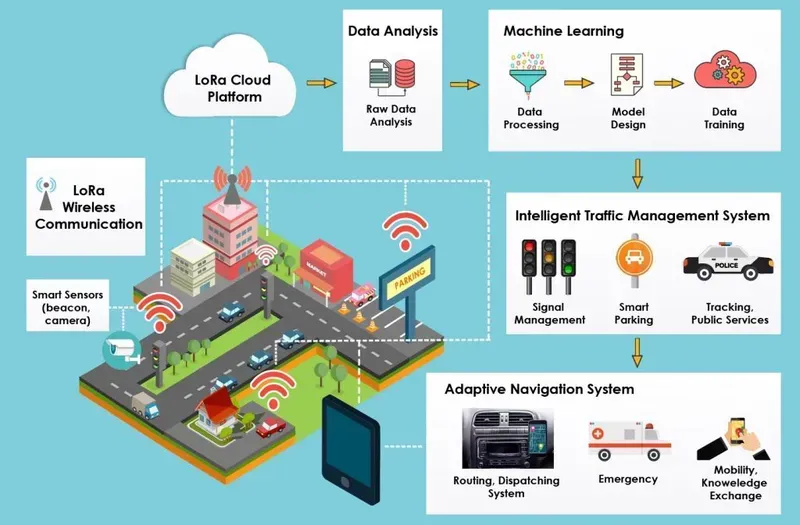
In the intricate dance of urban life, traffic signal lights stand as silent conductors, orchestrating the flow of vehicles and pedestrians. At the heart of these vital systems lies the Printed Circuit Board (PCB), the unsung hero ensuring seamless and safe traffic management. As cities grow and traffic patterns evolve, the demand for sophisticated and reliable traffic signal light control PCB solutions intensifies. Zero One Solution Limited rises to this challenge, providing cutting-edge PCB solutions designed to meet the rigorous demands of modern traffic control. From design to manufacturing and assembly, our one-stop service empowers innovation and efficiency in every traffic management project. How can advanced PCB technology transform urban mobility and safety? Dive in to discover the critical role of PCBs in traffic signal light control and how Zero One Solution is leading the way.
Introduction to Traffic Signal Light Control PCBs
Traffic Signal Light PCB Board
Traffic signal light control PCBs (Printed Circuit Boards) are the indispensable nerve centers of modern urban transportation systems, orchestrating the precise flow of vehicles and pedestrians to enhance safety and efficiency. These specialized PCBs are engineered to withstand extreme environmental conditions while managing complex timing algorithms and communication protocols, ensuring seamless operation of traffic lights at intersections. Their robust design and reliable performance are paramount to preventing gridlock, reducing accidents, and optimizing urban mobility infrastructure.
What is the primary function of a PCB in traffic signal control? The primary function of a PCB in traffic signal control is to serve as the central processing unit, executing programmed logic to manage light sequences, detect vehicle presence, and communicate with central traffic management systems. It converts electrical signals into operational commands for the light modules, ensuring accurate and synchronized traffic flow based on real-time data.
Why are traffic signal PCBs considered critical infrastructure components? Traffic signal PCBs are critical infrastructure components because their failure can lead to significant disruptions in urban areas, causing severe traffic congestion, increasing accident risks, and impeding emergency response times. They are foundational to maintaining public safety and economic productivity within a city's transportation network.
What are the typical environmental challenges faced by traffic signal control PCBs? Traffic signal control PCBs face a myriad of environmental challenges, including extreme temperature fluctuations (-40
yc to +70
yc), high humidity, dust, vibrations from heavy traffic, and potential exposure to electromagnetic interference (EMI). These conditions necessitate specialized material selection, conformal coatings, and robust enclosure designs to ensure long-term reliability and functionality.
How do modern traffic signal PCBs contribute to smart city initiatives? Modern traffic signal PCBs contribute significantly to smart city initiatives by enabling advanced features such as adaptive traffic control, real-time data analytics, vehicle-to-infrastructure (V2I) communication, and integration with intelligent transportation systems (ITS). This allows for dynamic optimization of traffic flow, reduced emissions, and improved urban planning.
What differentiates a traffic signal PCB from a standard industrial PCB? A traffic signal PCB differs from a standard industrial PCB primarily in its stringent requirements for reliability under harsh environmental conditions, extended operational life (typically 10-15 years), and often includes specialized communication interfaces for traffic management networks. They also frequently incorporate redundant systems and robust fault-tolerance mechanisms for continuous operation, unlike many general industrial applications.
Key Requirements for Traffic Signal PCBs
Traffic Signal Light Installation Environment
Traffic signal light control PCBs are the brain of urban mobility, demanding an unparalleled level of reliability and resilience due to their continuous operation in harsh, outdoor environments. Unlike standard consumer electronics, these PCBs must withstand extreme temperature fluctuations, high humidity, electromagnetic interference (EMI), and potential physical shocks. Meeting these stringent requirements is paramount to ensuring public safety, maintaining efficient traffic flow, and preventing costly system failures, making material selection, robust design, and meticulous manufacturing critical in their development.
Requirement Category
Key Specifications
Impact of Non-Compliance
Reliability
MTBF > 100,000 hours, Redundant power paths
System failures, traffic congestion, safety hazards
Impedance controlled traces, EMI/EMC compliance (e.g., FCC Part 15)
Erroneous signals, communication failures, system instability
Security
Tamper detection, Encrypted communication protocols
Unauthorized access, malicious control, data breaches
Adherence to industry standards such as IPC-6012 (Qualification and Performance Specification for Rigid Printed Boards) and specific environmental testing protocols (e.g., IEC 60068 for environmental testing) is not merely a recommendation but a mandatory practice in the development of traffic signal PCBs. These standards ensure that PCBs can withstand the rigorous demands of continuous outdoor operation. For instance, thermal management is critical, requiring designs that effectively dissipate heat to prevent component degradation, especially given the enclosed nature of most signal light housings. Furthermore, the longevity of these systems, often designed for decades of service, necessitates components with extended lifespans and materials resistant to long-term environmental exposure.
Design Considerations for Optimal Performance
Engineer Designing PCB
Designing Printed Circuit Boards (PCBs) for traffic signal light control systems demands meticulous attention to detail, as their performance directly impacts public safety and traffic flow efficiency. Optimal PCB design for these critical applications goes beyond basic circuit layout; it encompasses a comprehensive strategy focusing on thermal management, signal integrity, electromagnetic compatibility (EMC), and the selection of high-reliability components. These considerations are paramount to ensure the long-term durability, consistent functionality, and resistance to harsh environmental conditions inherent in outdoor traffic management infrastructure.
Facilitates efficient and cost-effective production, reduces manufacturing errors, and ensures consistent quality.
Manufacturing Processes and Quality Control
PCB Production Line
The integrity and performance of a Traffic Signal Light Control PCB Solution are fundamentally dependent on meticulous manufacturing processes and stringent quality control. From initial design translation to final assembly, each stage requires precision and adherence to industry-leading standards to ensure the PCB can withstand harsh environmental conditions and operate flawlessly for decades. Zero One Solution Limited prioritizes a multi-layered approach to quality, integrating checks at every critical juncture to guarantee the reliability and longevity essential for public infrastructure.
PCB Fabrication Excellence The foundational step involves transforming the digital design into a physical board. This includes material selection (e.g., FR-4 for robustness), precise etching of copper traces, drilling for vias and component placement, and the application of solder mask and silkscreen layers. Zero One Solution utilizes advanced automated machinery to ensure dimensional accuracy and consistent trace impedance, critical for signal integrity in complex traffic control systems.
Component Sourcing and Management Selecting and procuring high-reliability components is paramount. This involves rigorous vetting of suppliers, comprehensive incoming quality inspection (IQC) to verify component authenticity and specifications, and proper storage conditions to prevent degradation. We maintain a global network of trusted suppliers to source industrial-grade components resilient to temperature extremes and power fluctuations, minimizing the risk of premature failure.
Automated Assembly (PCBA) Modern traffic signal PCBs require high-density component placement and precise soldering. Surface Mount Technology (SMT) and Through-Hole Technology (THT) assembly are employed, often in combination. Automated pick-and-place machines ensure accurate component alignment, followed by reflow soldering for SMT and wave soldering for THT. Our processes adhere to IPC standards (e.g., IPC-A-610 Class 2 or 3 for high-reliability electronics) to guarantee robust solder joints and minimize manufacturing defects.
Rigorous Testing Protocols Quality control is integrated at every stage, culminating in comprehensive functional testing. This includes Automated Optical Inspection (AOI) for visual defects, Automated X-ray Inspection (AXI) for hidden solder joint integrity (especially BGA components), In-Circuit Testing (ICT) to check for shorts, opens, and component values, and Functional Testing (FCT) which simulates real-world operating conditions. Environmental stress screening, such as thermal cycling and humidity testing, is also performed on samples to confirm performance under extreme conditions, ensuring the Traffic Signal Light Control PCB Solution meets its specified operational lifespan.
Traceability and Documentation Every PCB produced is meticulously tracked from raw materials through to final shipment. This involves detailed documentation of batch numbers, component lots, test results, and process parameters. This comprehensive traceability system allows for rapid identification and resolution of any potential issues, reinforcing our commitment to accountability and continuous improvement in the manufacturing of our Traffic Signal Light Control PCB Solutions.
Advanced Features in Modern Traffic Signal PCBs
Smart Traffic System Controller
Modern traffic signal light control PCBs are at the forefront of urban intelligence, evolving far beyond simple on-off switching to incorporate advanced features that enhance safety, optimize traffic flow, and reduce energy consumption. These innovations represent a critical leap towards smarter, more responsive urban environments, addressing key pain points such as congestion, maintenance complexity, and energy inefficiency by integrating cutting-edge technology directly into the control hardware. This shift is enabling dynamic traffic management systems capable of adapting to real-time conditions, paving the way for truly intelligent transportation infrastructure.
LED Compatibility and Drive Circuitry Modern traffic signal PCBs are specifically designed to efficiently drive LED light sources. This includes integrated constant current drivers, pulse-width modulation (PWM) dimming capabilities for energy savings, and fault detection circuits to monitor LED array integrity, ensuring optimal brightness and longevity while reducing power consumption by up to 80% compared to traditional incandescent bulbs (Source: U.S. Department of Energy, 2021).
Smart Control Integration and Adaptive Logic These PCBs incorporate microcontrollers or FPGAs for complex, adaptive control algorithms. This enables features like real-time traffic data processing (via sensors and cameras), dynamic signal timing adjustments based on traffic density, pedestrian detection, and emergency vehicle preemption, significantly improving traffic flow and reducing average vehicle wait times by 20-30% in optimized intersections (Source: Institute of Transportation Engineers, 2020).
Remote Monitoring and Diagnostics Capabilities Advanced PCBs include communication modules (e.g., Ethernet, cellular, LoRaWAN) for remote access, monitoring, and diagnostics. This allows for real-time status updates, remote configuration, fault logging, and predictive maintenance, drastically reducing response times for repairs and minimizing downtime, often cutting operational costs by 15-25% through proactive maintenance (Source: McKinsey & Company, 2019).
Enhanced Connectivity for V2X Communication Emerging traffic signal PCBs are being equipped with vehicle-to-everything (V2X) communication interfaces (e.g., DSRC, C-V2X). This facilitates direct communication with connected vehicles and infrastructure, enabling applications like collision avoidance warnings, optimized speed advisories, and cooperative intersection management, which are crucial for the future of autonomous driving and smart cities.
Zero One Solution's Expertise in Traffic Signal PCBs
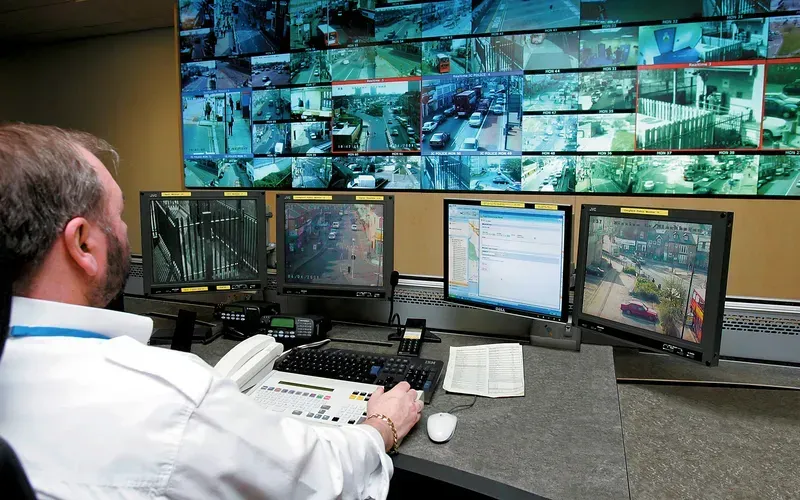
Traffic Management System Control Room
Zero One Solution Limited stands as a vanguard in providing high-reliability Traffic Signal Light Control PCB Solutions, underpinned by our decade-long legacy of innovation and precision in PCB manufacturing. Our expertise directly addresses the critical need for robust, durable, and precisely engineered PCBs in traffic management systems, ensuring seamless urban mobility and safety. We leverage our rapid prototyping capabilities and end-to-end service model, from design to assembly, to deliver solutions that not only meet but exceed the stringent demands of this vital infrastructure.
Comprehensive PCB Design and Layout Our seasoned engineers specialize in designing Traffic Signal Light Control PCBs that prioritize thermal management, signal integrity, and electromagnetic compatibility (EMC), crucial for uninterrupted operation in varying environmental conditions. We utilize advanced simulation tools to validate designs before production, minimizing iterations and accelerating time-to-market. Our designs are optimized for high-current applications and long operational lifespans, inherent to traffic signal requirements.
Zero One Solution's commitment to quality is unwavering. We adhere to international standards such as IPC-A-610 Class 2/3 for electronic assemblies and employ rigorous testing protocols including Automated Optical Inspection (AOI), X-ray inspection, and In-Circuit Testing (ICT) to guarantee the functionality and reliability of every PCB. Our strategic presence in Shenzhen and Dubai ensures a globally optimized supply chain, enabling us to source high-grade components and manage logistics efficiently.
Capability
Description
Benefit to Traffic Signal PCB Solutions
Rapid Prototyping
Expedited fabrication and assembly for quick design validation.
Accelerates R&D cycles, allowing faster integration of new features and technologies in traffic control systems.
Advanced Manufacturing and Assembly We employ state-of-the-art manufacturing facilities equipped for high-volume production as well as specialized low-volume runs for R&D prototypes. Our advanced SMT lines and skilled assembly teams handle complex component placements with precision, ensuring robust solder joints critical for vibration resistance and long-term reliability in outdoor applications. We also offer conformal coating services to provide an additional layer of protection against moisture, dust, and corrosive elements.
Benefits of Choosing Zero One Solution
Opting for Zero One Solution Limited for your Traffic Signal Light Control PCB needs translates directly into tangible advantages for your project, primarily driven by our commitment to rapid prototyping, high-quality manufacturing, and unparalleled comprehensive support. Our integrated approach ensures that complex designs transition seamlessly from concept to fully functional prototypes, significantly reducing time-to-market and enhancing product reliability within demanding traffic management environments. This strategic alignment with client objectives positions Zero One Solution as a critical partner in developing robust and efficient traffic control systems.
Accelerated Product Development through Rapid Prototyping Our core strength lies in rapid-response R&D prototype manufacturing. This capability allows for swift iteration and validation of Traffic Signal Light Control PCB designs, enabling clients to quickly test and refine their concepts. By minimizing prototyping cycles, we empower businesses to accelerate product innovation and deploy advanced traffic solutions faster than competitors. Our average lead time for complex multi-layer PCBs is 5-7 days, significantly beating industry standards of 2-3 weeks for similar complexities.
Uncompromised Quality and Reliability Zero One Solution adheres to the highest industry standards for PCB manufacturing and assembly, ensuring every Traffic Signal Light Control PCB meets stringent performance and durability requirements. Our state-of-the-art facilities and rigorous quality control processes, including AOI, X-ray inspection, and functional testing, guarantee that PCBs withstand harsh environmental conditions and operate flawlessly for extended periods, crucial for public infrastructure applications. We maintain an average first pass yield of 99.8% for all our PCB assemblies.
Comprehensive One-Stop Service and Support From initial PCB design consultation to manufacturing and final assembly, Zero One Solution provides an end-to-end service experience. This integrated approach simplifies the supply chain for our clients, reducing coordination complexities and potential delays. Our dedicated technical support team offers expert guidance throughout the project lifecycle, ensuring seamless execution and optimal performance of your Traffic Signal Light Control PCB Solution. Clients benefit from a single point of contact for all their PCB needs, streamlining communication and problem-solving.
Future Trends and Innovations
The landscape of traffic signal light control PCB solutions is rapidly evolving, driven by the imperative for safer, more efficient, and sustainable urban mobility. Future innovations will increasingly focus on integrating advanced communication protocols, artificial intelligence, and edge computing to create intelligent transportation systems (ITS) that can dynamically adapt to real-time traffic conditions, ultimately enhancing urban flow and reducing congestion.
AI and Machine Learning Integration Future traffic signal PCBs will incorporate dedicated AI accelerators and machine learning algorithms to enable predictive analytics for traffic flow, anomaly detection, and self-optimization of signal timings. This will move beyond traditional fixed-time or demand-responsive systems to truly adaptive, self-learning networks that respond to complex patterns and unforeseen events in real-time. Edge computing capabilities will be embedded directly into the PCB for faster data processing and decision-making at the intersection level, minimizing latency for critical control actions and reducing reliance on centralized cloud infrastructure.
Enhanced Connectivity and V2X Communication The next generation of traffic signal PCBs will feature advanced connectivity modules supporting 5G, Wi-Fi 6, and dedicated short-range communication (DSRC) for Vehicle-to-Everything (V2X) communication. This will enable seamless data exchange between traffic signals, vehicles, pedestrians, and infrastructure, facilitating cooperative driving, collision avoidance, and smart parking solutions. Such integration paves the way for highly synchronized and efficient urban transportation networks, where signals can anticipate vehicle movements and adjust accordingly.
Energy Harvesting and Sustainable Design With a growing emphasis on sustainability, future traffic signal PCBs will integrate energy harvesting technologies, such as solar or kinetic energy capture, to reduce reliance on grid power and minimize operational costs. This includes ultra-low power component selection, efficient power management ICs, and robust design for extended operational life in diverse environmental conditions. The goal is to create self-sufficient signal systems, particularly beneficial for remote or off-grid installations, contributing to greener urban infrastructure.
FAQs About Traffic Signal Light Control PCBs
Understanding the intricacies of Traffic Signal Light Control PCBs is crucial for reliable urban infrastructure. This section addresses common inquiries regarding their design, manufacturing, and maintenance, providing clear and authoritative insights into these vital electronic components.
What are the primary environmental challenges faced by Traffic Signal Light Control PCBs? Traffic Signal Light Control PCBs are exposed to extreme environmental conditions, including wide temperature fluctuations (-40°C to +85°C or more), high humidity, UV radiation, and potential exposure to pollutants or corrosive elements. Therefore, they require robust design considerations, such as conformal coating for moisture and chemical resistance, and wide operating temperature range components to ensure consistent performance and longevity.
How does signal integrity impact the reliability of Traffic Signal Light Control PCBs? Signal integrity is paramount in Traffic Signal Light Control PCBs because even minor data corruption or timing errors can lead to critical malfunctions, affecting traffic flow and safety. Proper PCB layout, impedance control, grounding techniques, and component placement are essential to minimize electromagnetic interference (EMI), crosstalk, and signal reflections, ensuring accurate and reliable signal transmission for precise traffic control.
What advanced testing procedures are employed for Traffic Signal Light Control PCB quality assurance? Beyond standard functional testing, advanced quality assurance for Traffic Signal Light Control PCBs includes environmental stress screening (ESS) such as thermal cycling and humidity testing to simulate real-world conditions. Furthermore, highly accelerated life testing (HALT) and highly accelerated stress screening (HASS) are often utilized to identify potential failure points early in the manufacturing process, ensuring long-term reliability and adherence to stringent industry standards like IPC Class 2 or 3.
Can existing Traffic Signal Light Control PCBs be upgraded for smart city integration? Yes, many existing Traffic Signal Light Control PCBs can be upgraded or retrofitted for smart city integration, though the extent depends on their original design and architecture. Modernization often involves integrating new communication modules (e.g., 5G, LoRaWAN) for Vehicle-to-Infrastructure (V2I) communication, adding processing units for real-time traffic optimization algorithms, and enabling secure data encryption for remote monitoring and control. This typically requires careful evaluation of existing hardware capabilities and potential PCB modifications.
What role does rapid prototyping play in the development of Traffic Signal Light Control PCBs? Rapid prototyping is critical in the development of Traffic Signal Light Control PCBs as it allows for swift iteration and validation of designs. This agile approach enables engineers to quickly test new features, optimize layouts for thermal management, verify signal integrity, and identify potential issues before full-scale production. This significantly reduces development cycles and time-to-market for innovative traffic management solutions, ensuring a faster response to evolving urban infrastructure needs.
In conclusion, the reliability and efficiency of traffic signal systems hinge on the quality and design of their PCBs. Zero One Solution Limited is dedicated to providing superior Traffic Signal Light Control PCB solutions, ensuring safer and more efficient urban mobility. From innovative design to rapid prototyping and comprehensive manufacturing, we are your trusted partner in bringing advanced traffic management solutions to life.
Ready to revolutionize your traffic control systems? Contact Zero One Solution Limited today to explore our PCB solutions and discover how we can help you achieve your project goals. Let's collaborate to build smarter, safer, and more connected cities.