Understanding Electrical and Electronic Components: A Comprehensive Guide
2025.01.19
From powering our homes to enabling our smartphones, electrical and electronic components are the fundamental building blocks of modern technology. These often-unseen elements, like resistors, capacitors, and transistors, work in harmony to control the flow of electricity and process information. This article delves into the world of these components, exploring their types, functions, and significance in various applications, bridging the gap between abstract concepts and real-world technology.
The Fundamentals: What Are Electrical and Electronic Components?
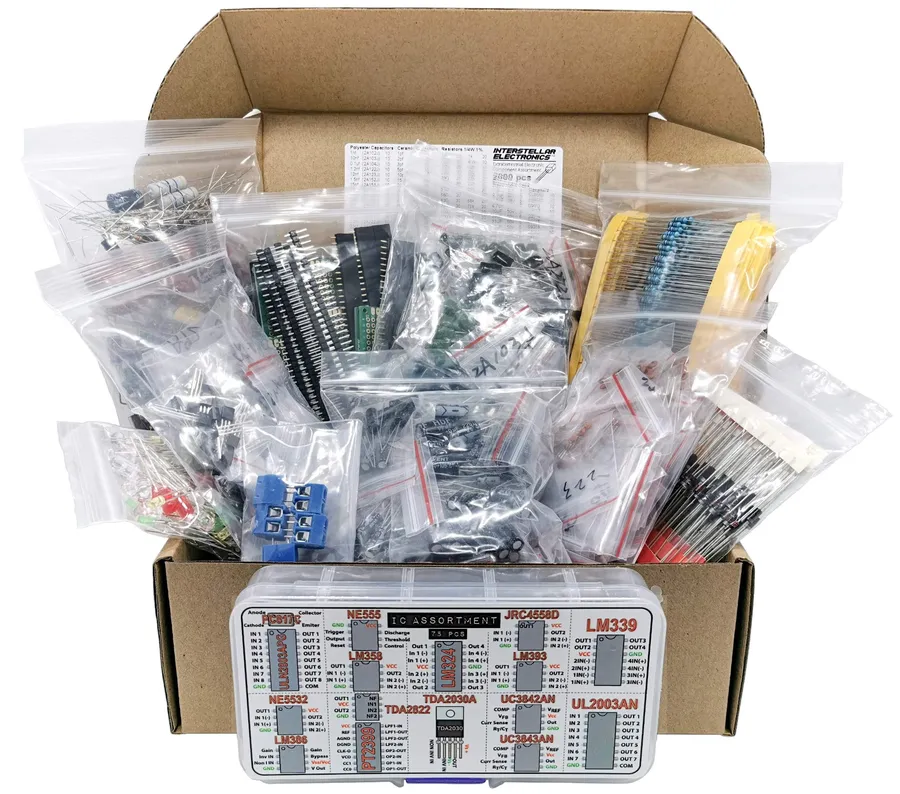
Electronic Components Assortment
Electrical and electronic components are the fundamental building blocks of all electrical and electronic circuits, each playing a unique role in manipulating electrical energy to perform specific functions. Understanding the distinction between these components is crucial for anyone working with or learning about electronics.
Electrical components primarily deal with the flow of electrical current and are often associated with power transmission and distribution. Electronic components, on the other hand, manipulate electrical signals to perform more complex functions, commonly involving the control and processing of information.
Passive Components: Resistors, Capacitors, and Inductors
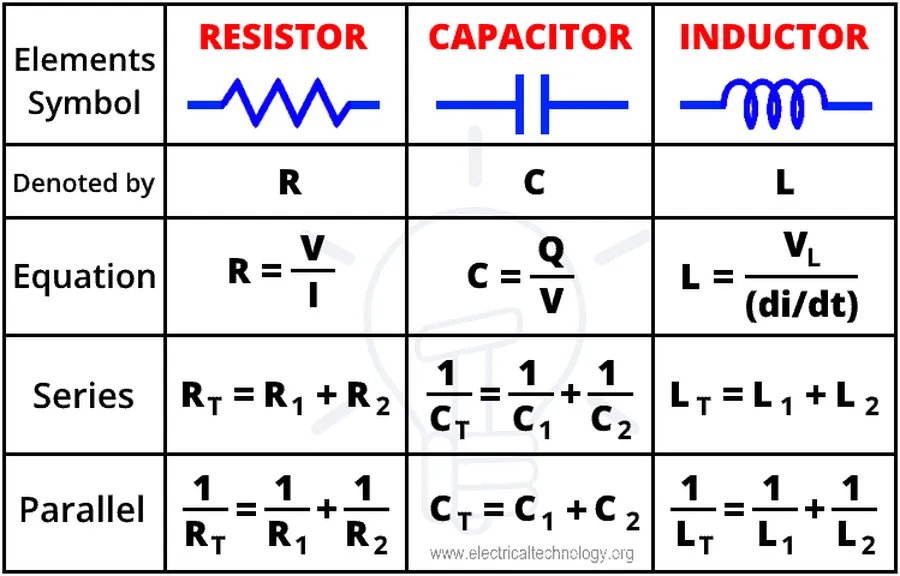
Resistors Capacitors and Inductors
Passive components are fundamental building blocks in electrical and electronic circuits, characterized by their inability to generate power. Instead, they manipulate electrical energy in various ways, controlling current, voltage, and storing energy. The three primary passive components are resistors, capacitors, and inductors, each with distinct characteristics and applications.
Resistors primarily oppose the flow of electrical current, crucial for controlling current levels and dividing voltage within circuits. They come in various forms, including fixed resistors with a set resistance and variable resistors like potentiometers which allow for adjustable resistance.
Feature
Resistors
Capacitors
Inductors
Primary Function
Limit current flow, divide voltage
Store electrical energy
Oppose changes in current
Energy Manipulation
Dissipates energy as heat
Stores energy in an electric field
Stores energy in a magnetic field
Typical Units
Ohms (Ω)
Farads (F)
Henries (H)
Key Characteristics
Resistance value, power rating
Capacitance, voltage rating
Inductance, current rating
Common Types
Fixed, variable, SMD
Ceramic, electrolytic, film
Air-core, ferrite-core, toroidal
Capacitors, on the other hand, store electrical energy in the form of an electric field between two conductive plates. They play a crucial role in filtering, smoothing, and timing circuits, and are also categorized into different types, including ceramic, electrolytic, and film capacitors each suited for different applications.
Inductors are designed to oppose any changes in current flow, storing energy in a magnetic field. They are frequently used in filtering, tuning, and energy storage applications. Like other passive components, inductors are available in different types, such as air-core, ferrite-core, and toroidal inductors, each offering specific characteristics.
Active Components: Diodes, Transistors, and Integrated Circuits
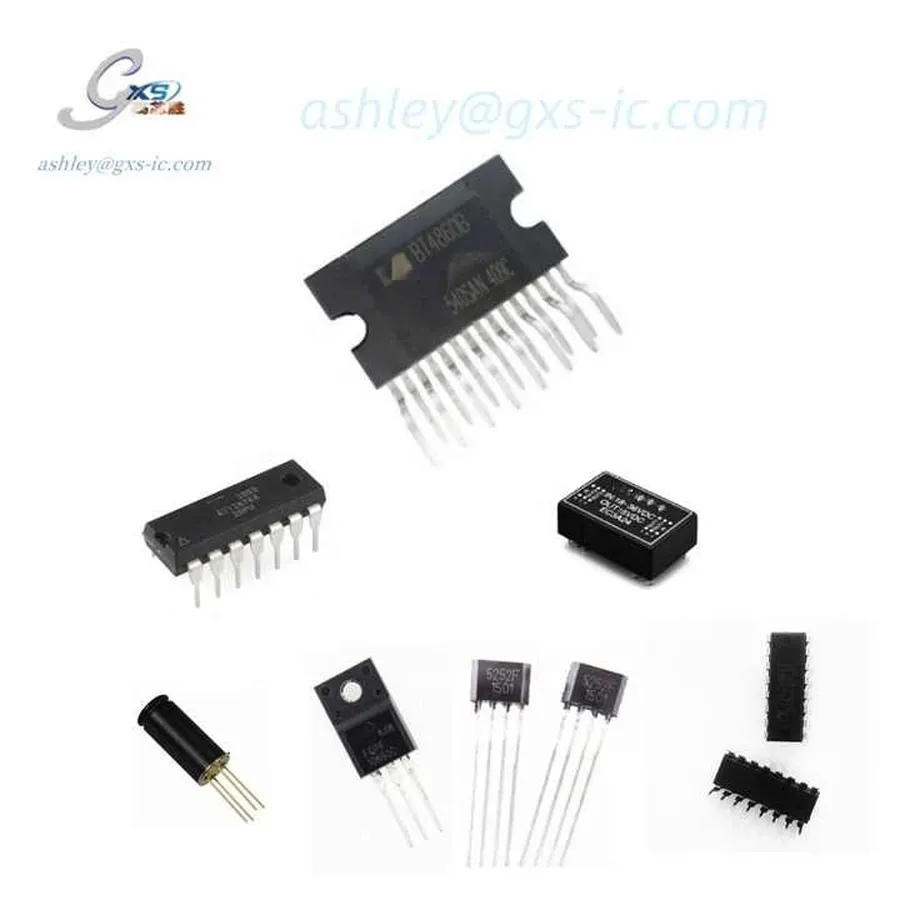
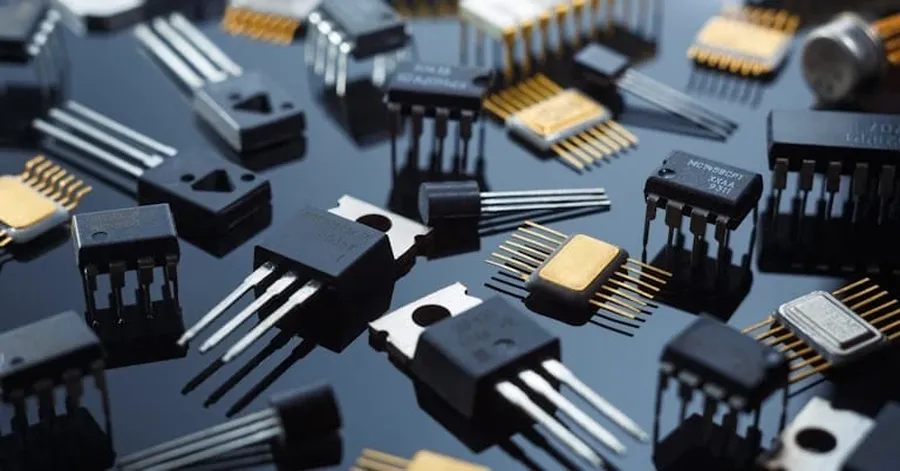
Diodes Transistors and Integrated Circuits
Active components are the building blocks of electronic circuits that possess the ability to control the flow of electrical current, enabling amplification, switching, and signal processing. Unlike passive components, active components require an external power source to operate and provide gain or control over electrical signals. This section delves into three fundamental active components: diodes, transistors, and integrated circuits (ICs).
Diodes are semiconductor devices that allow current to flow primarily in one direction, a property known as rectification. The most common application of diodes is in converting alternating current (AC) to direct current (DC). Beyond rectification, diodes find diverse applications, including voltage regulation, signal modulation, and light emission (in the case of light-emitting diodes, or LEDs).
Transistors are semiconductor devices with the capability to amplify or switch electronic signals and electrical power. These versatile components form the backbone of modern electronic circuits. Transistors are used in virtually all electronic devices, enabling signal amplification, switching, and logic operations. Two of the most prevalent types are Bipolar Junction Transistors (BJTs) and Metal-Oxide-Semiconductor Field-Effect Transistors (MOSFETs).
Integrated circuits (ICs), also known as microchips or chips, are complex electronic circuits fabricated on a small semiconductor material, typically silicon. These compact devices contain thousands to billions of transistors and other components, performing intricate functions from arithmetic operations to memory storage and logic processing. ICs are fundamental to modern electronics, underpinning all types of electronic devices and systems.
Switches, Relays, and Connectors: Controlling Electrical Flow
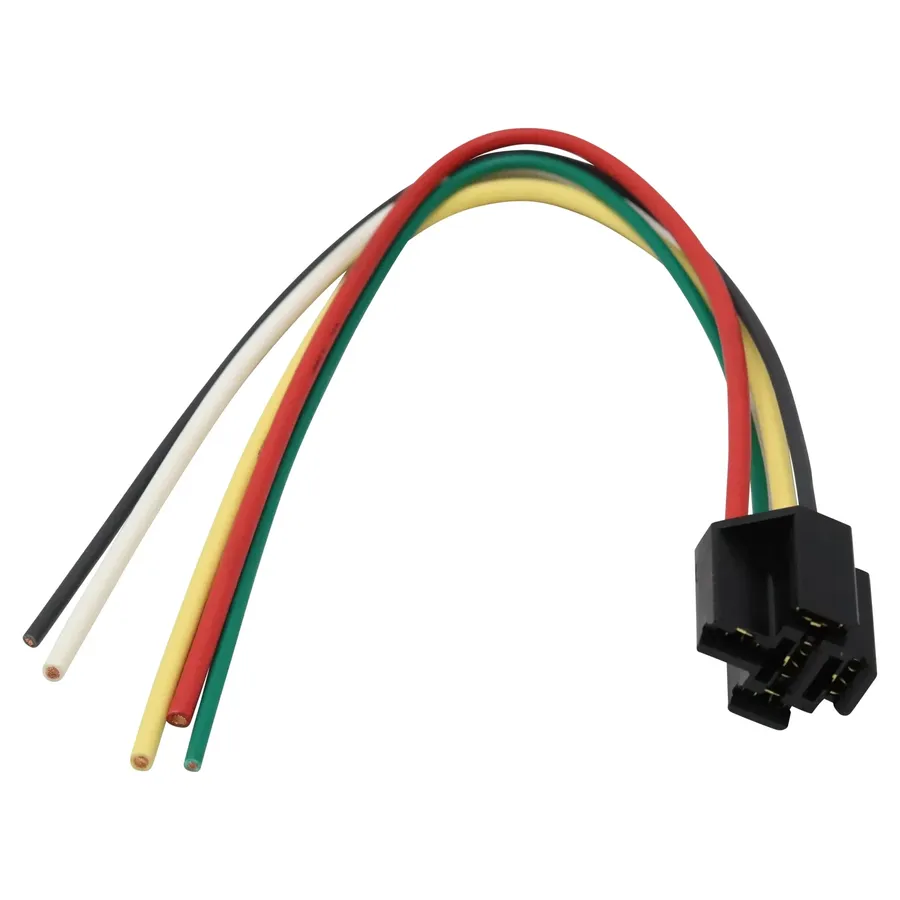
Electronic Switches Relays and Connectors
Switches, relays, and connectors are fundamental components that dictate how electrical current flows within a circuit, providing the means to control, redirect, and establish electrical pathways. They play a critical role in the functionality and safety of electronic systems, by enabling precise management of power distribution and signal transmission.
Switches Switches are electromechanical devices used to make or break an electrical circuit, thereby controlling the flow of current. They come in various forms such as toggle switches, push-button switches, rotary switches, and slide switches. The choice of switch depends on factors such as the required current rating, the frequency of operation, and environmental conditions. Common applications include power control, signal selection, and safety interlocks.
Relays Relays are electrically operated switches that use an electromagnet to mechanically operate a switch. They serve as an interface between low-power control signals and higher-power circuits, allowing a low current to control a high current. Relays are frequently used in applications requiring remote control and electrical isolation between different parts of a circuit. Their use spans from simple on/off control of motors and heaters to complex control systems in industrial applications. There are multiple types of relays, including electromechanical, solid-state, and reed relays, each with specific advantages for various applications.
Connectors Connectors are devices that join two or more electrical circuits or components, allowing electrical current or signals to pass through. They ensure a reliable connection, minimize signal loss and provide for easy assembly and disassembly of electronic systems. Connectors come in many forms, such as terminal blocks, pin headers, and coaxial connectors, each designed for specific applications and performance requirements. Considerations for choosing connectors involve voltage and current capacity, durability, environmental conditions, and ease of use and assembly.
Component
Function
Types
Applications
Switches
Make or break electrical circuits.
Toggle, push-button, rotary, slide, limit
Power control, signal routing, safety interlocks.
Relays
Use low-power signals to control high-power circuits.
Electromechanical, solid-state, reed
Remote control, electrical isolation, motor control.
Connectors
Join electrical circuits or components.
Terminal blocks, pin headers, coaxial, USB
Interconnecting PCBs, connecting power sources, signal transmission.
Power Sources: Batteries and Power Supplies
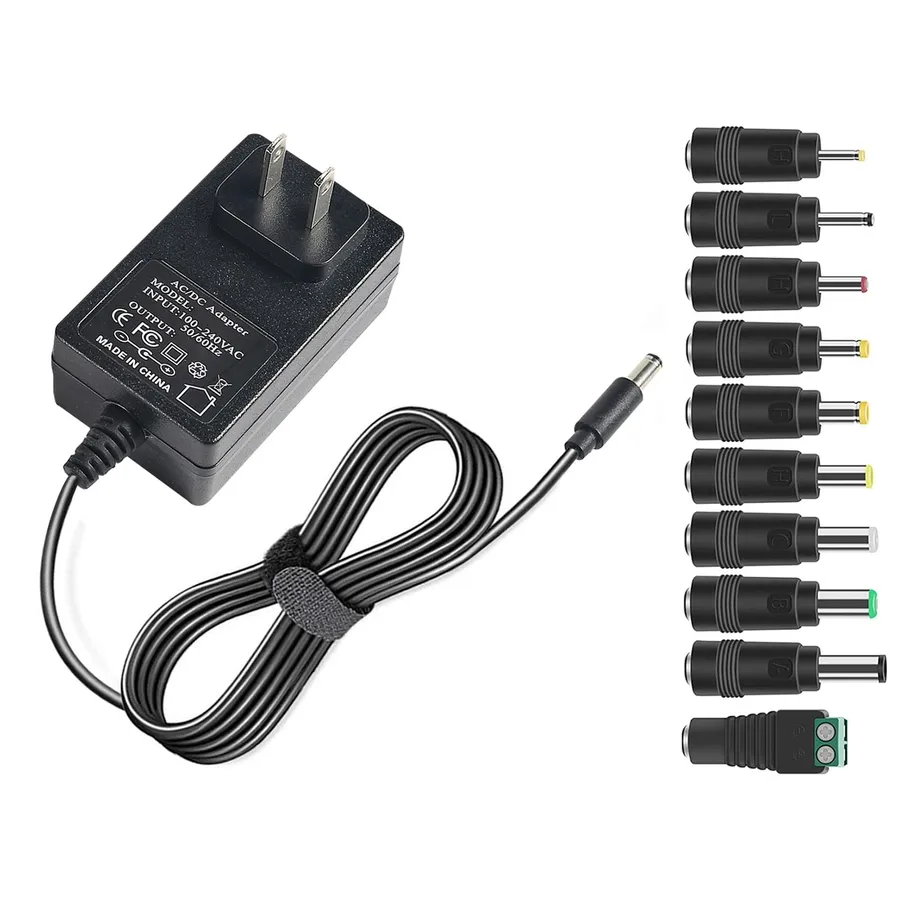
Batteries and Power Adapters
Power sources are fundamental to the operation of all electrical and electronic circuits, providing the necessary energy for components to function. This section explores two primary power source types: batteries and power supplies, detailing their characteristics, chemistries, and applications.
Batteries provide portable, direct current (DC) power through electrochemical reactions, while power supplies typically convert alternating current (AC) from the mains to regulated DC for electronic devices. Understanding these fundamental differences is crucial for selecting appropriate power sources for various applications.
Below are some examples of specific types of batteries and power supplies
Common Battery Types Primary (non-rechargeable) batteries like alkaline and lithium-ion have distinct chemistries, resulting in varied energy densities and voltages. Secondary (rechargeable) batteries such as lithium polymer (LiPo) and nickel-metal hydride (NiMH) allow repeated use. Each chemistry presents unique charging requirements, discharge characteristics, and life-cycle limitations. For example, lithium-ion batteries offer higher energy density than NiMH, while alkaline batteries are more readily available and cost-effective for disposable applications.
Power Supply Types Linear power supplies offer stable output by regulating voltage through linear components. They are reliable and generate low noise, but are less efficient and bulkier. Switching power supplies employ high-frequency switching to achieve significantly higher efficiency and smaller size, although with increased switching noise. Power supply selection hinges upon the needed power levels, efficiency needs, size requirements and application noise-sensitivity.
Sensors and Transducers: The Interface with the Physical World
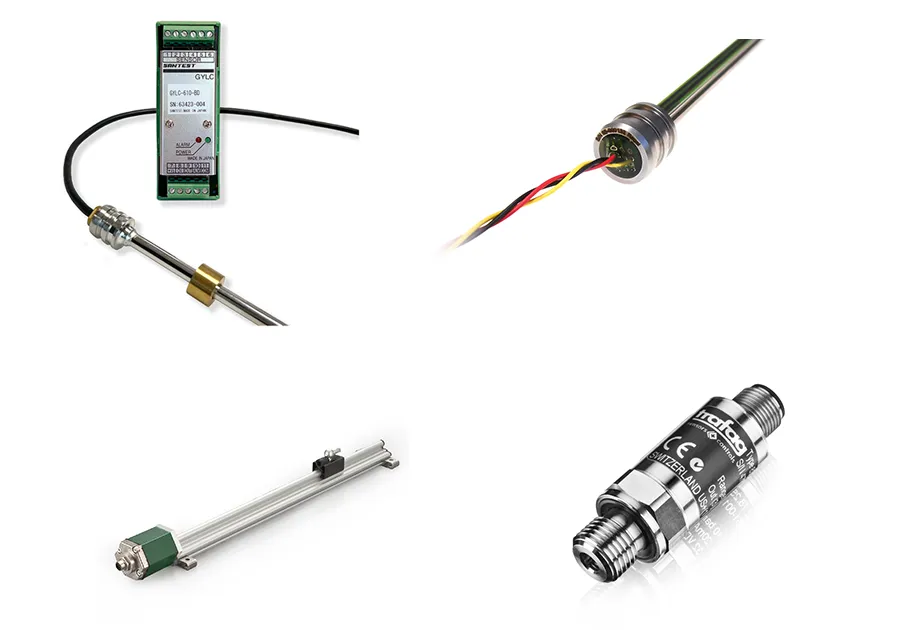
Sensors and Transducers
Sensors and transducers form the critical bridge between the physical world and electronic systems. Sensors detect physical phenomena, while transducers convert these phenomena into measurable electrical signals, enabling electronic circuits to perceive and respond to their environment. This interplay is vital for automated control, data acquisition, and many other technological applications.
Temperature Sensors These devices measure temperature variations and come in various forms, such as thermocouples, thermistors, and resistance temperature detectors (RTDs). Thermocouples utilize the Seebeck effect to generate a voltage proportional to temperature differences, while thermistors and RTDs change resistance with temperature. Each type offers different accuracy, range, and response time characteristics.
Light Sensors Light sensors detect the presence and intensity of light. Photodiodes and phototransistors generate current proportional to incident light, while photoresistors exhibit a change in resistance when exposed to light. These sensors are used in applications ranging from automatic lighting control to sophisticated optical measurement instruments.
Pressure Sensors Pressure sensors measure the force exerted on a unit area. Strain gauge-based sensors use the principle that the resistance of a material changes when deformed by pressure. Piezoelectric sensors, on the other hand, generate an electrical charge under pressure. Applications include automotive tire pressure monitoring and industrial process control.
Transducers: Physical-to-Electrical Conversion Transducers are crucial in converting physical quantities into electrical signals. These include devices such as microphones, which convert sound waves into electrical signals; accelerometers, which measure acceleration forces and convert them into electrical signals; and potentiometers, which convert mechanical displacement into a variable electrical resistance. The selection of the correct transducer depends on the type of physical quantity to be measured and the required precision and bandwidth.
Sensor/Transducer Type
Principle of Operation
Common Applications
Thermocouple
Seebeck effect (voltage generation due to temperature difference)
Industrial temperature measurement, automotive
Photodiode
Current generation proportional to incident light
Light detection, solar cells, optical communication
Strain Gauge Pressure Sensor
Change in resistance due to mechanical deformation from pressure
Frequently Asked Questions About Electrical and Electronic Components
This section addresses common queries regarding electrical and electronic components, clarifying their distinctions, outlining basic component functions, and exploring their practical applications. Understanding these frequently asked questions is crucial for anyone working with or learning about electronics.
What is the fundamental difference between electrical and electronic components? Electrical components primarily deal with the flow of electrical current and are often used in power distribution and basic circuit functions (e.g., wires, switches). Electronic components, on the other hand, manipulate electrical signals to perform specific tasks, often involving more complex behaviors (e.g., transistors, diodes, integrated circuits).
What are the five basic electrical components and their core functions? The five basic electrical components are: 1) Resistors, which limit current flow; 2) Capacitors, which store electrical energy in an electric field; 3) Inductors, which store energy in a magnetic field and oppose changes in current; 4) Diodes, which allow current flow in one direction; and 5) Switches, which control the opening and closing of electrical circuits.
Could you provide examples of common electronic components and their uses? Examples of electronic components include: Transistors, used for amplification and switching; Diodes, used for rectification and signal shaping; Integrated Circuits (ICs), used for complex signal processing and control; LEDs, used for light emission, and Sensors, used to measure physical quantities. Each component has specific uses depending on its design and characteristics.
What are some practical applications of electrical and electronic components? Electrical and electronic components are ubiquitously applied in diverse applications. These include power supplies for electronics, control systems in industrial processes, communication systems like smartphones and computers, lighting and heating applications, medical devices, and transportation systems. Their use spans nearly every aspect of modern life.
How do I choose the right electrical or electronic component for my project? Selecting the correct component involves a clear understanding of the component's function and its specifications, including voltage and current ratings, power handling capacity, tolerances, and operational temperature range. You also need to consider the application and circuit requirements, as well as environmental conditions where the components will operate.
Are all electronic components polarized, and how does polarization affect circuit design? Not all electronic components are polarized. Resistors and many capacitors are non-polarized, while diodes, electrolytic capacitors, and transistors are polarized. Incorrect polarity in a polarized component can result in malfunction, failure, or damage to the component, and it is essential to correctly orient them in a circuit to ensure proper operation.
Where can I find reliable datasheets for specific electrical and electronic components? Reliable datasheets can typically be found on the manufacturer's website. Major electronic component distributors, such as Digi-Key, Mouser, and Arrow Electronics, also provide access to component datasheets. It is crucial to use the manufacturer's datasheet as the primary source for specifications and operational details.
Selecting the Right Electrical and Electronic Components: Key Considerations
PCB Component Selection
Selecting the appropriate electrical and electronic components is crucial for the successful operation and longevity of any electronic circuit or system. This process requires a thorough understanding of the application's requirements and the specifications of the available components. Careful consideration of various parameters ensures optimal performance, reliability, and safety.
Key factors to consider when choosing electrical and electronic components include:
Voltage Rating The maximum voltage that a component can withstand without failing. Operating a component above its rated voltage can lead to immediate failure or decreased lifespan. It's crucial to select components with a voltage rating that exceeds the maximum voltage expected in the circuit.
Current Rating The maximum current that a component can safely carry. Exceeding this limit can cause overheating, damage, or failure of the component. This is particularly critical for components like resistors, transistors, and wires. Always check the current that will be flowing through the component to ensure the selected component is sufficient.
Power Rating The maximum power that a component can dissipate without damage, usually measured in watts. This is especially important for resistors and power semiconductors. When selecting a resistor for example, you must ensure the wattage rating is greater than the power the component will need to dissipate. Components that exceed this rating will quickly fail.
Component Tolerance The allowable variation in a component's value from its nominal value, expressed as a percentage. For precision applications, components with lower tolerances (e.g., 1% or 0.1% resistors) are necessary to meet performance specifications. This means that the variance will be within the prescribed tolerance.
Operating Temperature Range The range of temperatures within which the component will operate reliably. Ensure that the component's temperature rating is compatible with the environment in which it will be used. Exceeding the temperature ratings can affect the lifespan of the component and can even lead to catastrophic failure.
Environmental Conditions Factors such as humidity, corrosion, vibration, and shock can affect component performance and reliability. Choose components designed to withstand the specific operating environment.
Component Type and Functionality Ensuring the component type meets the intended circuit function is paramount. For example, choosing a specific transistor type (NPN, PNP, MOSFET) must be determined by the circuit requirements. Selecting the wrong type can result in malfunction.
Physical Size and Package Type Consider physical constraints on the circuit board and how well suited a particular component package is for a given application. Surface-mount technology (SMT) components are compact and well-suited to automated assembly; however, through-hole components may be better for prototyping or lower-volume applications.
Cost and Availability While performance requirements are critical, cost and availability of components play a vital role. Balancing performance, budget, and sourcing availability is paramount.
Datasheet Review Always consult the component's datasheet for detailed specifications and application guidelines. Datasheets contain all the necessary parameters and should always be reviewed.
Emerging Trends in Electronic Components
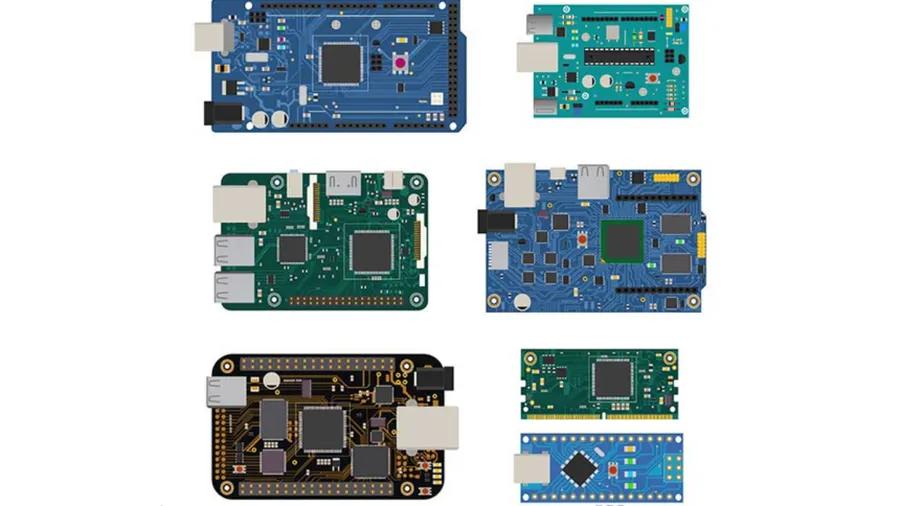
Emerging Electronic Components
The field of electronic components is in constant evolution, driven by demands for smaller, more efficient, and more versatile devices. These emerging trends are not merely incremental improvements; they represent fundamental shifts in how electronic systems are designed and manufactured, impacting everything from consumer electronics to industrial automation and aerospace engineering.
Miniaturization The relentless pursuit of smaller components is a key trend. Techniques like advanced microfabrication, nanotechnology, and 3D packaging are enabling higher densities and smaller form factors. This allows for more functionality in smaller devices, leading to innovations in wearable technology, mobile devices, and implantable medical devices. The challenge is to maintain performance and reliability at these reduced scales.
Enhanced Energy Efficiency As devices become more portable and ubiquitous, energy efficiency is critical. Low-power design, new semiconductor materials, and energy-harvesting techniques are being explored to reduce energy consumption. This includes the development of components with lower quiescent currents, improved switching performance, and better power management capabilities. This is paramount for extending battery life in portable devices and reducing overall energy consumption.
Advanced Materials The use of new materials is pivotal in driving performance improvements. For example, silicon carbide (SiC) and gallium nitride (GaN) are increasingly used in power electronics due to their superior electrical characteristics compared to silicon, enabling higher operating frequencies and reduced power losses. Research into novel materials also focuses on flexible and stretchable electronics for applications like smart textiles and biomedical implants.
Integration and System-on-Chip (SoC) The trend towards higher integration aims to combine multiple functions into a single chip, reducing board space and complexity, while improving performance and reducing power consumption. System-on-Chip (SoC) technology encompasses the integration of processors, memory, and peripherals on a single die. This allows for more sophisticated and compact designs.
Artificial Intelligence (AI) and Machine Learning (ML) Components There is an increasing focus on developing specialized electronic components optimized for AI and ML tasks. This includes neuromorphic chips inspired by biological neural networks, tensor processing units (TPUs) for deep learning, and other hardware accelerators designed for efficient processing of complex algorithms.
Sustainability and Eco-friendliness Environmental concerns are driving efforts to develop more sustainable electronic components. This includes the use of recyclable or biodegradable materials, reducing hazardous substance use, and optimizing manufacturing processes to minimize environmental impact. There's also a focus on the circular economy where components are designed for easier disassembly and recycling.
In summary, electrical and electronic components are the foundational elements of all modern devices. From simple resistors to complex integrated circuits, each component plays a crucial role in enabling functionality. Understanding these components, their properties, and their interactions is essential for anyone interested in electronics, and as technology continues to evolve, so too will these fundamental building blocks of our digital world. Keeping abreast of trends in this field will be necessary to stay on top of emerging technology and innovations.