From the smartphones in our pockets to the complex machinery in factories, electronic circuits are the unsung heroes of our modern world. These circuits, the lifeblood of technology, rely on various components, each playing a crucial role in directing and manipulating electrical current. This article delves into the essential circuit components, examining their functions, and their crucial contributions to the world of electronics. We'll explore the building blocks of these circuits, much like understanding the individual bricks that make up a building, to better grasp the intricacies of how electronic devices operate.
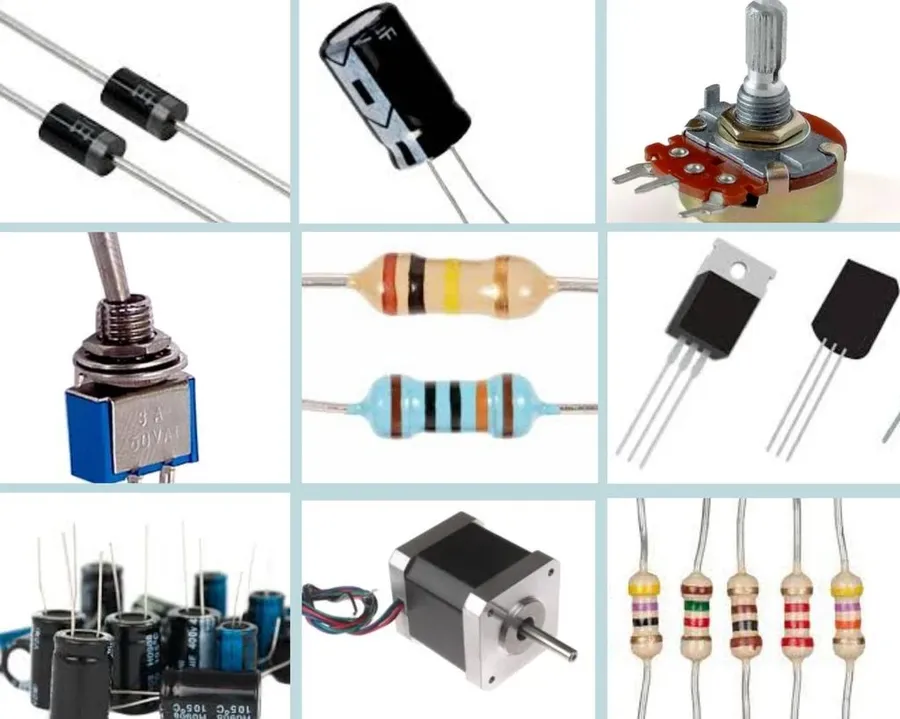
Circuit components are the fundamental building blocks of any electrical or electronic circuit, each with a specific function to manipulate electrical signals or energy. These components can be broadly categorized as either discrete, individual units, or integrated, where multiple components are fabricated onto a single semiconductor chip. Understanding their individual roles and collective interaction is critical to designing and analyzing electronic systems.
Discrete components are individual elements like resistors, capacitors, and transistors that are packaged separately, and require physical connections such as wires or solder. Integrated components, often referred to as integrated circuits (ICs), on the other hand, combine numerous transistors, resistors, and other components onto a single silicon chip, greatly reducing size and complexity of electronic circuits. These ICs range from simple logic gates to complex microprocessors, playing a crucial role in modern electronics.
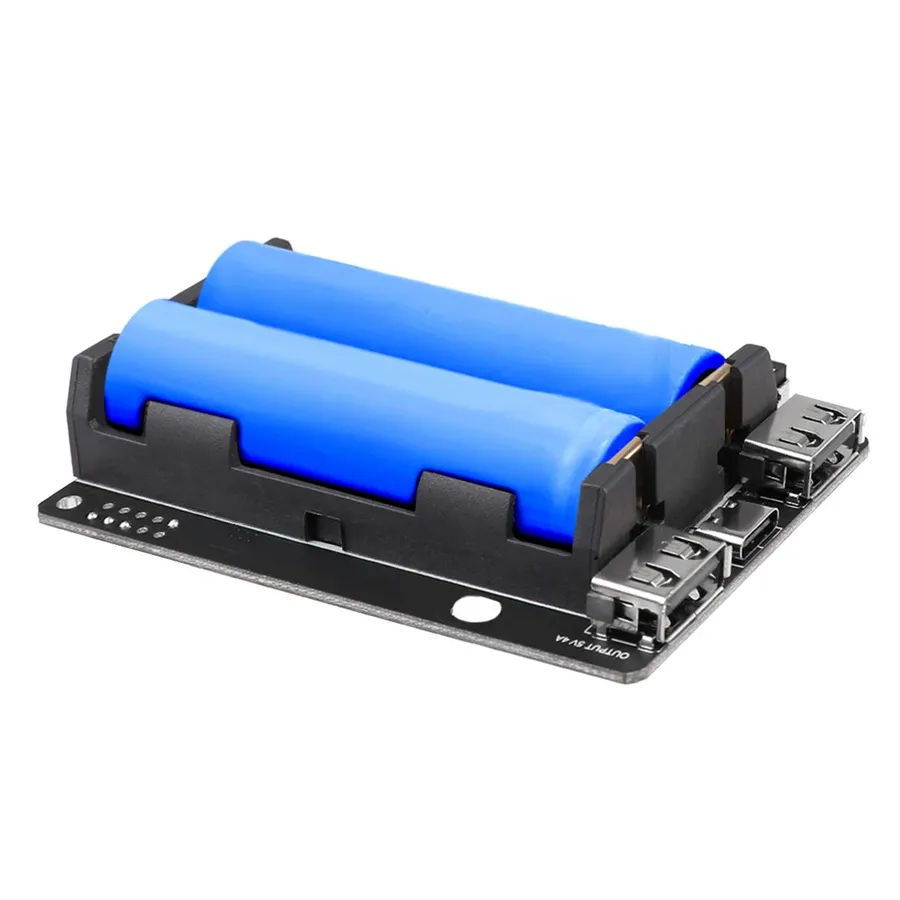
Power sources are the fundamental components that provide the energy necessary for electrical circuits to operate. These sources, primarily voltage and current sources, establish the potential difference and drive the flow of electrons, enabling all electronic devices to function.
Voltage sources, such as batteries and power supplies, maintain a consistent electrical potential difference across their terminals, measured in volts (V). This potential difference pushes electrons through the circuit. Current sources, less common in everyday applications, provide a constant flow of electrons, measured in amperes (A), irrespective of the load resistance, and are typically found in specialized applications like current regulators.
| Characteristic | Voltage Source | Current Source |
|---|---|---|
| Primary Function | Maintains a constant potential difference (voltage) | Maintains a constant flow of charge (current) |
| Internal Resistance | Ideally low | Ideally high |
| Common Examples | Batteries, Power Supplies | Current Regulators |
| Output Behavior | Voltage remains relatively constant even with varying load. | Current remains relatively constant even with varying load. |
Batteries, in their various forms (e.g., alkaline, lithium-ion), convert chemical energy into electrical energy, providing a portable source of power. Power supplies, typically connected to the mains, convert alternating current (AC) to direct current (DC), providing a stable and reliable source for electronic circuits. The selection of a power source is determined by the specific voltage, current, and stability requirements of the circuit.
Passive components are fundamental building blocks in electrical circuits, characterized by their inability to generate energy but crucial for manipulating electrical signals. These components, including resistors, capacitors, and inductors, form the bedrock of circuit functionality by controlling current flow, storing energy, and influencing signal behavior.
Resistors are components that impede the flow of current, and their resistance value, measured in ohms (Ω), directly affects the current flowing through the circuit. There are various types of resistors, each suited for different applications.
| Resistor Type | Description | Typical Applications |
|---|---|---|
| Fixed Resistors | Have a constant resistance value that cannot be changed, typically made from carbon film or metal film. | General circuit applications, current limiting, voltage division |
| Variable Resistors (Potentiometers and Rheostats) | Resistance can be adjusted by rotating a knob or sliding a contact. Potentiometers are typically used as voltage dividers, while rheostats are used to control current. | Volume controls, dimmer switches, adjustable power supplies |
| Special Resistors (Thermistors and Photoresistors) | Their resistance changes with temperature (thermistors) or light intensity (photoresistors). | Temperature sensing, light detection, automatic gain control |
Capacitors are devices that store energy in an electric field and their capacitance, measured in farads (F), determines the amount of charge they can hold at a given voltage. The properties of capacitors vary with construction, so different types are used for various specific applications.
| Capacitor Type | Description | Typical Applications |
|---|---|---|
| Ceramic Capacitors | Use ceramic materials as their dielectric, non-polarized, small size and low cost. | Bypass capacitors, general filtering, coupling applications |
| Electrolytic Capacitors | Use a polarized electrolyte as the dielectric, and offer higher capacitance values for their size, but have polarity. | Power supply filtering, energy storage, decoupling applications |
| Film Capacitors | Employ a thin plastic film as the dielectric and are known for their high precision and stability, non-polarized. | Audio circuits, timing circuits, precision applications |
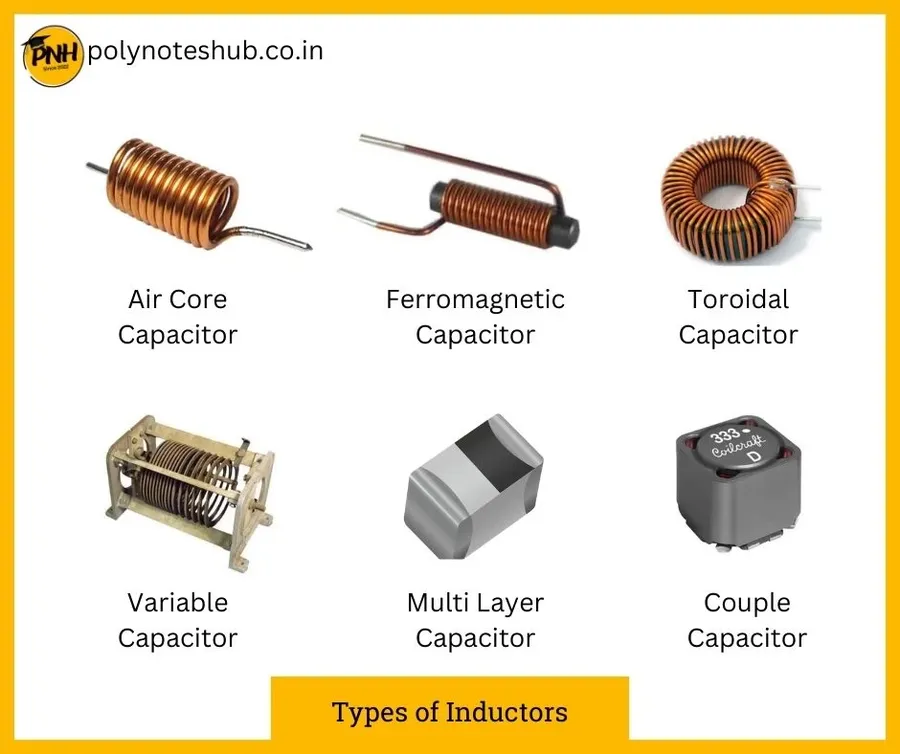
Inductors are components that store energy in a magnetic field when current passes through them. The property of inductance, measured in henries (H), determines the relationship between the current and the induced voltage. Coils and transformers are common types of inductors. The specific geometry of the winding significantly affects the inductance.
| Inductor Type | Description | Typical Applications |
|---|---|---|
| Coils (Air-Core and Ferromagnetic-Core) | A coil is a conductive wire wound into a specific shape to enhance the magnetic field around it. Air-core inductors have lower inductance but higher frequency capability, while ferromagnetic core inductors enhance the magnetic field and can operate at higher inductance. | Tuning circuits, filtering, resonant circuits |
| Transformers | Consist of two or more magnetically coupled coils, used to change voltage levels in AC circuits, also isolate different sections of circuits. | Power supplies, voltage adaptation, impedance matching |
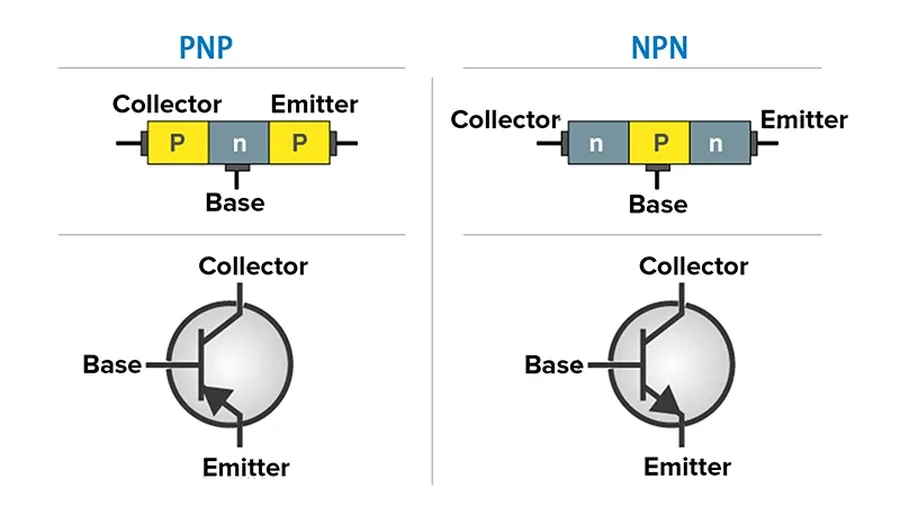
Active components are the core of modern electronic circuits, providing the means to amplify, switch, and control electrical signals. Unlike passive components, which only react to voltage and current, active components require an external power source to function. This enables them to perform complex operations essential for a wide array of electronic devices.
Key active components include diodes and transistors. Diodes primarily act as one-way valves for electrical current, while transistors serve as fundamental building blocks for amplifiers and switches. Their ability to manipulate electrical signals makes sophisticated electronics possible.
Here's a closer look at common active components:
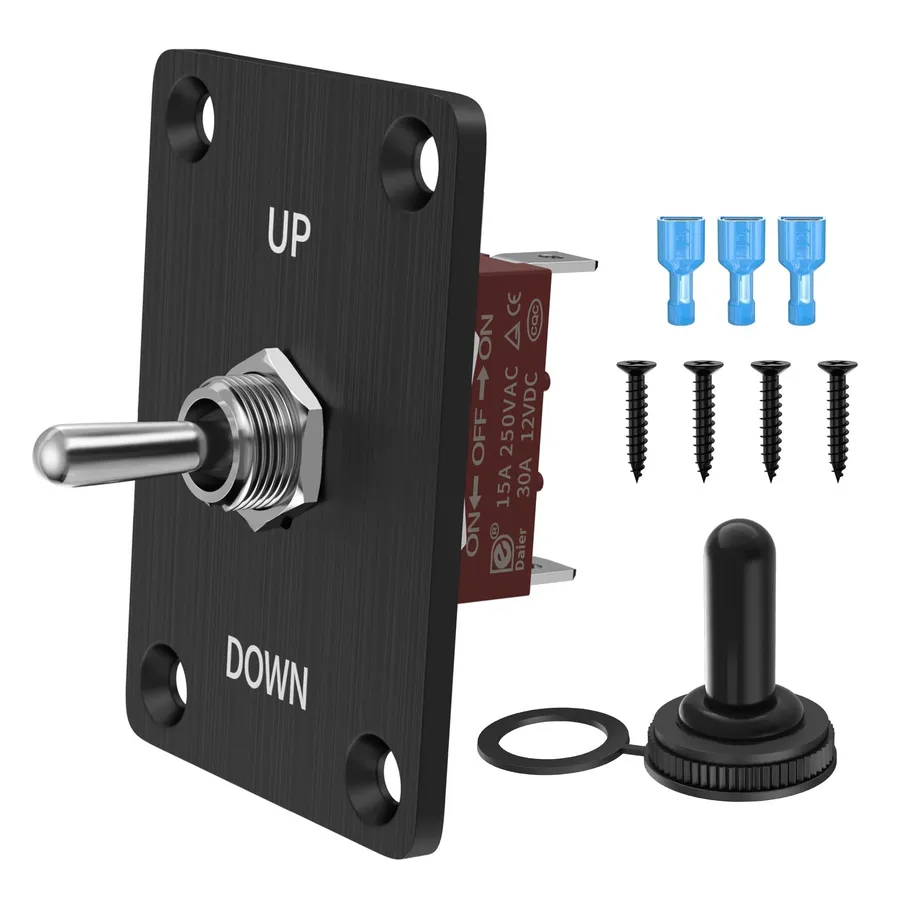
Switches and relays are crucial components for controlling the flow of electricity within a circuit. They act as gatekeepers, enabling or preventing current flow, thereby facilitating the activation or deactivation of different circuit segments. Their role is fundamental to the operation of virtually every electronic device.
Switches are generally operated manually, while relays are electrically controlled switches. Both devices can be used to control circuits, but are implemented in different scenarios based on the needs for manual control and higher current control.
| Switch Type | Description | Typical Application |
|---|---|---|
| SPST (Single Pole Single Throw) | Simplest switch; either opens or closes the circuit. | Light switches, simple on/off control. |
| SPDT (Single Pole Double Throw) | Can switch a single input to one of two outputs. | Selector switches, toggling between two modes. |
| Push Button | Momentary contact switch, activates only when pressed. | Door bells, reset buttons. |
Relays, on the other hand, use an electromagnetic coil to control a mechanical switch. When current is applied to the coil, it generates a magnetic field that pulls a contact, either opening or closing a secondary circuit. Relays are especially useful for controlling high-power circuits with a low-power control signal.
| Relay Type | Description | Typical Application |
|---|---|---|
| Electromechanical Relay | Uses an electromagnet to control a mechanical switch. | Automotive controls, industrial automation. |
| Solid State Relay (SSR) | Uses semiconductor devices for switching, no moving parts. | Motor control, temperature control. |
Understanding the schematic symbols for circuit components is crucial for interpreting and designing electrical circuits. These symbols provide a standardized visual language that allows engineers and technicians to communicate circuit designs effectively. The following table presents common electronic components, their schematic symbols, and their primary functions within a circuit.
| Component | Symbol | Function |
|---|---|---|
| Resistor | A zig-zag line | Limits current flow; provides resistance. |
| Capacitor | Two parallel lines | Stores electrical energy; blocks DC, passes AC. |
| Inductor | A coil of wire | Stores energy in a magnetic field; opposes changes in current. |
| Diode | Triangle pointing to a line | Allows current flow in one direction only. |
| LED (Light Emitting Diode) | Diode symbol with arrows | Emits light when current flows through it. |
| Bipolar Junction Transistor (BJT) | A circle with three legs and a arrow | Amplifies or switches electronic signals. |
| Metal-Oxide-Semiconductor Field-Effect Transistor (MOSFET) | A line with three legs and gate | Amplifies or switches electronic signals using a gate voltage. |
| Battery | A long and a short parallel lines | Provides a DC voltage source. |
| AC Power Source | A circle with tilde inside | Provides an AC voltage source. |
| Switch (SPST) | A line with a break and arc | Opens or closes a circuit. |
| Switch (SPDT) | A line with a break and arc with two output | Divert the circuit in two directions. |
| Ground | Three lines decreasing in size | Provides a common reference point with zero potential. |
Understanding circuit components can be challenging, so we've compiled a list of frequently asked questions to clarify common points of confusion and offer clear, concise explanations.
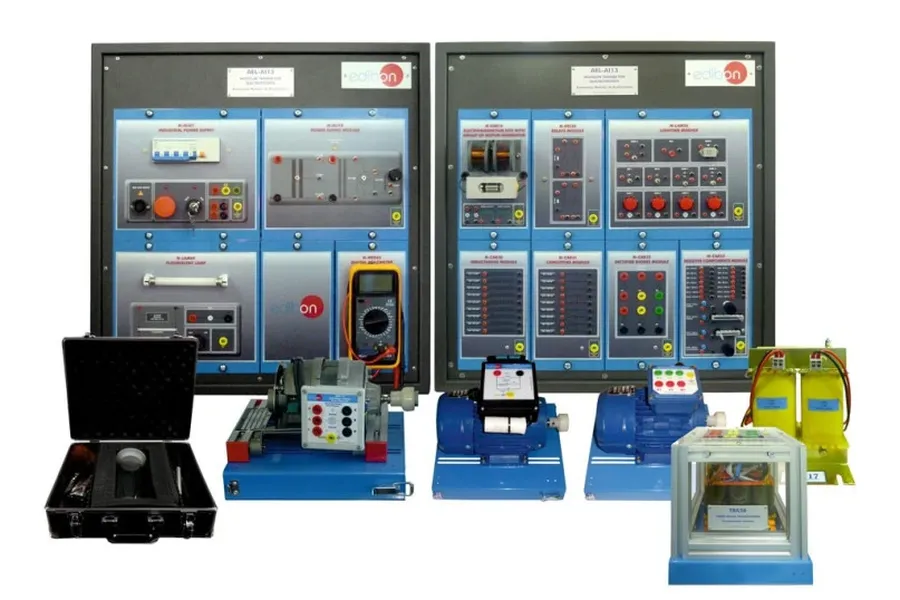
Circuit components, the fundamental building blocks of electronics, are not abstract entities confined to textbooks; they are the very essence of the digital and electronic world we inhabit. Their practical applications are vast, ranging from the simplest of household appliances to the most complex systems used in aerospace and medical technology. Understanding how these components are deployed in real-world devices provides a crucial perspective on their function and importance.
Let's delve into specific examples, exploring the practical roles these components play in various devices.
In essence, the seamless operation of these gadgets stems from the harmonious collaboration of numerous circuit components, each playing a specific role. Without the precise functioning of each component, these systems would fail to perform their intended functions, illustrating the critical dependence of our technological world on these often-overlooked elements.
In summary, understanding circuit components is fundamental to comprehending how electronic devices function. Resistors, capacitors, inductors, and diodes all have specific roles in shaping the flow of electrons to produce a desired outcome. From the simplest circuits to complex electronic systems, these components are the building blocks that enable modern technology, shaping our world and pushing the boundaries of innovation. As technology evolves, further understanding of these circuit components will continue to be crucial for engineering the future of electronic devices.

