The term 'light emitting resistor' often sparks curiosity, conjuring images of resistors glowing like tiny bulbs. While technically, resistors don't emit light in the way an LED does, understanding their role in LED circuits is crucial. This article will clarify what a light emitting resistor isn't and explore its vital function, bridging the gap between everyday electronics and the fascinating world of light emission. Let's demystify this concept and see how resistors play a key role in lighting up our world.
The term 'light emitting resistor' is a misnomer, often used humorously or due to a misunderstanding of basic electronic components. A standard resistor, under normal operating conditions, does not produce light. This misconception typically arises from the confusion between resistors and Light Emitting Diodes (LEDs), which are the components designed to emit light.
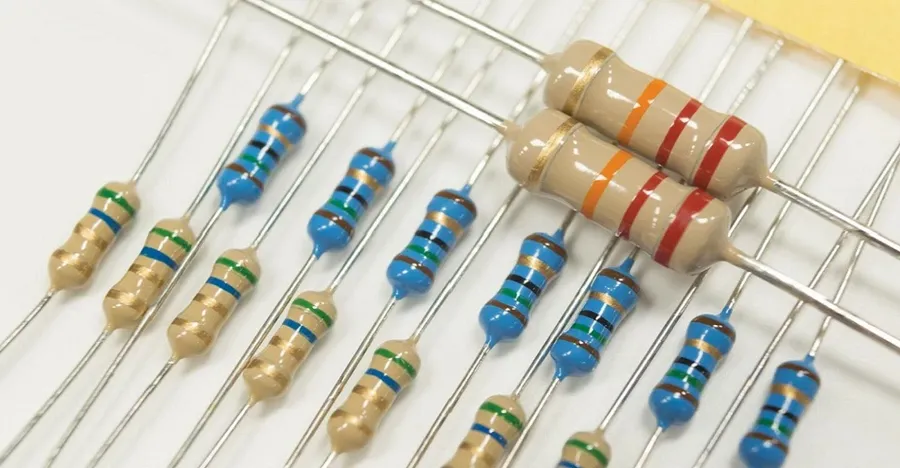
A resistor is a fundamental passive electronic component designed to impede the flow of electrical current within a circuit. This opposition to current, known as resistance, is a crucial property utilized to control voltage levels, limit current, and divide voltage within a circuit. Resistors are essential building blocks in virtually all electronic devices.
The core function of a resistor lies in its ability to convert electrical energy into heat due to collisions between moving electrons and the atoms of the resistive material. This material is chosen based on its inherent resistivity, which quantifies how strongly it opposes electrical current. Common resistor materials include carbon, metal film, and wirewound elements.
| Property | Description |
|---|---|
| Resistance (R) | Measured in ohms (Ω), it quantifies the opposition to current flow. Higher resistance results in lower current flow for a given voltage. |
| Resistivity (ρ) | An intrinsic property of a material that indicates its opposition to electrical current. It is measured in ohm-meters (Ω·m). |
| Tolerance | Indicates the allowable deviation of the actual resistance value from the stated or nominal value, expressed as a percentage (+/- %). |
| Power Rating | Maximum power that a resistor can safely dissipate as heat without damage. Measured in watts (W), exceeding it can cause resistor failure. |
Understanding these properties is crucial for selecting the appropriate resistor for a given application in an electronic circuit.
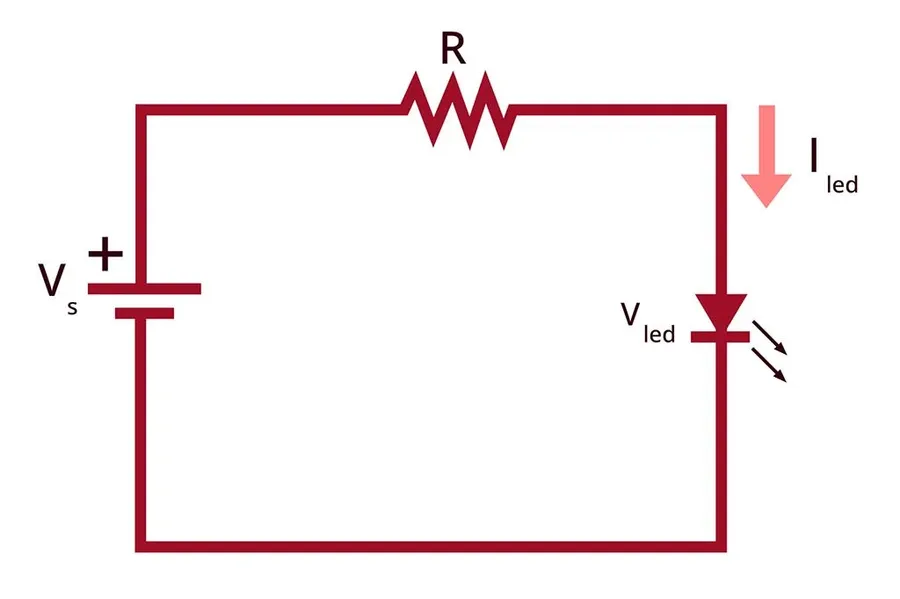
Resistors are indispensable components in LED circuits, primarily serving to regulate the current flowing through the LED. Without a properly sized resistor, an LED would draw excessive current, leading to rapid overheating and subsequent failure. This current control is not a light emitting function but a necessary condition for the stable operation of the LED.
The fundamental principle is that LEDs are current-driven devices, meaning their brightness and longevity are directly tied to the amount of current passing through them. Each LED has a specific forward current rating, and exceeding this rating can result in immediate damage or a drastically shortened lifespan. A resistor placed in series with the LED ensures that the current remains within this safe operating range.
Furthermore, resistors introduce a voltage drop within the circuit. As current flows through a resistor, a portion of the overall voltage is consumed, reducing the voltage available to the LED. This voltage drop is dictated by Ohm's Law (V=IR), where voltage (V) equals current (I) multiplied by resistance (R). By strategically selecting the resistor value, we can ensure that both the voltage and current supplied to the LED are within its operational parameters. This allows for precise control over the LED's brightness and protects it from damage.
It's crucial to note that the resistor itself does not emit any light during normal operation. The light emitted in an LED circuit comes solely from the LED itself, which is a semiconductor diode and not a resistor.
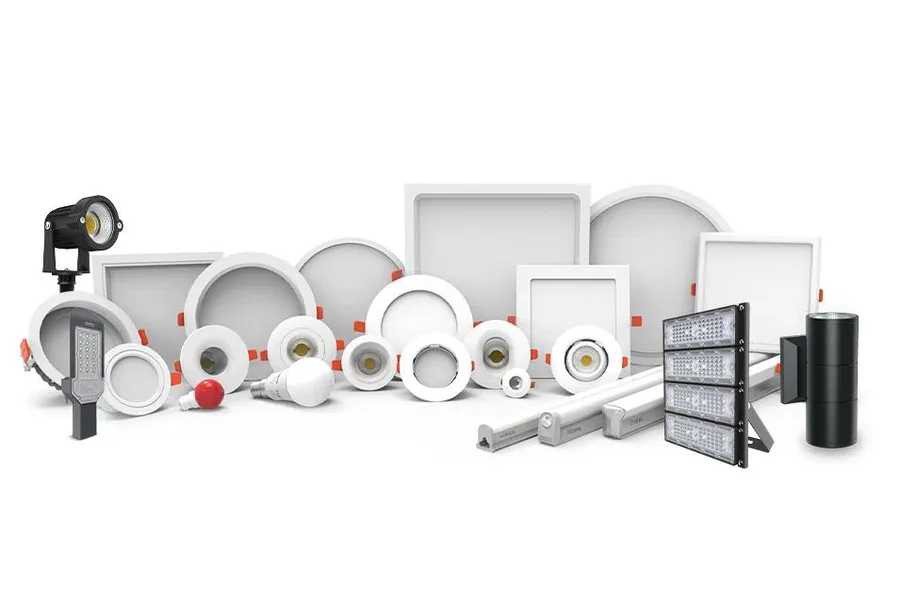
Light Emitting Diodes (LEDs) are semiconductor devices that fundamentally differ from resistors in their function; instead of impeding electrical current, they convert electrical energy directly into light. This conversion process occurs within the semiconductor material, primarily through the phenomenon of electroluminescence.
LEDs are constructed from doped semiconductor materials, typically combinations of elements from groups III and V of the periodic table such as Gallium, Arsenic and Phosphorus. When a voltage is applied across an LED, electrons move from the n-type material to the p-type material through the depletion region. When these electrons combine with holes (electron vacancies) in the p-type region, photons are emitted at a specific wavelength, corresponding to the bandgap energy of the semiconductor material. This directly produces the light we see.
| Feature | Resistor | LED |
|---|---|---|
| Primary Function | Limits current flow, dissipates energy as heat | Converts electrical energy into light |
| Light Emission | Does not emit light under normal operating conditions | Emits light when current flows through it |
| Construction | Typically made of a conductive material such as carbon or metal alloy | Made of p-n junction semiconductor materials |
| Energy Conversion | Converts electrical energy into heat | Converts electrical energy into light |
| Polarity | Non-Polarized | Polarized, current flows in one direction only |
Unlike resistors, which primarily dissipate electrical energy as heat due to their resistance to electron flow, LEDs actively generate light as their primary function. This distinction is crucial in understanding their different roles in electronic circuits. The intensity and color of the emitted light depend on the specific semiconductor materials used and the amount of current passing through the LED.
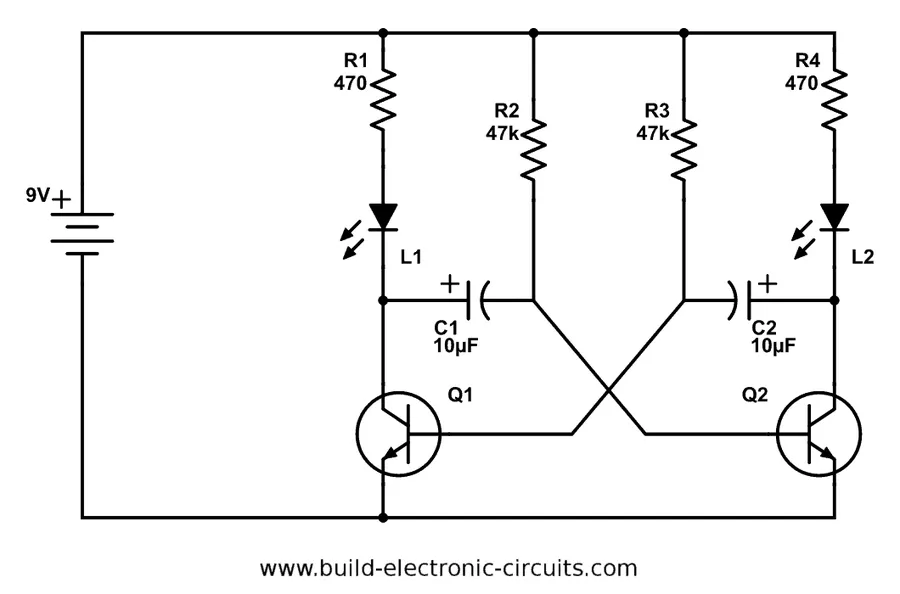
Determining the correct resistor value for an LED is crucial to ensure its proper operation and longevity. This involves using Ohm's Law to limit current flow to the LED's specifications, preventing damage and optimizing light output. The relationship between voltage, current, and resistance is defined by Ohm's Law.
Ohm's Law states: *Voltage (V) = Current (I) × Resistance (R)*. To calculate the necessary resistor value (R), we rearrange the formula to: *R = V / I*. However, in an LED circuit, we need to consider the voltage drop across the LED (V_LED) and the source voltage (V_source). Thus, the formula is modified to: *R = (V_source - V_LED) / I_LED*, where I_LED is the desired current for the LED.
Here is a step-by-step guide to calculate the resistor value:
Let’s look at a simple example: Suppose we have a red LED with a forward voltage drop of 2V (V_LED = 2V) and a desired current of 20mA (I_LED = 0.020A), powered by a 5V source (V_source = 5V). Applying the formula: R = (5V - 2V) / 0.020A = 150 ohms. So, we should use a 150 ohm resistor, or slightly higher (e.g., 180 or 220 ohms), to avoid overdriving the LED. Note: Ensure units are consistent. Volts (V), Amps (A), and Ohms (Ω).
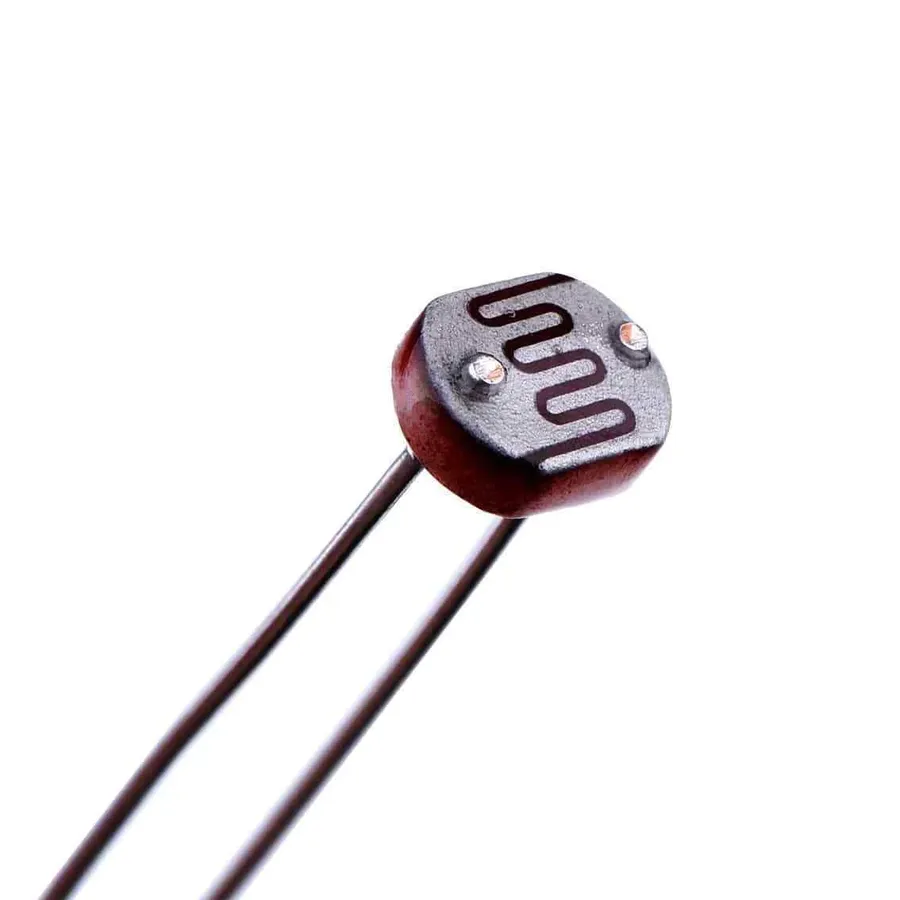
While standard resistors maintain a relatively constant resistance, photoresistors, also known as light-dependent resistors (LDRs), exhibit a resistance that varies inversely with the intensity of incident light. This fundamental difference dictates their applications in electronic circuits.
| Characteristic | Standard Resistor | Photoresistor (LDR) |
|---|---|---|
| Resistance | Fixed Value | Varies with Light Intensity |
| Primary Function | Limit Current Flow | Light Sensing |
| Response to Light | No Change | Decreases Resistance with Increasing Light |
| Typical Material | Carbon, Metal Film | Cadmium Sulfide (CdS), Lead Sulfide (PbS) |
| Applications | Current Limiting, Voltage Division | Automatic Lighting Control, Light Meter |
Standard resistors are essential for controlling current in electronic circuits. Their resistance, defined by their material and physical dimensions, is designed to remain constant within specified tolerances. This predictability allows for precise control over current flow, such as limiting current to prevent damage to LEDs or other sensitive components. In contrast, photoresistors (LDRs) leverage the photoelectric effect in specific semiconductor materials. When light photons impinge on the LDR material, they excite electrons, causing them to move more freely and reduce the material's resistance. In dark conditions, the resistance of an LDR is typically very high, often in the megaohm range, while in bright conditions, resistance can drop to just a few ohms. This characteristic of a photoresistor makes it invaluable in light-sensing applications where circuits respond to changes in ambient light.
Photoresistors are widely utilized in various applications that require light detection. Common applications include automatic lighting systems that activate at dusk, light meters for photography, and in sensor circuits that detect the presence or absence of light to trigger specific actions, or as part of an analog circuit. The selection between standard resistors and LDRs depends on whether a constant resistance is needed or if a variable resistance dependent on light is required.
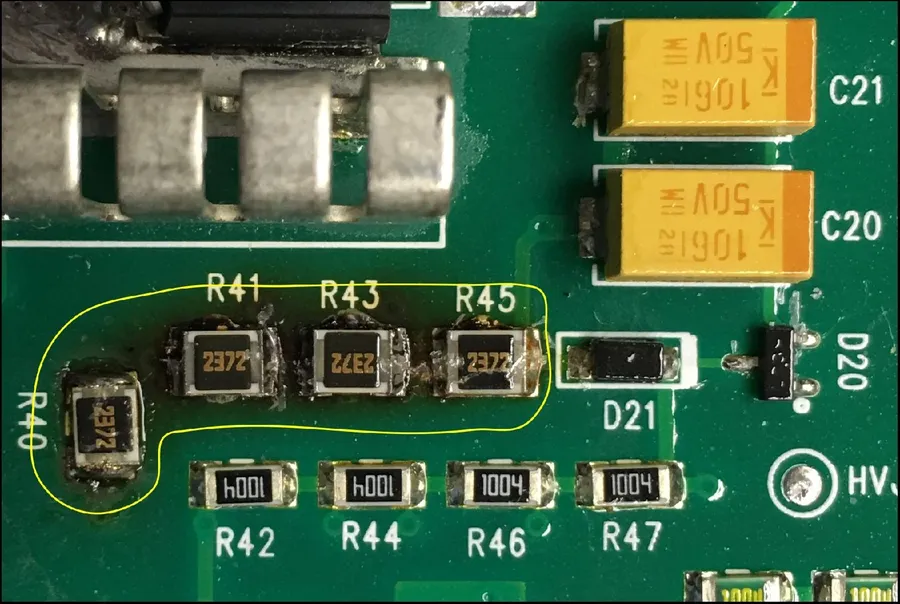
Under normal operating conditions, resistors do not emit light. However, a resistor can appear to glow when subjected to excessive current, a condition indicative of a critical failure rather than intended functionality. This phenomenon occurs when the power dissipation within the resistor exceeds its rated capacity, causing it to overheat.
The apparent light emission is not due to the resistor generating light, but rather the intense heat it produces as it burns out. This extreme temperature can lead to visible incandescence, where the material glows due to heat. This overheating process is not only a sign of circuit malfunction but also a potential fire hazard, requiring immediate attention and rectification of the underlying problem.
This section addresses common questions and misconceptions regarding resistors and their interaction with LEDs. Understanding these nuances is crucial for effective circuit design and preventing component damage.
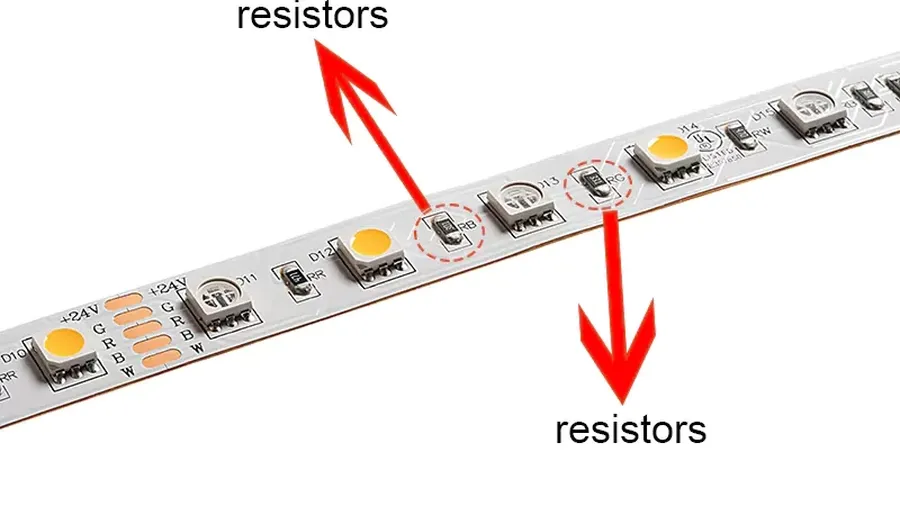
Resistors are fundamental components in a vast array of lighting and electronic applications, serving crucial roles in current control and circuit protection. They are not light emitters themselves but are essential for the proper functioning and longevity of light-emitting components, particularly LEDs.
| Application | Resistor Function | Benefit |
|---|---|---|
| LED Strips | Current Limiting for Each LED Segment | Prevents Overheating and Ensures Even Brightness |
| LCD Backlights | Regulates LED Current | Consistent Illumination and Long Life |
| Automotive Lights | Current Control for LED Arrays | Safe and Reliable Performance |
| Digital Displays | Brightness Control | Optimal Visibility |
| General Circuitry | Current limiting | Circuit protection from overcurrent faults |
While the idea of a 'light emitting resistor' might seem intriguing, it's essential to understand that resistors don't actively emit light. Their critical role is to control current flow and protect LEDs, the true light emitters, from damage. By grasping this distinction and correctly applying resistors, we can effectively design and maintain safe and efficient lighting and electronic systems. Thinking more broadly, the humble light emitting resistor, or rather the resistor and LED partnership is a classic example of engineering precision at work in devices large and small. Understanding such nuances leads to a greater appreciation of everyday technology.

