In the ever-evolving world of electronics, Surface Mount Diodes (SMD diodes) have become indispensable components. Just as our modern lives rely on tiny integrated circuits, SMD diodes play a crucial role in controlling electrical current at a miniature scale. This article unravels the intricacies of SMD diodes, covering their various types, applications, how to identify them, and comparing them with traditional through-hole diodes. Whether you're a hobbyist or a seasoned engineer, this guide will enhance your understanding of these fundamental components.
What is an SMD Diode?
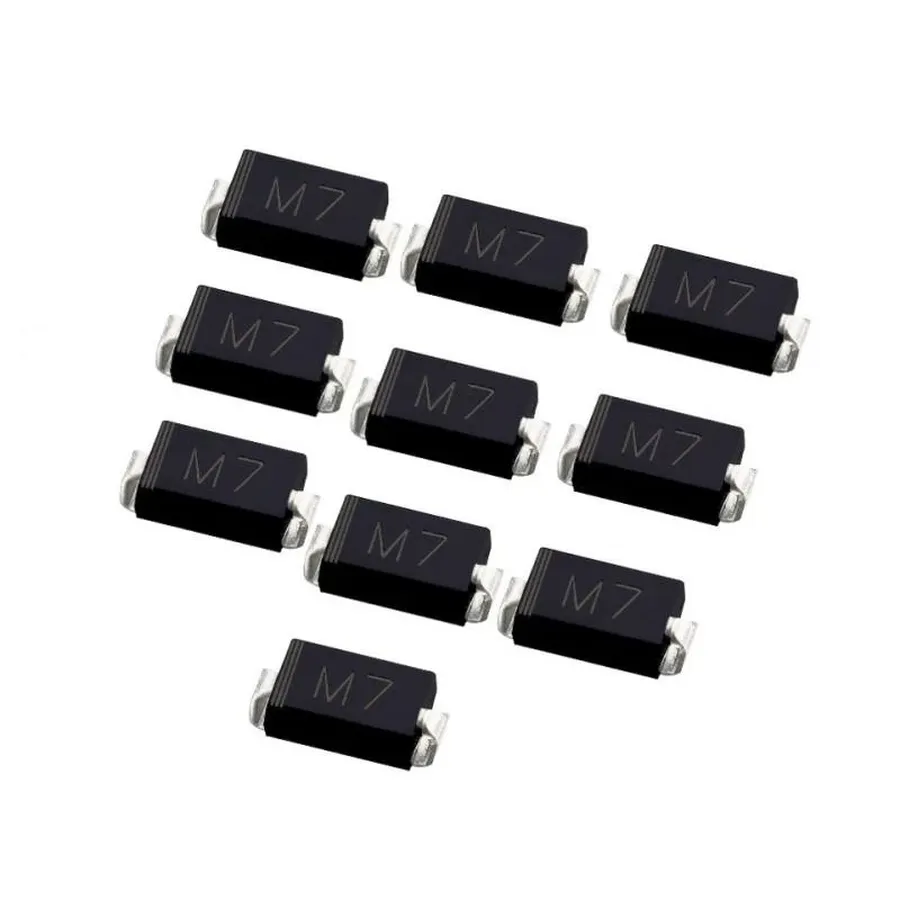
SMD Diode
Surface Mount Device (SMD) diodes are a cornerstone of modern electronics, characterized by their compact size and direct mounting onto a circuit board's surface, without the need for through-holes. This contrasts sharply with traditional through-hole diodes, which feature leads that must be inserted into plated holes on the PCB. SMD diodes' small footprint and automated assembly capabilities make them essential for high-density, miniaturized electronic devices.
The primary distinctions between SMD and through-hole diodes lie in their size, mounting methodology, and lead structure. SMD diodes are significantly smaller, allowing for higher component density and reduced overall board size. They are mounted directly onto the board surface using solder paste and reflow soldering techniques, which enables efficient automated manufacturing processes. Conversely, through-hole diodes are larger, requiring holes on the PCB for their leads, and are typically soldered by hand or using wave soldering. This fundamental difference affects the manufacturing process, design considerations, and the overall size and complexity of electronic devices.
Types of SMD Diodes
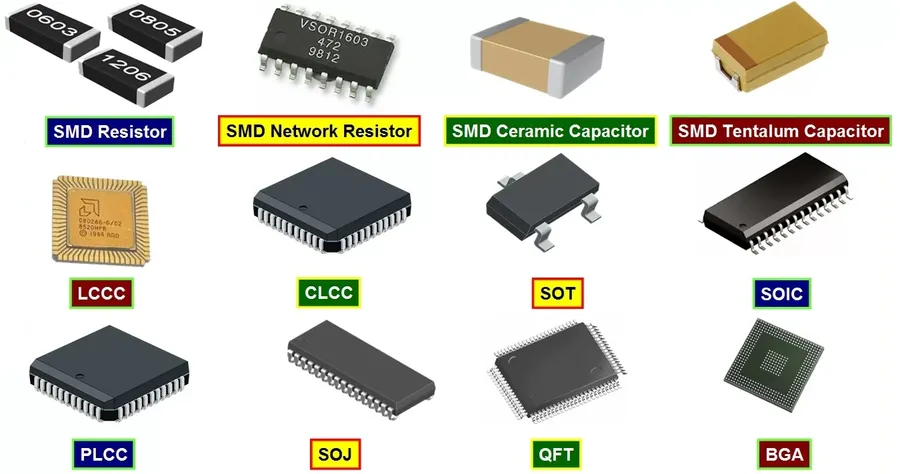
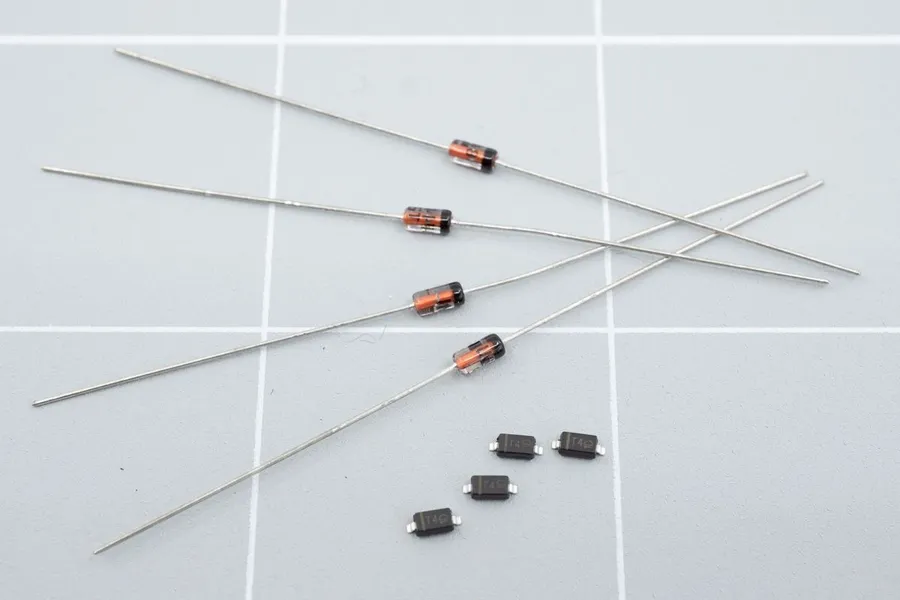
Different SMD Diode Packages
SMD (Surface Mount Device) diodes are available in a variety of types, each designed for specific applications within electronic circuits. This section details the common types, their characteristics, and typical uses.
General-Purpose Diodes These diodes are the workhorses of electronics, used for rectification, signal processing, and general circuit protection. They have moderate forward voltage drop and reverse recovery time. A common example is the 1N4148 in an SMD package.
Switching Diodes Optimized for high-speed switching applications, these diodes have a very fast reverse recovery time, which allows them to quickly transition between conducting and blocking states. They are common in high-frequency circuits and digital logic. Examples include the BAS16 and BAW56 in SMD packages.
Schottky Diodes Characterized by a low forward voltage drop and very fast switching speeds, Schottky diodes are ideal for applications requiring high efficiency, such as power converters, voltage clamps, and RF detectors. These are often used to prevent reverse current in solar panel systems. Common examples are the BAT41 and BAT54S.
Zener Diodes Designed to operate in reverse breakdown, Zener diodes provide a stable reference voltage, making them essential in voltage regulation circuits. They are used in over-voltage protection, voltage reference, and clippers. The BZX84 series is a common example of a Zener diode in a SMD package.
Light Emitting Diodes (LEDs) While technically diodes, LEDs are used for their light-emitting properties. SMD LEDs come in various colors and sizes, used for indication, displays, and illumination. SMD LEDs have a wide range of current and voltage ratings. Standard SMD LED package sizes include 0603, 0805, and 1206.
Diode Type
Forward Voltage Drop
Reverse Recovery Time
Typical Applications
Common SMD Examples
General-Purpose
Medium
Medium
Rectification, Signal Processing
1N4148
Switching
Medium
Fast
High-Speed Switching
BAS16, BAW56
Schottky
Low
Very Fast
Power Conversion, Voltage Clamping
BAT41, BAT54S
Zener
High
Slow
Voltage Regulation, Over-Voltage Protection
BZX84
LED
Varies
N/A
Indication, Illumination
Various SMD sizes
SMD Diode Packages and Dimensions
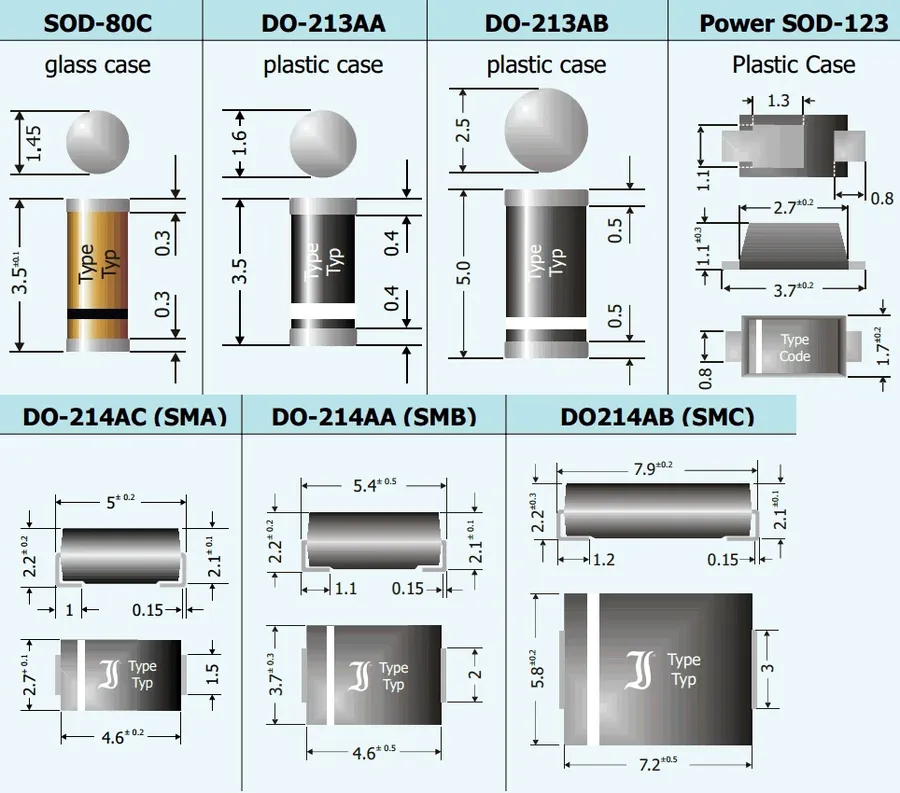
SMD Diode Dimensions
SMD diodes are available in a variety of standardized packages, each with specific dimensions to facilitate automated assembly processes. These packages are significantly smaller than their through-hole counterparts, contributing to the miniaturization of electronic devices. Understanding these package sizes and their corresponding dimensions is crucial for proper component selection and PCB design.
Package Name
Length (mm)
Width (mm)
Height (mm)
Typical Application
Package Marking Examples
0603 (1608 metric)
1.6
0.8
0.5
General purpose, low power
A, B, C, etc.
0805 (2012 metric)
2.0
1.25
0.6
General purpose, medium power
1A, 1B, 1C, etc.
1206 (3216 metric)
3.2
1.6
0.7
General purpose, higher power
2A, 2B, 2C, etc.
SOD-123
3.68
1.88
1.02
Medium power, higher current
A, B, C, etc.
SOD-323
2.5
1.3
0.9
Low to medium power applications
E, F, G, etc.
Package markings on SMD diodes are typically very small and may consist of a combination of numbers and/or letters. These markings are not standardized across all manufacturers, however, they generally help identify the diode's specific type, manufacturer, or a date code. To decode these markings accurately, referring to the manufacturer's datasheet is often necessary. It's important to note that some extremely small packages, such as 0402 (1005 metric) or smaller, may not have any markings due to size constraints.
Identifying SMD Diodes
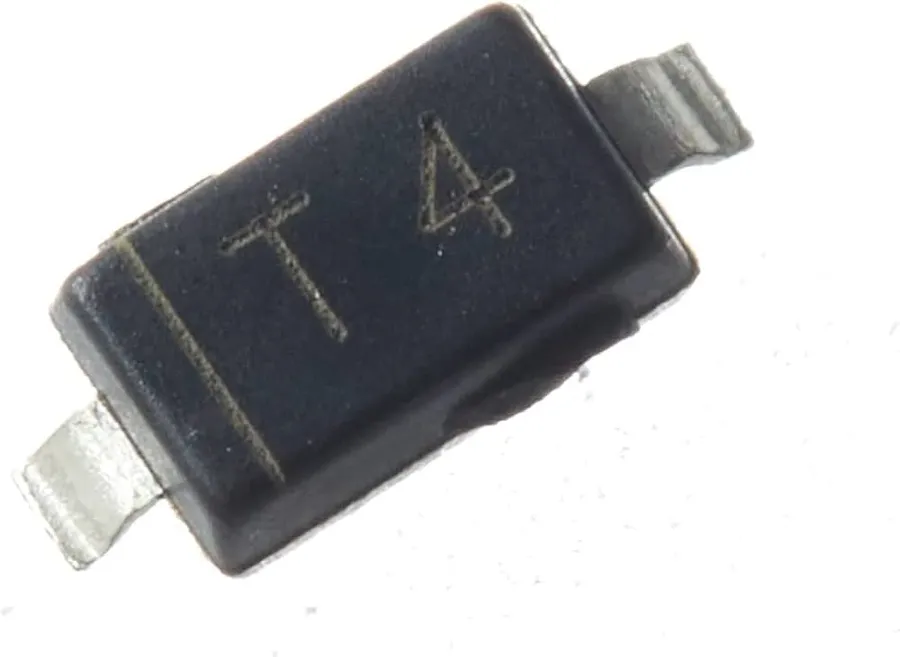
SMD Diode Markings
Identifying SMD (Surface Mount Device) diodes accurately is crucial for effective circuit repair and design. Due to their small size, SMD diodes utilize markings, codes, and datasheets for identification. Understanding these methods is essential to prevent misidentification, which can lead to circuit malfunction. This section will guide you through the process, covering common marking schemes, potential pitfalls, and useful resources.
SMD diodes often have very limited space for markings, typically employing alphanumeric codes rather than full part numbers. These codes are specific to the manufacturer and may not follow a universal standard. Therefore, it is important to consult datasheets or reliable databases to correctly identify a specific diode.
Common Identification Methods include:
Alphanumeric Codes: These are the most common markings on SMD diodes. A combination of letters and numbers represents the diode's type and sometimes manufacturer. Examples include 'A7' or 'T4'. These codes are not standardized, so lookup is required.
Color Bands: Some larger SMD diodes may utilize color bands similar to through-hole components. However, this is less common. Interpretation of the bands is needed using color code charts, but these are not often seen on diodes.
Package Type: The physical size and shape of the SMD diode package also provides clues. Common packages like SOD-123, SOD-323, 0603, 0805, and 1206 are widely used and can help narrow down possibilities.
Manufacturer Logos: Sometimes a very small logo of the manufacturer may be printed on the device, this could lead to the correct device via manufacturer's website or reference.
Several online resources are available to assist in identifying SMD diodes:
Datasheets: Consulting the manufacturer’s datasheet is the most reliable method. Datasheets provide detailed specifications, pinouts, and marking codes.
Online Databases: Websites like 'alltransistors.com' or 'smdmark.com' allow searching by code, package, and manufacturer. These are often crowdsourced databases and should be verified with datasheets where possible.
Component Identifiers: Some professional electronics diagnostic equipment contains databases of codes, however it is important to verify these with official documentation.
Common SMD Diode Codes and Examples:
Code
Description
Package
A7
Often a 1N4148 switching diode, but can vary by manufacturer.
SOD-323
T4
Typically a BAS16 high-speed switching diode.
SOD-123
BAW
Common Schottky Diode e.g BAS40
SOD-123
W4
Another high-speed diode, check datasheet.
SOD-323
Potential Pitfalls:
Non-Standard Markings: Manufacturers may use proprietary marking schemes not publicly documented. Cross-referencing multiple sources is critical.
Ambiguous Codes: Some codes may be used by multiple manufacturers or for different device types. Careful investigation is required.
Limited Markings: Extremely small packages might have only a single digit or letter, making identification more complex.
Counterfeit Parts: Counterfeit components often use incorrect or misleading codes. Always purchase components from reputable suppliers.
By carefully examining the markings, using datasheets and reliable online databases, and avoiding common pitfalls, you can accurately identify SMD diodes in most cases. Accurate identification ensures effective circuit repair, design and avoids the issues caused by incorrect replacements.
SMD Diode Polarity
SMD Diode Polarity
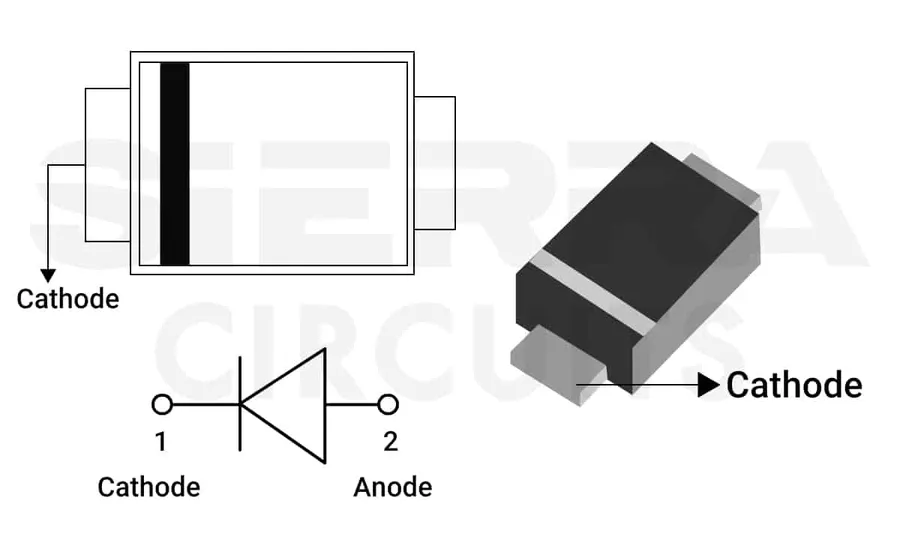
Polarity is a crucial characteristic of diodes, dictating the direction of current flow. SMD (Surface Mount Device) diodes, like their through-hole counterparts, are polarized components, meaning they have a distinct anode and cathode terminal. Correctly identifying these terminals is essential for proper circuit function, and incorrect placement will impede operation. The cathode is typically marked to indicate the direction of current flow.
Importance of Polarity Diodes are designed to conduct current in one direction only (from anode to cathode). Reverse biasing a diode can lead to damage or circuit malfunction. In a circuit with mixed SMD component, polarity misidentification can result in entire system failures, making it a critical factor in design and assembly
Identifying the Cathode SMD diode packages utilize various methods to denote the cathode. These commonly include a band, a dot, or a specific shape on the diode body. Some packages may have a color coding system or utilize a unique feature on the package itself to denote polarity. Always consult the manufacturer's datasheet to confirm the cathode marking.
Testing Polarity with a Multimeter A multimeter set to diode test mode can help confirm polarity. The multimeter's positive lead is connected to the assumed anode, and the negative lead to the assumed cathode. A small voltage drop, typically between 0.3V to 0.7V, will be measured, indicating correct polarity. If the leads are reversed, the meter will show an open circuit or a very large resistance. The expected forward voltage varies depending on the diode type.
Package Type
Cathode Marking Method
Additional Notes
SOD-123
Band or line
Band usually closer to one edge
SOD-323
Band or line
A black band is commonly used
0603/0805/1206
Dot or line
Sometimes difficult to see without magnification
SMD Diode vs. Through-Hole Diodes: A Comparison
SMD Diode vs Through Hole Diode
Surface Mount Device (SMD) diodes and through-hole diodes represent two distinct approaches to component mounting in electronic circuits. SMD diodes, designed for direct surface mounting, contrast sharply with through-hole diodes, which utilize leads that pass through holes in the circuit board. This fundamental difference dictates their respective applications, advantages, and disadvantages.
In summary, the choice between SMD and through-hole diodes hinges on application-specific priorities. SMD diodes dominate in high-volume, compact designs, while through-hole components retain relevance in prototyping, low-volume production and applications where mechanical robustness or ease of handling are paramount.
Applications of SMD Diodes
SMD Diodes on a Circuit Board
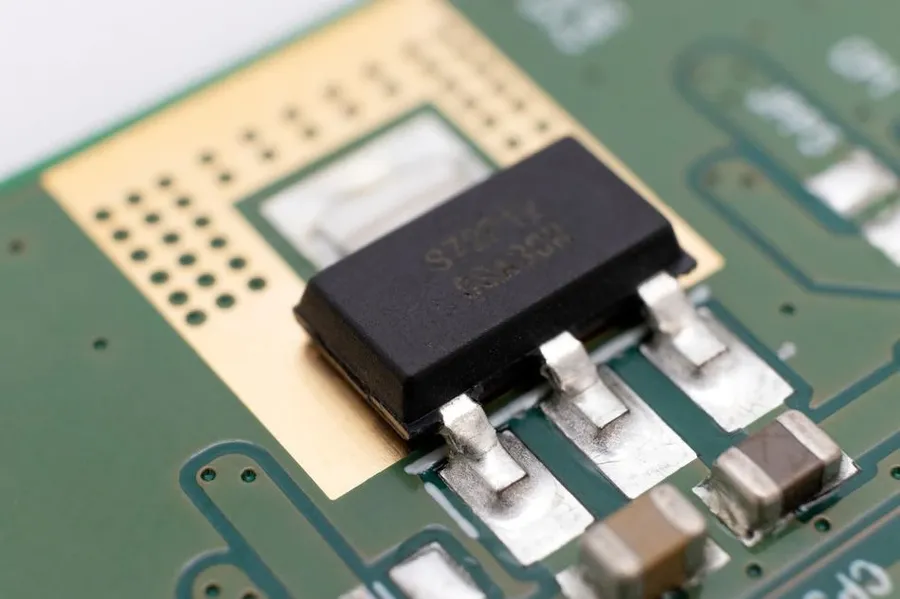
SMD (Surface Mount Device) diodes are integral components in modern electronics, finding widespread use across numerous applications due to their compact size and efficient performance. Their small footprint allows for higher circuit density on PCBs (Printed Circuit Boards), making them crucial in increasingly miniaturized devices.
Their versatility in function, ranging from simple rectification to complex signal processing, coupled with diverse types of SMD diodes (such as Schottky, Zener, and switching diodes), makes them indispensable in many electronic designs. Below are some examples of their applications.
Mobile Devices In smartphones and tablets, SMD diodes are used in power management circuits for voltage regulation, reverse polarity protection, and signal rectification. They ensure that the power supply is stable, protecting sensitive components from damage. Their small size is ideal for the densely packed PCBs in mobile devices.
Power Supplies SMD diodes are crucial in AC-DC power supplies to rectify alternating current (AC) to direct current (DC). Schottky diodes, with their low forward voltage drop, are often used in switching power supplies for increased efficiency, minimizing heat generation and energy loss, especially in battery charging circuits.
Automotive Electronics Within vehicles, SMD diodes perform vital functions in various electronic control units (ECUs), including engine management, lighting systems, and infotainment systems. They handle a wide range of voltage and current levels, providing reliable performance in the harsh environment of automotive applications, protecting critical components, in lighting systems for reverse polarity protection and voltage regulation.
LED Lighting SMD diodes, particularly light-emitting diodes (LEDs), are not only the light source but also integral for driving and controlling the LED itself in lighting systems. They provide precise current control and efficient power conversion. They are used extensively in backlighting for displays, interior lighting, and general illumination for homes, businesses, and the automotive industry
Printed Circuit Boards (PCBs) SMD diodes are fundamental building blocks on PCBs, serving a variety of functions. They are used for signal processing, reverse polarity protection, and as freewheeling diodes in inductive circuits. They are essential in nearly all electronic devices, enabling the complex functionality that relies on a high level of component density on each PCB.
Consumer Electronics From home appliances to gaming devices, SMD diodes are used for a multitude of functions. They are key components in power circuits, ensuring safe and efficient operation. Their reliability and small size make them preferred for high-volume consumer product manufacturing.
Frequently Asked Questions about SMD Diodes
This section addresses common questions regarding SMD (Surface Mount Device) diodes, providing concise and authoritative answers to enhance understanding and practical application of these essential electronic components.
What exactly is an SMD diode? An SMD diode is a semiconductor device designed for surface mounting onto a printed circuit board (PCB). Unlike through-hole diodes, it lacks wire leads and is soldered directly onto the board's surface. This design results in smaller, more compact electronic assemblies, allowing for higher component density on PCBs.
How can I accurately identify an SMD diode? SMD diode identification relies primarily on markings printed on the component body. These markings, often alphanumeric codes, correspond to specific manufacturer part numbers. Datasheets from the manufacturer are then essential to determine the diode's specifications, such as type, polarity, and electrical characteristics. Online databases and component identification tools can also assist in matching the code to the specific diode type. Always verify with an official datasheet to avoid errors.
Do SMD diodes have polarity, and how do I determine it? Yes, most SMD diodes are polarized components, meaning they have distinct anode and cathode terminals. Proper polarity is critical for correct circuit operation. The cathode is typically marked with a band or line on the diode body, a dot, or a uniquely shaped feature on the package. Always consult the datasheet of the specific SMD diode to confirm polarity as marking conventions can vary by manufacturer. Additionally, a multimeter in diode test mode can confirm polarity.
What distinguishes an SMD diode from a through-hole diode? The primary difference lies in their physical construction and mounting methods. SMD diodes are designed for surface mounting, resulting in a smaller footprint, lower profile, and higher component density. Through-hole diodes, with their wire leads, are inserted into holes in the PCB. SMD diodes are better suited for high-volume, automated manufacturing, while through-hole diodes are often favored for prototyping and manual assembly due to their ease of handling and soldering.
Are there any specific tools needed for testing an SMD diode? A digital multimeter is essential for testing SMD diodes. When using it in diode test mode, it provides a forward voltage drop reading when connected correctly (anode to positive, cathode to negative) and an open circuit reading when connected in reverse. For SMD diodes, testing probes may need to be fine tipped to ensure proper contact with the component. Additionally, an LCR meter is more accurate when measuring the capacitance of the diode, especially for high-frequency applications.
What are the common types of SMD diodes available? SMD diodes come in various types, including general-purpose diodes (e.g., 1N4148), switching diodes (e.g., BAS16), Schottky diodes (offering faster switching speeds and lower forward voltage drops), Zener diodes (for voltage regulation), and light-emitting diodes (LEDs). Each type has distinct characteristics and intended applications, making the proper selection critical.
Can I replace an SMD diode with a through-hole diode? While it is possible to substitute a through-hole diode for an SMD diode in certain applications, it may require careful consideration and modifications. Through-hole diodes are larger and require a different mounting method, so it is important to choose one that has equivalent electrical characteristics. It is generally recommended to use the designed SMD equivalent when possible for optimal performance and proper fit. This also allows for better adherence to the PCB layout and avoids unforeseen design complications.
Soldering SMD Diodes: Best Practices
Hand Soldering SMD Diode
Soldering SMD (Surface Mount Device) diodes requires precision and care due to their small size and delicate nature. Proper technique is crucial to ensure reliable electrical connections and prevent damage to the component. This section outlines the best practices for both manual and reflow soldering methods.
Before soldering, ensure the work area is clean, well-lit, and has adequate ventilation. Using the correct tools and materials, such as a temperature-controlled soldering iron, fine-tipped tweezers, appropriate solder, and flux, is essential.
Both manual soldering and reflow soldering have advantages and disadvantages, with selection depending on production needs and equipment availability. Manual soldering is suitable for small-scale assembly, prototyping, and rework, while reflow soldering is preferred for high-volume PCB production.
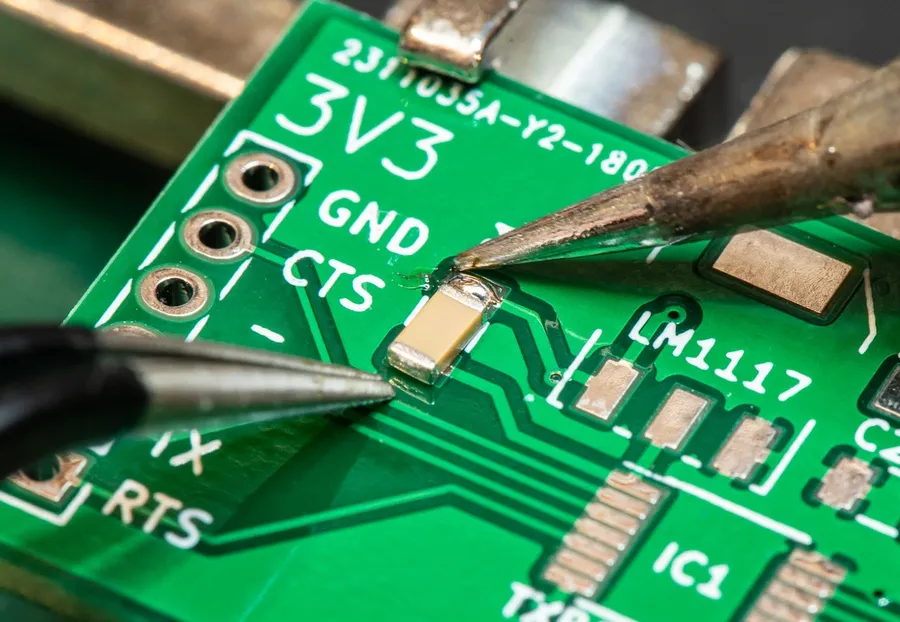
Manual Soldering Techniques for SMD Diodes Apply a small amount of flux to the PCB pads where the diode will be placed. Position the SMD diode using tweezers, ensuring correct orientation based on polarity markings. Tack one side of the diode with a small amount of solder, ensuring that the diode doesn’t shift. Solder the other side of the diode. If you tacked one side in place first, now go back and solder the first side again. Avoid using too much solder to prevent solder bridging and create a clean fillet at each joint. Use a fine-tipped soldering iron, set to a temperature appropriate for the solder alloy in use, typically between 300-350°C. Maintain consistent temperature control to avoid damaging the diode. Inspect the solder joints for shiny, smooth, and concave profiles. Check for shorts and ensure proper electrical connection with a multimeter.
Reflow Soldering Techniques for SMD Diodes Apply solder paste to the PCB pads using a stencil. Place the SMD diodes accurately onto the solder paste using pick-and-place equipment. Heat the PCB assembly in a reflow oven, following a specific temperature profile based on the solder alloy and component specifications. The temperature profile will include preheating, soaking, reflow, and cooling phases. Ensure adequate temperature control to prevent damage to components and board. Inspect the solder joints and electrical connectivity, and perform X-ray inspection if needed for multilayer boards.
Essential Tools Temperature-controlled soldering iron with fine tips, fine-tipped tweezers, solder paste and/or solder wire, solder flux, reflow oven or heat gun(for reflow soldering), magnification tools, multimeter. For proper SMT soldering, the solder must be the proper alloy for the application. A lead-free solder is almost always required, with different alloys having different temperature ranges and mechanical properties. The proper flux is also critical, as well as using the proper amount of solder to prevent bridging.
Safety Precautions Work in a well-ventilated area to avoid inhaling solder fumes. Always wear safety glasses to protect against solder splatters. Be mindful of hot surfaces to prevent burns. Dispose of solder waste properly to comply with environmental standards.
SMD diodes have revolutionized electronics, enabling smaller, more efficient devices. Their diverse types, ease of mass production and wide-ranging applications, make them fundamental components across numerous industries. Whether you are designing a complex circuit or simply troubleshooting your electronics, understanding the nuances of SMD diodes, including types, identification, and polarity, will empower you to approach electronic projects with greater confidence. The humble SMD diode, a marvel of miniaturization, continues to drive technological advancements and is an essential part of the modern world.