Understanding the 1M Ohm Resistor: Applications, Types, and Selection
2025.02.03
Just like how a 1m resistor in a circuit controls the flow of electrons, understanding its role is essential for any electronics enthusiast or engineer. This article will explore the applications, types, and how to select the right 1M ohm resistor for your needs, demystifying this critical component. We'll delve into practical aspects and provide the knowledge to confidently work with 1M resistors.
What is a 1M Ohm Resistor?
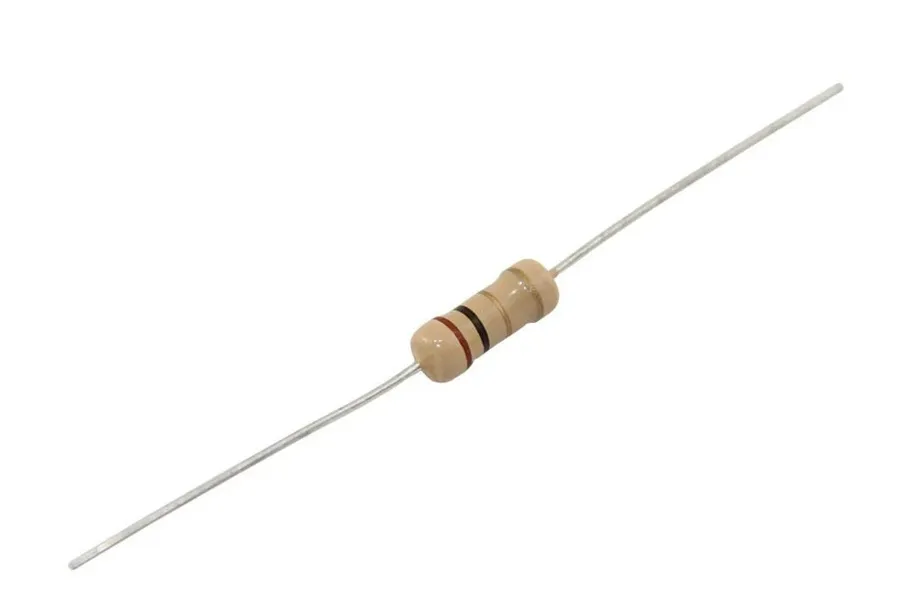
1M ohm Resistor
A 1M ohm resistor is a passive electronic component that provides a resistance of one million ohms (1,000,000 Ω) to the flow of electrical current. The '1M' designation signifies '1 megaohm,' where 'mega' represents a million. These resistors are crucial in circuits that require high resistance, limiting current and influencing voltage.
Common Types of 1M Ohm Resistors
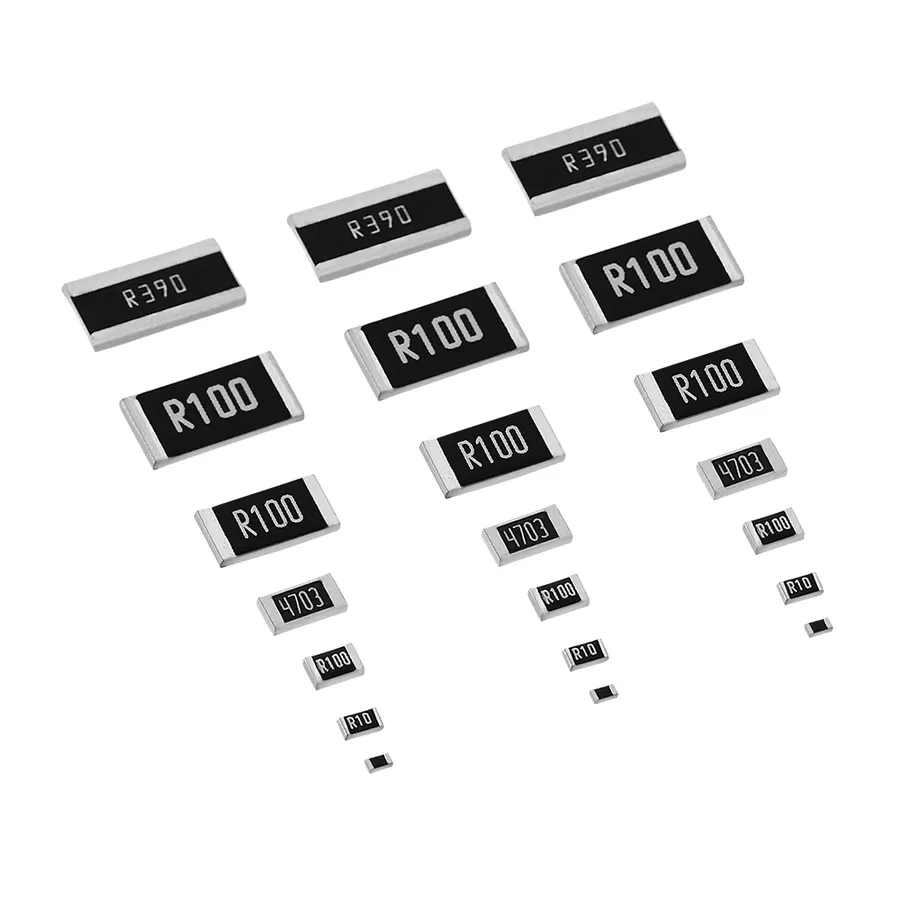
SMD Resistor
1M Ohm resistors, crucial components in electronic circuits, come in various types, each with unique construction and application suitability. These variations accommodate different circuit needs and operational environments. Understanding these types is essential for selecting the right resistor for specific requirements. This section details the main types of 1M Ohm resistors: carbon film, metal film, and surface mount (SMD), along with their distinct characteristics.
Resistor Type
Construction
Typical Applications
Advantages
Disadvantages
Carbon Film Resistors
A thin carbon film deposited on a ceramic substrate, with a protective coating.
Small size, suitable for automated manufacturing, improved heat dissipation compared to leaded resistors.
More difficult to handle manually, requires special soldering techniques.
1M Resistor Color Code: Decoding the Resistance
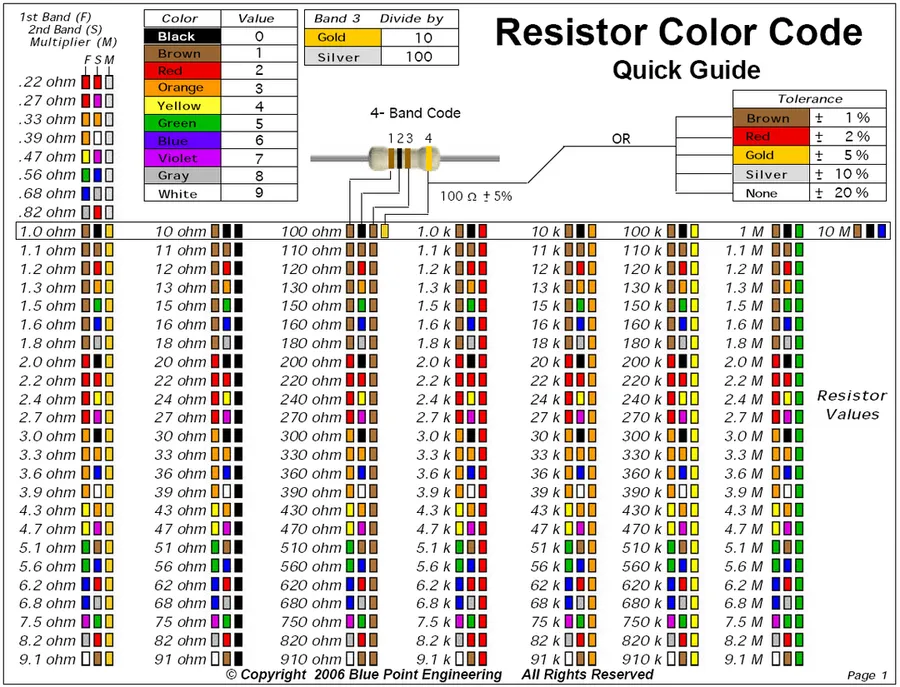
1M Ohm Resistor Color Code
The color code on a 1M ohm resistor is a standardized system that uses colored bands to indicate the resistance value, tolerance, and sometimes the temperature coefficient. This method allows for quick identification of resistor specifications without needing to refer to printed text, and provides a robust method for value identification in mass manufacturing.
For a 1M ohm resistor, the standard color bands are typically four or five, read from left to right as follows:
Four-Band Resistor Most common type. The first two bands represent the significant digits of the resistance value, the third band represents the multiplier (number of zeros), and the fourth band indicates the tolerance.
Five-Band Resistor Used for higher precision resistors, the first three bands represent the significant digits, the fourth band represents the multiplier, and the fifth band indicates the tolerance.
Band
Color
Value (4-Band)
Value (5-Band)
1st Band
Brown
1
1
2nd Band
Black
0
0
3rd Band
Green
5 (Multiplier)
0
4th Band
Gold or Silver
Tolerance (Gold = 5%, Silver = 10%)
Green (Multiplier)
5th Band
Brown, Red, Green, Blue, Violet
-
Tolerance (Brown = 1%, Red = 2%, Green = 0.5%, Blue=0.25%, Violet=0.1%)
Therefore, a 1M ohm resistor has the following color codes:
Four-Band 1M Ohm Resistor Brown (1), Black (0), Green (5 zeros or 100000), Gold or Silver (5% or 10% tolerance). Thus, the color bands would be: Brown, Black, Green, Gold.
Five-Band 1M Ohm Resistor Brown(1), Black(0), Black(0), Yellow (6 zeros or 1000000), Brown, Red, Green, Blue, Violet (1%, 2%, 0.5%,0.25%,0.1% tolerance). Thus, the color bands would be: Brown, Black, Black, Yellow, Brown (1% tolerance).
1M Resistor Applications: Where are they Used?
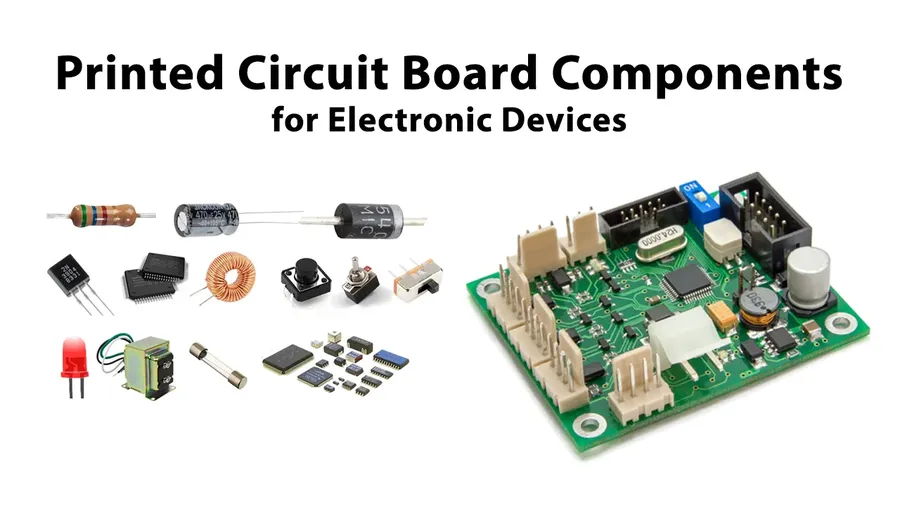
Circuit Board Components
1M Ohm resistors, characterized by their high resistance of 1,000,000 ohms, are essential components in various electronic circuits, typically employed where limiting current flow or establishing specific voltage levels are required. Their applications are diverse, ranging from audio equipment to sophisticated timing circuits and feedback mechanisms.
Here are some common applications where 1M Ohm resistors are frequently used:
Audio Circuits In audio amplifiers and preamplifiers, 1M Ohm resistors are often used in biasing networks to set the operating point of transistors or operational amplifiers, ensuring optimal signal amplification and minimal distortion. They can also be part of feedback circuits controlling gain and stability.
Timing Circuits 1M Ohm resistors, combined with capacitors, form RC (Resistor-Capacitor) timing circuits, used to create time delays or generate specific frequencies in oscillators. These are found in applications such as timers, oscillators, and pulse generators. The high resistance values make them suitable for generating long timing intervals.
Feedback Loops 1M Ohm resistors are crucial in feedback loops in operational amplifier circuits, helping to control the gain and stability of the amplifier. They provide a large resistance to ensure the feedback current is precisely controlled, leading to stable circuit performance.
Pull-up and Pull-down Resistors In digital circuits, 1M Ohm resistors can act as pull-up or pull-down resistors for microcontroller inputs or logic gates. This ensures that inputs have a defined state when not actively driven by another component, preventing floating inputs which might lead to unpredictable behavior.
High-Impedance Sensor Interfaces When interfacing with high-impedance sensors, such as some types of piezoelectric or electrochemical sensors, a 1M Ohm resistor can serve as a high-resistance element that does not significantly load the sensor's output while still providing a path for any necessary bias currents.
LED Circuits for Low Current While less common as a primary current limiter for LEDs, a 1M ohm resistor can be used in combination with other components to limit current to very low values, for example in indicator circuits where minimal brightness is required.
Signal Conditioning 1M Ohm resistors can be used in signal conditioning circuits, where they might be used to attenuate high-voltage signals for measurement by lower-voltage instrumentation. They can also be part of filter circuits to eliminate noise and interference.
Power Ratings and Tolerance of 1M Resistors
A 1M ohm resistor's performance in a circuit is significantly influenced by its power rating and tolerance. These specifications dictate how much power the resistor can safely dissipate and how accurately it maintains its stated resistance value, directly impacting circuit stability and reliability.
Parameter
Description
Typical Values for 1M Resistors
Power Rating
The maximum power (in watts) the resistor can dissipate without overheating or failing.
1/8W, 1/4W, 1/2W, 1W, 2W, etc. (Commonly 1/4W or 1/8W for general use)
Tolerance
The allowable deviation of the actual resistance value from the nominal value (1M ohm), expressed as a percentage.
1%, 5%, 10% (Commonly 1% for precision applications and 5% for general use)
The selection of appropriate power ratings and tolerances is crucial. Using a resistor with an insufficient power rating can lead to overheating and failure, while tolerance affects the accuracy of the resistance within a circuit. A 5% tolerance on a 1M ohm resistor means that the actual resistance can be between 0.95M ohms and 1.05M ohms.
How to Select the Right 1M Ohm Resistor
Selecting the appropriate 1M ohm resistor for a given application requires careful consideration of several key factors to ensure optimal circuit performance and reliability. These factors primarily revolve around power handling capability, precision requirements, and physical implementation constraints, as well as environmental factors.
Power Rating The power rating, typically specified in watts (W), indicates the amount of power the resistor can dissipate without being damaged. Common ratings include 1/8W, 1/4W, 1/2W, and 1W. It is crucial to choose a resistor with a power rating that exceeds the expected power dissipation in the circuit. Exceeding the power rating can cause overheating and premature failure. Use P = I²R to estimate the power that will be dissipated by the resistor in the circuit.
Tolerance Tolerance represents the allowable deviation of the actual resistance value from the nominal 1M ohm value. It is expressed as a percentage (e.g., 1%, 5%, 10%). For precision applications, resistors with lower tolerance values (e.g., 1%) are preferred. A 5% tolerance means that the actual resistance value may be between 950k ohms and 1.05M ohms. 1% tolerance values are more expensive but provide more accurate results.
Resistor Type The construction of the resistor also influences its performance. Carbon film resistors are low cost but have a lower precision and stability compared to metal film resistors. Metal film resistors offer better temperature stability and lower noise. SMD resistors are typically used for compact applications and surface mount technology. Each type has different characteristics concerning thermal stability, noise, and inductance which need to be taken into account for specialized circuits.
Physical Size and Packaging The physical dimensions of the resistor must match the available space and mounting method. Through-hole resistors with axial leads are suitable for breadboards and prototyping, whereas surface-mount (SMD) resistors are designed for automated assembly onto printed circuit boards. SMD resistors are available in standard case sizes (e.g., 0805, 0603, 1206) Physical dimensions are dictated by the power rating. Higher power ratings often correlate to larger physical dimensions to dissipate heat effectively.
Temperature Coefficient The temperature coefficient specifies how much the resistance changes per degree Celsius. This parameter is crucial for environments with varying temperatures. Metal film resistors typically have lower temperature coefficients compared to carbon film resistors, making them suitable for applications where temperature stability is important. Select a resistor with the appropriate temperature coefficient to ensure that its performance remains consistent and predictable under changing temperature conditions.
Environmental Conditions Consider the operating environment of the circuit. High humidity, extreme temperature, and vibration will impact resistor performance. Select resistors with appropriate construction and environmental ratings to ensure reliable operation in these conditions.
1M Ohm Resistor vs. Other Resistor Values
A 1M ohm resistor provides a high level of resistance, significantly impeding current flow within a circuit. This is often contrasted with lower value resistors which permit greater current flow. Understanding the distinctions between a 1M ohm resistor and other values is crucial for designing effective electronic circuits.
The selection of a resistor value, such as 1M ohm, directly influences both current and voltage within a circuit according to Ohm's Law (V=IR). 1M ohm resistors are strategically chosen in circuits where very small currents are required, in contrast to resistors with lower values.
Resistor Value
Typical Application
Current Flow
Voltage Drop (at same current)
1 Ohm
Current sensing, low impedance loads
High
Low
100 Ohm
Pull-up/pull-down, LED current limiting
Moderate
Moderate
1K Ohm
General purpose, bias circuits
Moderate
Moderate
10K Ohm
Feedback circuits, signal processing
Low
High
100K Ohm
High gain amplifier circuits, high impedance input
Very low
Very High
1M Ohm
Timing circuits, high-impedance applications
Extremely low
Very High
1M ohm resistors are often found in applications needing very high resistance for purposes such as timing and creating extremely small current flows, whereas lower value resistors such as 1 ohm or 100 ohm would be unsuitable, resulting in drastically higher currents. The choice of resistor value directly impacts circuit functionality.
Frequently Asked Questions about 1M Resistors
This section addresses common queries regarding 1M ohm resistors, providing clear and concise answers to help users understand their characteristics, applications, and alternatives.
What exactly is a 1M ohm resistor? A 1M ohm resistor is a component that provides a resistance of one million ohms to the flow of electrical current. '1M' signifies 1 megaohm, where 'mega' stands for one million. It is used to limit current and create specific voltage drops in electronic circuits.
What is equivalent to a 1M ohm resistor? A 1M ohm resistor is equivalent to 1,000,000 ohms. In terms of other resistors, it could be represented by two 500k ohm resistors in series, four 250k ohm resistors in series, or ten 100k ohm resistors in series, for example. However, they must be connected serially to achieve the equivalent 1M resistance.
Do 1 ohm resistors exist, and what are they used for? Yes, 1 ohm resistors are commonly available and are used in applications where a very low resistance is needed. They are frequently used for current sensing, particularly in circuits that require precision measurement of current flow. Unlike 1M ohm resistors, which significantly reduce current, 1 ohm resistors allow for much greater current flow.
What is the standard color code for a 1M ohm resistor? The standard color code for a 1M ohm resistor is typically Brown, Black, Green, and Gold. The Brown band represents 1, the Black band represents 0, the Green band indicates a multiplier of 100,000, and the Gold band indicates a 5% tolerance.
Are there other tolerance options available for 1M resistors? Yes, while a 5% tolerance (gold band) is common, 1M ohm resistors are also available with tighter tolerances, such as 1% (brown band) for more precise applications. The tolerance indicates the allowable deviation from the nominal 1M ohm value.
What are the common power ratings for 1M ohm resistors? Common power ratings for 1M ohm resistors include 1/8W, 1/4W, 1/2W, and 1W. The power rating represents how much power the resistor can dissipate as heat without being damaged. It is important to select a resistor with an adequate power rating for your application.
Can 1M ohm resistors fail, and how? Yes, 1M ohm resistors can fail due to excessive power dissipation leading to overheating, physical damage, or due to aging. Such failure may result in increased resistance, open circuits or altered values. Multimeters can be used to test the resistance and detect failures.
Troubleshooting Common Issues with 1M Resistors
1M ohm resistors, while generally reliable, can exhibit issues that affect circuit performance. This section provides a guide to diagnosing and resolving common problems, focusing on practical steps and the use of a multimeter for testing.
Resistor Failure Resistor failure can occur due to overheating, exceeding power ratings, or physical damage. Overheating can cause the resistor to change value or become open circuit (no continuity) or shorted (very low resistance), leading to circuit malfunction. Physically damaged resistors may show cracks or burns that are visible.
Inaccurate Resistance Readings Inaccurate resistance readings can stem from a faulty multimeter or connection to the component under test. Check the multimeter's accuracy with another known good component. In addition, make sure you are reading the component inline and not in parallel with other components.
Open or Short Circuit An open circuit in a 1M resistor means that current cannot flow through it, usually indicated by a multimeter reading of infinite ohms or a completely open circuit. This typically occurs when the resistive element is broken. A short circuit means that current can flow through with very little resistance or almost 0 ohms. This indicates a short across the leads bypassing the resistive element.
Drifting Resistance Values Over time, or under stress, a 1M resistor’s value might drift out of its specified tolerance. This can alter the intended operation of the circuit. This drift is more prevalent with cheap Carbon resistors or those operating near there maximum power rating.
Environmental Factors Extreme temperatures and humidity can also impact resistor performance and accuracy and even cause failures. Temperature can cause the resistance value to change and moisture may cause corrosion, leading to unpredictable behaviour of a circuit.
Using a multimeter to test a 1M resistor requires the following steps:
Set Multimeter to Ohms Set the digital multimeter to the ohms (Ω) setting, selecting a range that includes 1MΩ (1,000,000 ohms) or higher. If the multimeter is autoranging, this step is not needed. If your multimeter does not include this high ohm setting, you may need to purchase a more capable device.
Isolate Resistor If the resistor is installed in a circuit, disconnect power and carefully desolder one end of the component from the circuit. This is to ensure no other components are affecting the reading, and to obtain the correct value.
Connect the Probes Place the multimeter probes across the resistor's leads. The polarity of the probes does not matter when measuring resistance. Ensure good contact between probes and leads.
Read the Measurement The multimeter reading should be close to 1MΩ. A reading significantly higher could indicate an open circuit and or out of tolerance, and a reading close to zero could indicate short circuit. Any large deviations from the nominal value of 1M ohm indicates the resistor is faulty. Take note of the measurement and compare this value with the resistors tolerance value. If the resistor is out of tolerance, it should be replaced.
In the world of electronics, the 1M ohm resistor is often an unsung hero. From its role in high resistance circuits to its subtle influence in delicate systems, it's clear that understanding the 1m resistor is critical for any electronics project. By considering factors like type, tolerance, and power ratings, and through this guide, you can ensure optimal performance and reliability, unlocking the full potential of your projects. Remember, even the smallest components play a large part in how our technological world works.