Understanding the 1N4007 Diode: Specs, Uses, and Applications
2025.01.22
The 1N4007 diode, a seemingly small component, is a workhorse in countless electronic devices, from simple power adapters to complex circuitry. Like a one-way street for electricity, the 1N4007 ensures current flows in the desired direction. This article will delve into the specifics of this ubiquitous diode, exploring its technical characteristics, practical applications, and why it's such a staple in the world of electronics.
1N4007 Diode: Key Specifications
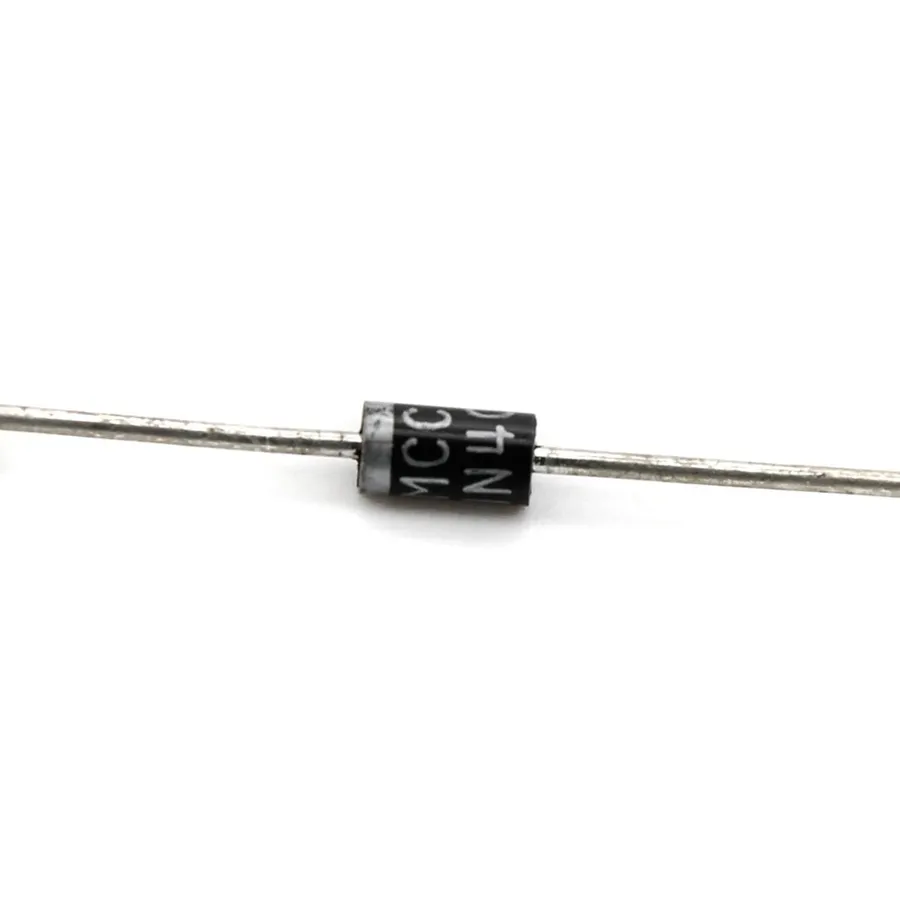
1N4007 Diode
The 1N4007 diode is a ubiquitous silicon rectifier diode, characterized by its robust electrical specifications, making it suitable for a wide array of power rectification and general-purpose applications. Its key attributes include a high repetitive peak reverse voltage, an adequate forward current capacity, and a substantial peak surge current tolerance.
Parameter
Value
Unit
Maximum Repetitive Peak Reverse Voltage (VRRM)
1000
V
Maximum DC Blocking Voltage (VDC)
1000
V
Average Rectified Forward Current (IF(AV))
1.0
A
Peak Forward Surge Current (IFSM)
30
A
Operating Junction Temperature
-55 to +150
°C
How the 1N4007 Diode Works as a Rectifier
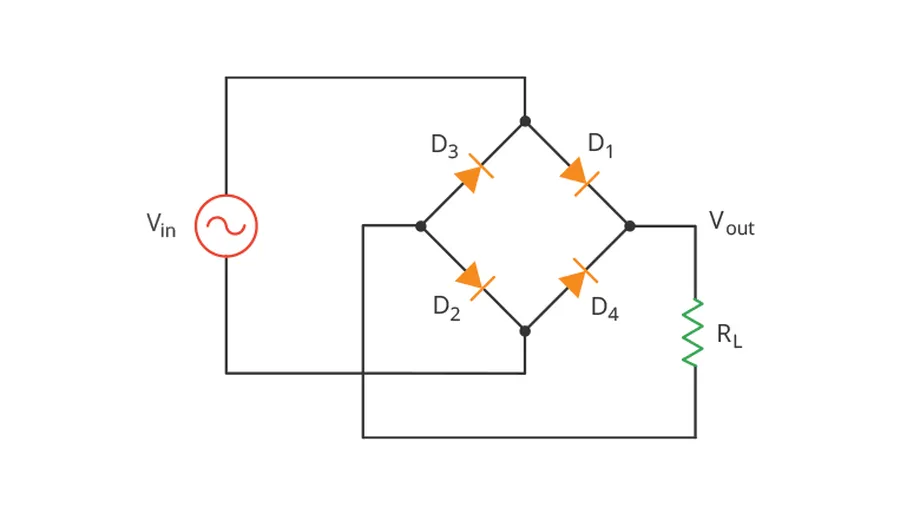
Rectifier Circuit
The 1N4007 diode fundamentally acts as a rectifier, a critical function in electronics that converts alternating current (AC) to direct current (DC). This conversion is achieved by the diode's unique ability to allow current flow in only one direction, effectively blocking the reverse flow. This unidirectional characteristic makes it invaluable in numerous applications, particularly within power supplies, battery charging circuits, and various other electronic devices.
In practical terms, when an AC voltage is applied to the 1N4007 diode, it conducts current during the positive half-cycle of the AC waveform, allowing current to pass. Conversely, during the negative half-cycle, the diode blocks the current flow. This process results in a pulsating DC output, which can be further smoothed using other components like capacitors to provide a stable DC power source. The 1N4007's ability to rectify AC signals efficiently makes it a crucial element in a wide variety of electronic designs.
Common Applications of the 1N4007 Diode
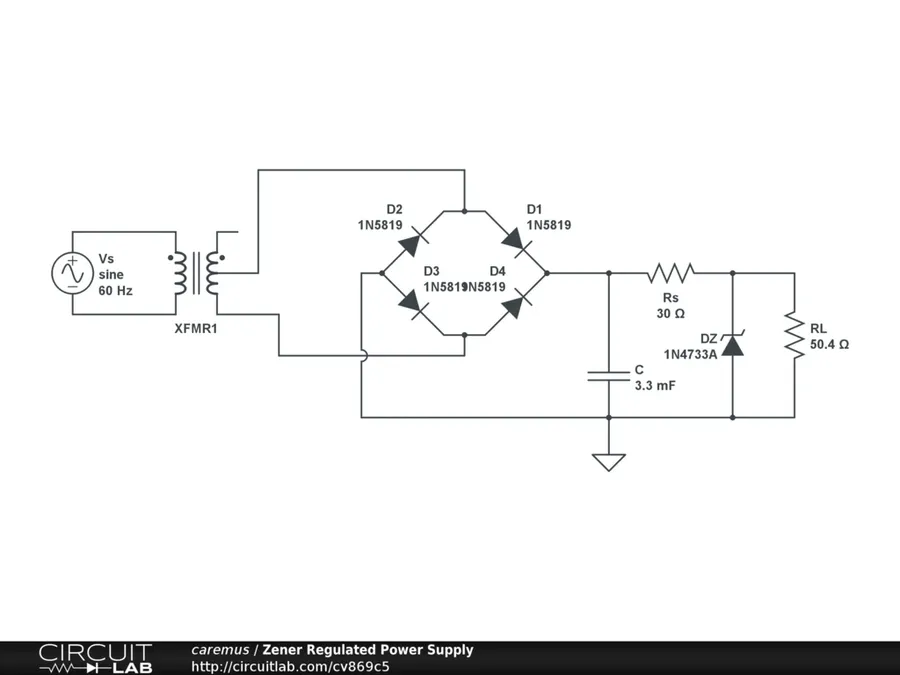
Power Supply Circuit
The 1N4007 diode is a ubiquitous component in electronics, renowned for its reliability and versatility in numerous applications. Its primary role involves rectifying alternating current (AC) to direct current (DC), but its utility extends beyond this fundamental function.
Power Supplies The 1N4007 is frequently employed as a rectifier in power supplies, converting AC line voltage to DC voltage suitable for electronic circuits. Specifically, it can be found within bridge rectifiers and half-wave rectifier circuits.
AC Adapters Many consumer electronic devices rely on AC adapters, and the 1N4007 often serves as a core rectification component. These adapters convert higher AC voltages into lower DC voltages for charging or operation.
Freewheeling Diode Applications In inductive circuits, such as those involving relays or motors, the 1N4007 acts as a freewheeling or flyback diode. It protects sensitive circuits from voltage spikes that occur when an inductive load is switched off, providing a safe path for current.
Basic Signal Processing Circuits Beyond power applications, the 1N4007 is utilized in basic signal processing such as simple clipping and clamping circuits, where its unidirectional conduction properties are crucial for signal shaping and conditioning.
Specific Circuit Examples The 1N4007 can be found in a wide range of circuits, such as: Simple half and full wave rectifier circuits, which are often used as a starting point in learning about rectification. Protection circuits for ICs and sensitive components, preventing damage by reverse current.
1N4007 Diode Datasheet Analysis
A thorough examination of the 1N4007 diode datasheet is crucial for understanding its operational boundaries and limitations. Key parameters such as forward voltage drop, reverse leakage current, and thermal characteristics are pivotal in ensuring correct application and preventing premature failure of the component within electronic circuits. This section delves into these essential characteristics, providing practical insights for design and troubleshooting.
Parameter
Symbol
Typical Value
Conditions
Significance
Forward Voltage Drop
Vf
0.8-1.1 V
If = 1A
Voltage drop across diode when conducting; influences power loss.
Reverse Leakage Current
Ir
5-10 μA
Vr = 1000V
Current flowing when diode is reverse biased; impacts efficiency.
Maximum Repetitive Peak Reverse Voltage
Vrrm
1000 V
N/A
Maximum reverse voltage the diode can withstand without breakdown.
Average Rectified Forward Current
Io
1 A
N/A
Maximum average current the diode can continuously handle.
Peak Surge Current
Ifsm
30 A
8.3ms Pulse
Maximum non-repetitive surge current the diode can handle for a short period.
Operating Temperature Range
Tj
-55°C to +150°C
N/A
The range of ambient temperature in which the device operates correctly.
The forward voltage drop (Vf) indicates the voltage required for the diode to start conducting significantly; variations are typical and are affected by temperature and current. The reverse leakage current (Ir) quantifies the small amount of current that flows in the reverse direction, ideally zero, but is present in all real-world diodes and must be considered in high impedance applications. The maximum repetitive peak reverse voltage (Vrrm) is a critical limit; exceeding this can cause irreversible damage to the diode. The average rectified forward current (Io) defines the continuous current the diode can safely conduct and is vital to avoid thermal failure. The peak surge current (Ifsm) is the maximum surge the diode can handle non repetitively, usually for a short time such as during a power supply turn on. Finally, the operating temperature range indicates the extremes at which the diode can function reliably.
1N4007 vs. Other Diodes: Comparison Table
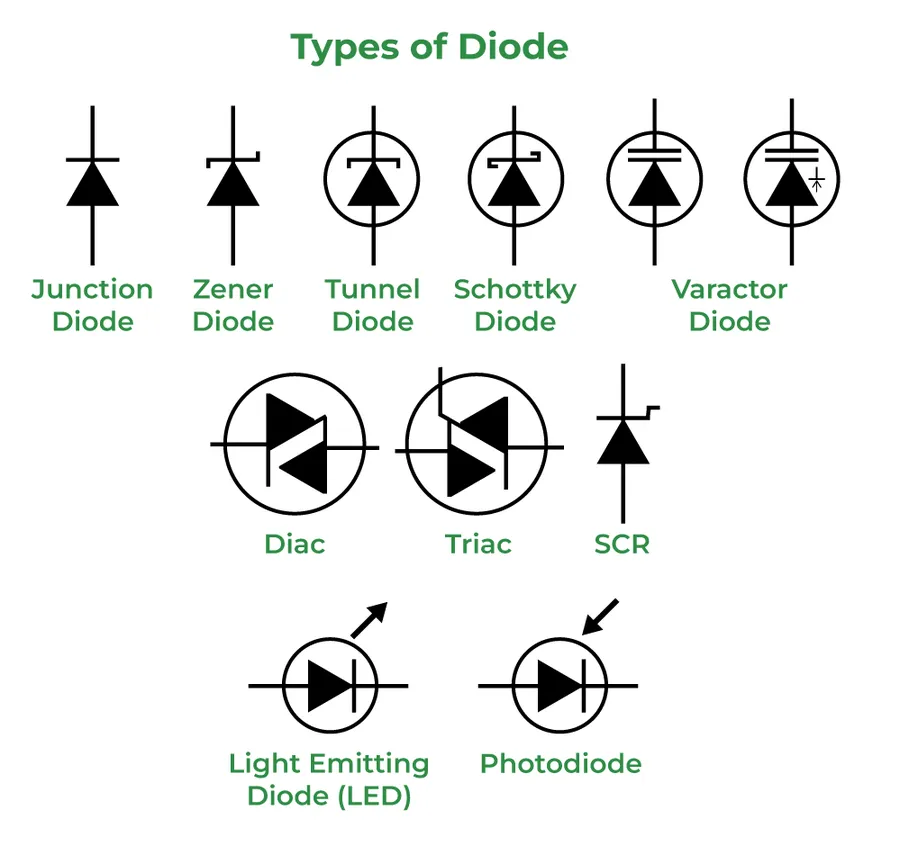
Different Diodes
Selecting the appropriate diode for a circuit requires a careful analysis of its electrical characteristics and application requirements. This section provides a comparative analysis of the 1N4007 diode against other common diodes, such as the 1N4001, 1N4004, and Schottky diodes. The comparison focuses on key parameters including voltage rating, current capacity, and switching speed, offering insights into scenarios where each diode is the optimal choice.
Practical Considerations When Using the 1N4007 Diode
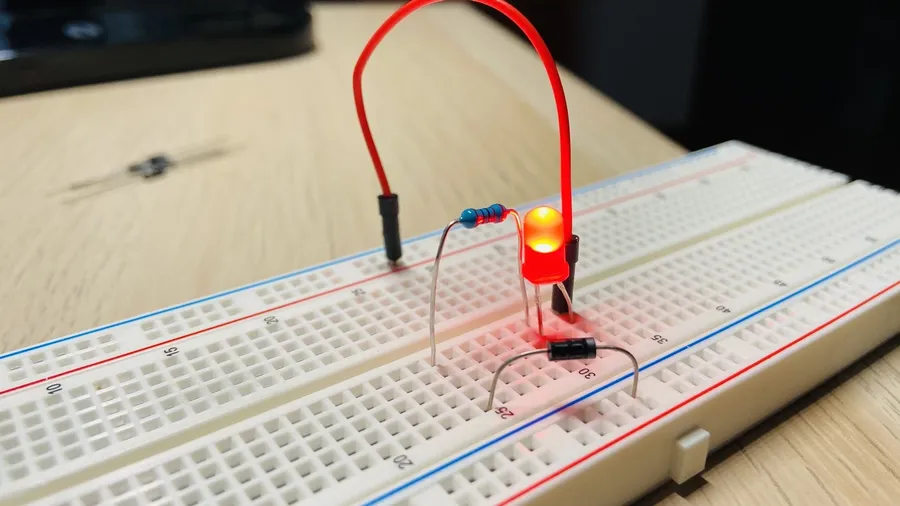
Diode on Breadboard
Successfully integrating a 1N4007 diode into electronic circuits requires careful attention to several practical considerations. These include proper polarity identification, effective heat management, and robust protection against over-current and over-voltage conditions. Ignoring these factors can lead to component failure and circuit malfunction.
Polarity Identification The 1N4007 diode is a polarized component, meaning it must be installed in the correct orientation. The cathode, marked by a band on the diode body, should be connected to the negative side of the circuit. Incorrect installation will prevent the circuit from working correctly and can even damage the diode or other components.
Heat Management Diodes generate heat when conducting current, particularly at higher forward currents. Inadequate heat dissipation can cause the diode to overheat and fail. To manage heat, consider using a heat sink if the diode is expected to carry significant current. Ensure proper ventilation around the component to facilitate heat transfer.
Over-current Protection While the 1N4007 has a specified forward current rating (1A average, 30A surge), exceeding these limits can lead to its failure. Incorporate a fuse or circuit breaker in series with the diode to protect it from over-current conditions. The fuse should be sized appropriately to protect the diode but not be so sensitive as to cause nuisance tripping during normal operation.
Over-voltage Protection The 1N4007 has a maximum repetitive peak reverse voltage rating of 1000V. Applying a reverse voltage exceeding this limit can damage the diode. Use transient voltage suppression (TVS) diodes or other over-voltage protection components in parallel with the 1N4007, to protect it from voltage spikes.
Mounting Techniques Consider the mounting method and avoid any physical stress on the diode body and leads which can cause damage. If soldering is necessary, do it quickly to minimize the heat conducted to the component and avoid the excessive application of heat on the diode.
Circuit Design Carefully design the circuit to operate within the diode's specifications, taking into account the expected current, voltage, and thermal conditions. Use an appropriate safety margin for all operational parameters to ensure robust and reliable performance of the circuit.
Troubleshooting Common Issues with 1N4007 Diodes
The 1N4007 diode, while robust, can encounter common failure modes that compromise its performance or lead to circuit malfunction. These issues typically stem from operating conditions that exceed the diode's specified limits or from improper circuit design. Understanding these failure modes and their root causes is crucial for effective troubleshooting and maintaining the reliability of electronic systems.
Failure Mode 1: Reverse Bias Failure When subjected to a reverse voltage that exceeds its maximum repetitive peak reverse voltage (VRRM), typically 1000V for the 1N4007, the diode can break down. This failure manifests as a short circuit, which allows current to flow in the reverse direction, leading to a non-functioning rectifying behavior. The result is often circuit failure, because the component no longer acts as a one way gate.
Failure Mode 2: Surge Current Damage Surge currents, which are high-magnitude current spikes of short duration, can damage the diode's junction. While the 1N4007 can withstand a peak surge current of 30A for a short period, repeated or excessive surges can cause overheating and permanent damage. This type of failure will also manifest as a short circuit due to damage of the diode's internal structure.
Failure Mode 3: Excessive Heat Overheating, often caused by operating the diode at high forward currents without adequate heat sinking, leads to thermal runaway and degradation of the diode's internal material structure. This increases reverse leakage current and can permanently alter the diode's characteristics and may ultimately cause a short circuit. This problem is common when the diode is used without following the design guides.
Troubleshooting Step 1: Visual Inspection Begin by visually inspecting the diode for any signs of physical damage, such as cracks, discoloration, or melting. Such damage typically indicates an overstress event that can provide a quick diagnostic.
Troubleshooting Step 2: Diode Testing with a Multimeter Use a multimeter set to the diode test function to check the forward voltage drop and reverse current. A healthy diode typically shows a forward voltage drop of 0.6-0.7V and very high resistance in the reverse direction. Deviations from these readings indicate a faulty diode. Check in circuit and out of circuit for a complete test. A failed in circuit test indicates the diode is not working correctly, where as a failed out of circuit test indicates a faulty diode, where as a failed in circuit test but a passing out of circuit test indicates a fault somewhere else in the circuit.
Troubleshooting Step 3: Circuit Analysis If the diode tests okay out of circuit, review the circuit design and conditions where the diode is functioning in the circuit, look for transient voltages or excessive currents that might have caused the diode to fail or cause it to appear to fail in the circuit. Verify all components around the 1N4007 are working correctly.
Frequently Asked Questions About the 1N4007 Diode
This section addresses common inquiries regarding the 1N4007 diode, providing concise and accurate answers to help users understand its applications, limitations, and practical considerations. This information will be useful for both beginners and experienced electronics enthusiasts.
What are the primary uses of a 1N4007 diode? The 1N4007 diode is primarily used as a rectifier in power supplies and AC adapters, converting alternating current (AC) to direct current (DC). It's also used in freewheeling diode applications to protect circuits from inductive kickback, and for basic signal processing tasks. Its robust voltage rating makes it suitable for general-purpose rectification where high reverse voltage protection is needed.
What is the maximum voltage a 1N4007 diode can handle? The 1N4007 diode has a maximum repetitive peak reverse voltage (VRRM) of 1000 volts. This means it can withstand up to 1000V in the reverse direction before risking breakdown. It is crucial to operate the diode below this voltage to ensure its longevity and reliability, with a suitable safety margin to account for transient voltages.
What distinguishes a 1N4007 diode from a 1N4001 diode? The primary difference between the 1N4001 and 1N4007 diodes lies in their reverse voltage ratings. The 1N4001 has a maximum repetitive peak reverse voltage of 50V, while the 1N4007 is rated for 1000V. Therefore, the 1N4007 is used in higher voltage applications where the 1N4001 would be insufficient. They share the same forward current capability of 1A and similar physical package.
Is the 1N4007 diode a fast recovery diode? No, the 1N4007 is not considered a fast recovery diode. It has a relatively slow reverse recovery time, typically in the microsecond range. This makes it unsuitable for high-frequency switching applications. If faster switching is needed, a fast recovery diode or a Schottky diode should be used instead.
What is the typical forward voltage drop of a 1N4007 diode? The typical forward voltage drop of a 1N4007 diode is approximately 0.7 to 1.1 volts when conducting forward current. This voltage drop is a characteristic of silicon diodes and will influence the total voltage available in the circuit. It is temperature-dependent, decreasing slightly with increasing temperature.
How do I determine the correct polarity of a 1N4007 diode? The 1N4007 diode is a polarized component, meaning it must be installed correctly in a circuit. The cathode is marked with a band (typically a silver or gray band) on the diode body. Current can only flow from the anode (unmarked side) to the cathode (marked side). Incorrect polarity will prevent the circuit from functioning and could potentially damage the diode.
What are the main failure modes of a 1N4007 diode? The main failure modes of a 1N4007 diode include failure in reverse bias due to exceeding the peak reverse voltage, damage from surge current exceeding the specification, excessive heat leading to thermal runaway, and mechanical damage. To prevent these failures, follow the design specifications in terms of voltage, current, and temperature. Additionally, incorporate protection circuitry, such as fuses, into designs.
The 1N4007 diode, while simple in appearance, plays a critical role in modern electronics. Its ability to rectify AC to DC power makes it an indispensable component in everything from basic power adapters to complex circuitry. Understanding its specifications, applications, and limitations is essential for any electronics enthusiast or professional. The 1N4007 diode stands as a testament to how fundamental components can be vital to daily tech.