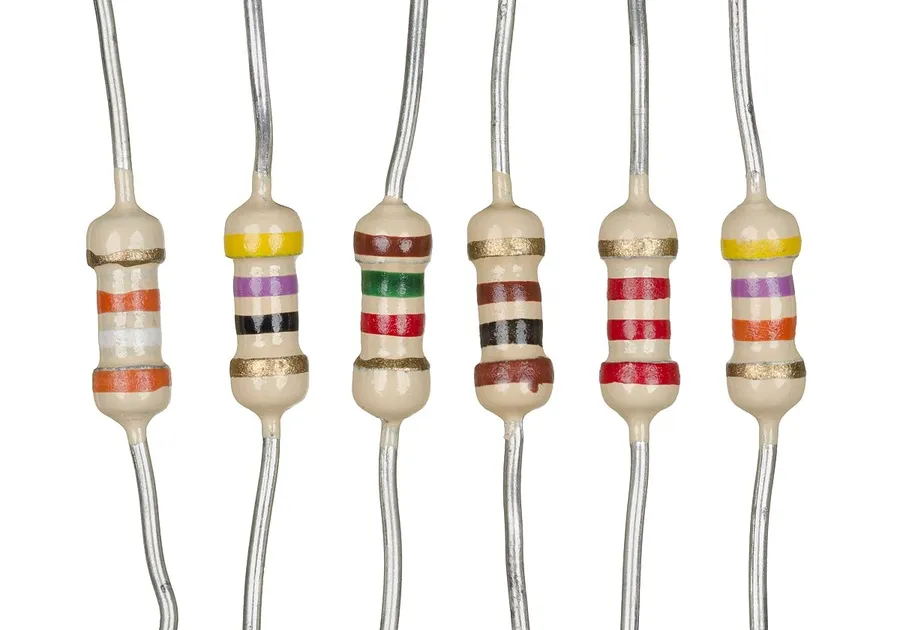
Understanding the 220 Ohm Resistor: Uses, Specs, and More
2025.01.23
The 220 ohm resistor, a small but vital component, is ubiquitous in electronics. From the glow of an LED to the intricate workings of a microcontroller, it's often the unsung hero. This article dives deep into the 220 ohm resistor, examining its color code, applications, and key specifications to enlighten both novices and seasoned electronics enthusiasts. Understanding this basic component opens the door to more complex electronics projects.
What is a 220 Ohm Resistor?
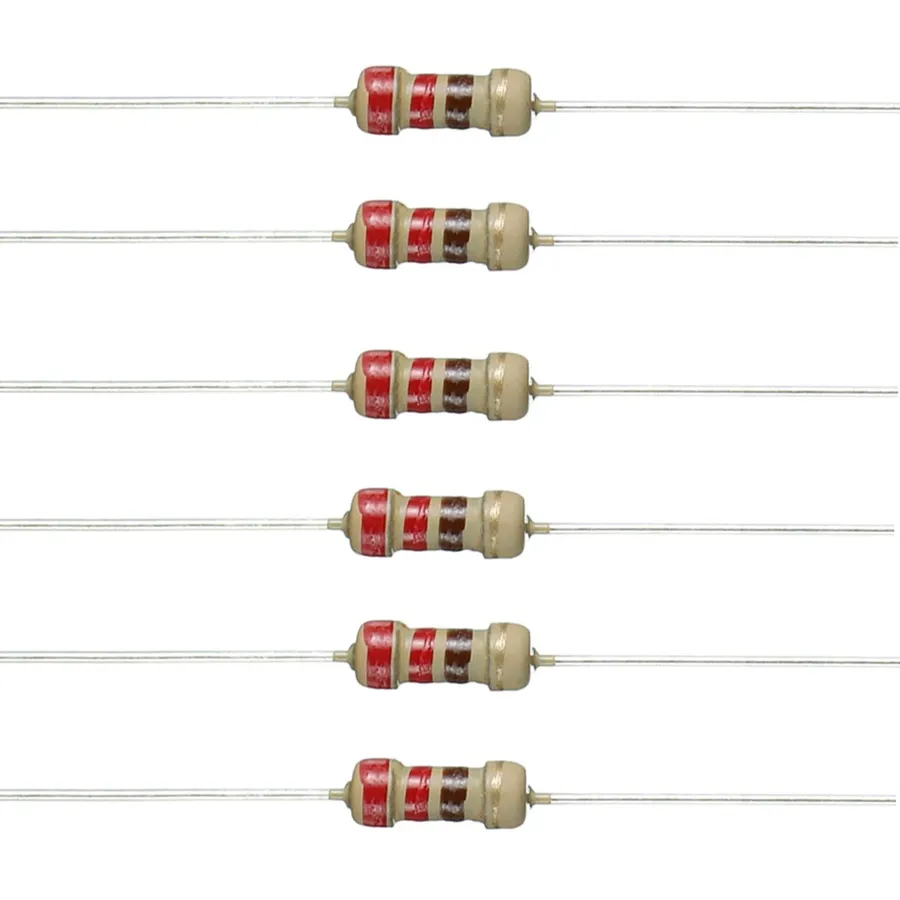
220 Ohm Resistor
A 220 ohm resistor is a fundamental electronic component designed to impede the flow of electrical current, offering a specific resistance of 220 ohms. This resistance value is crucial in circuit design to control current levels, reduce voltage, and ensure proper functioning of electronic devices by adhering to Ohm's Law (V=IR).
Resistors, including the 220 ohm variant, are passive two-terminal electrical components, with their primary function of providing electrical resistance as a circuit element. It is essential to distinguish resistors from other circuit elements such as capacitors and inductors which behave differently when DC (Direct Current) or AC (Alternating Current) is applied, whereas resistors behave similarly across both DC and AC, with their resistance being the dominating factor.
The 220-ohm value is often used in various circuits where moderate current reduction is required, making it a common choice in applications ranging from simple LED circuits to complex signal processing boards. Unlike variable resistors, a 220-ohm resistor is designed to provide a fixed resistance and does not change under normal operational conditions.
Decoding the 220 Ohm Resistor Color Code
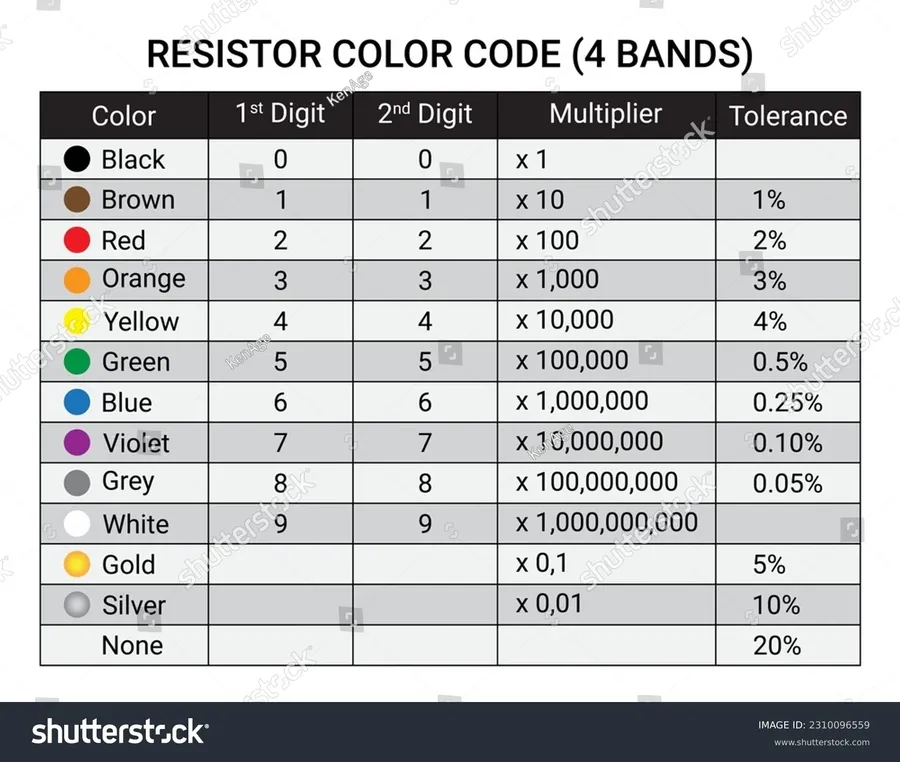
Resistor Color Code
The color code on a 220 ohm resistor is crucial for identifying its value without needing a multimeter. This system uses colored bands to represent numerical values, multipliers, and tolerances. Understanding this color code is fundamental for anyone working with electronics, ensuring that the correct components are used in circuits.
Band
Color
Digit/Value
Multiplier
Tolerance
1st Band
Red
2
-
-
2nd Band
Red
2
-
-
3rd Band
Brown
-
10^1
-
4th Band
Gold
-
-
5%
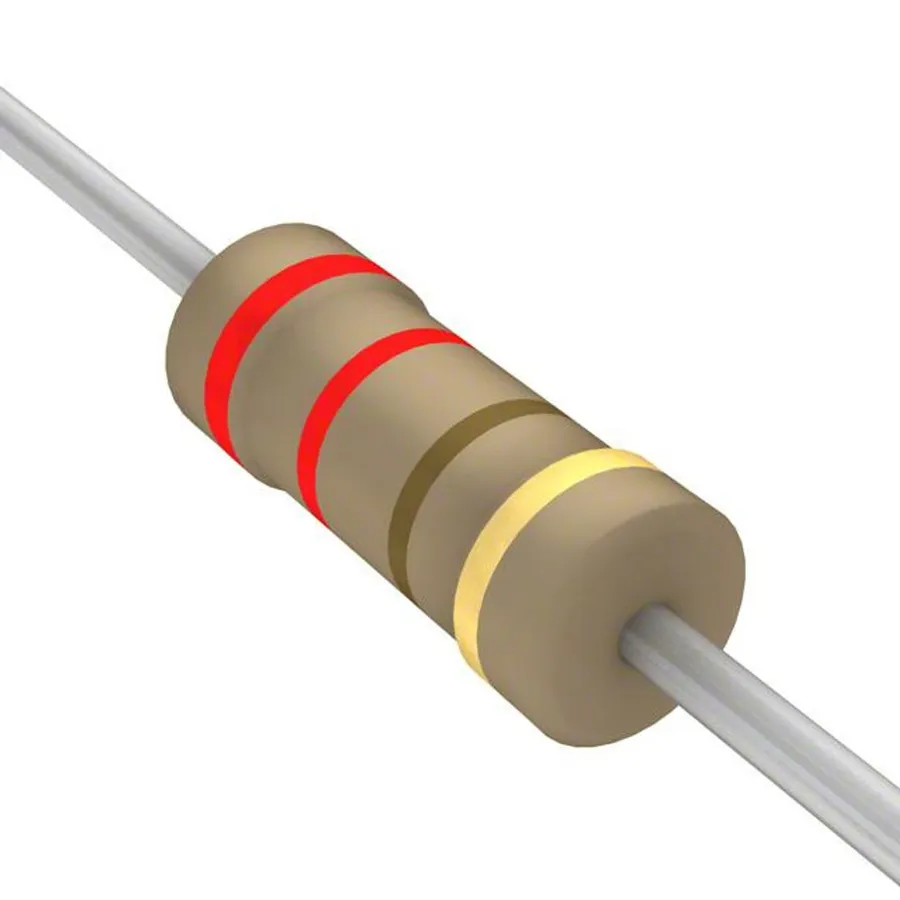
For a 220 ohm resistor, the color bands typically follow this pattern:
* **1st band:** Red (2)
* **2nd band:** Red (2)
* **3rd band:** Brown (10^1 or x10)
* **4th band:** Gold (5% tolerance).
Therefore, the calculation would be 22 x 10^1 = 220 ohms. The gold band indicates a tolerance of ±5%, meaning the actual resistance could be between 209 and 231 ohms.
Common Applications of the 220 Ohm Resistor
Resistor on Circuit Board
The 220 ohm resistor is a ubiquitous component in electronics, finding widespread use in various applications due to its suitable resistance value for current limiting and voltage division in many common circuits. Its versatility makes it a staple in both hobbyist and professional electronics projects, particularly in scenarios requiring moderate resistance.
LED Current Limiting A primary application of 220 ohm resistors is to limit the current flowing through LEDs (Light Emitting Diodes). LEDs typically require a specific current range for optimal brightness and to prevent damage. A 220 ohm resistor, in series with an LED, helps regulate the current to a safe operating level when used with common power sources like 5V or 3.3V.
Microcontroller Connections When interfacing microcontrollers with other electronic components, 220 ohm resistors are frequently used as current-limiting resistors for digital output pins. This protects the microcontroller from overcurrent, especially when driving LEDs, transistors, or other devices that can draw significant current.
Transistor Biasing In transistor circuits, 220 ohm resistors are often utilized in biasing networks. They help establish the correct base current or provide a voltage drop, enabling the transistor to operate in the desired mode, such as amplification or switching. The precise resistance value of the 220 ohm resistor facilitates many of the basic transistor biasing arrangements.
Simple Voltage Division The 220 ohm resistor can be used in conjunction with other resistors to create voltage dividers. By strategically combining resistances, one can scale down voltages for use in sensitive electronic components or sensors.
Pull-up or Pull-down Resistors While higher value resistors are common for pull-up or pull-down applications, 220 ohm resistors can serve this purpose, particularly when a stronger pull is needed, but care must be taken to ensure power consumption is not excessive.
These common applications highlight the 220 ohm resistor's practical value in a broad range of electronic circuits and projects. Its use is prevalent due to its balance of functionality, availability and cost-effectiveness. In summary, the 220 ohm resistor provides a vital function of controlling the flow of electricity, ensuring components function safely and efficiently.
220 Ohm Resistor Specifications: Power Rating, Tolerance, and Type
Different Packages Resistors
Understanding the specifications of a 220 Ohm resistor is crucial for selecting the correct component for your electronic projects. These specifications primarily revolve around power rating, tolerance, and the resistor's material type, each influencing its performance and suitability for different applications. A 220 Ohm resistor, like any other resistor, does not operate in isolation; these specifications determine how it interacts within a circuit.
Specification
Description
Typical Values for 220 Ohm Resistors
Implications
Power Rating
The maximum power a resistor can dissipate without damage.
1/8W, 1/4W, 1/2W, 1W
Ensures the resistor doesn't overheat and fail in use. Higher ratings allow for more current to flow safely.
Tolerance
The percentage by which the actual resistance can vary from the nominal value.
5%, 1%
Affects the precision of the resistor in the circuit. Lower tolerance values indicate higher accuracy.
Type
The material used to construct the resistor's resistive element.
Carbon Film, Metal Film
Impacts stability, noise, and temperature coefficient of resistance. Metal film resistors offer higher precision and stability compared to carbon film resistors.
Let's delve deeper into each of these specifications:
Power Rating The power rating, measured in watts (W), indicates the maximum amount of power the resistor can safely dissipate as heat. Exceeding this rating can lead to overheating and resistor failure. Common power ratings for 220 Ohm resistors include 1/8W, 1/4W, 1/2W, and 1W. Selecting the appropriate power rating depends on the voltage and current expected in the circuit. For instance, in LED circuits, a 1/4W resistor is often sufficient, but circuits with higher current draws will need a resistor with a higher rating.
Tolerance Tolerance defines the acceptable deviation from the nominal resistance value. A 5% tolerance means a 220 Ohm resistor could have an actual resistance between 209 and 231 Ohms (220 ± 5%). For most general-purpose applications, a 5% tolerance is adequate. However, precision circuits may require resistors with a 1% or even tighter tolerance. Higher precision means the actual resistance value is closer to the stated value.
Resistor Type The type of resistor refers to the material used to create the resistive element, most commonly carbon film or metal film. Carbon film resistors are economical and suitable for many basic applications, but metal film resistors offer lower temperature coefficient, better stability, and lower noise. For precision applications, the choice is typically metal film. Metal film resistors maintain their resistance more consistently under temperature variations.
220 Ohm Resistor vs. Other Resistor Values
Different Value Resistors
The 220 ohm resistor is a common value used in many electronic circuits, but its performance and application differ significantly from other resistor values. Understanding these differences is crucial for effective circuit design and troubleshooting. This section provides a comparative analysis of the 220 ohm resistor against other common values, highlighting their specific applications and impact on circuit behavior.
Resistor Value
Typical Application
Current Limiting Capacity
Effect on Circuit Behavior
10 Ohm
High-current paths, shunts
Very low limiting
Allows significant current flow
100 Ohm
Current limiting, pull-up/down
Low limiting
Reduces current flow moderately
220 Ohm
LED circuits, signal lines
Moderate limiting
Offers balance between current and voltage
1k Ohm
General current limiting, bias
Moderate to High limiting
Further reduces current flow
10k Ohm
Pull-up/down, bias
High limiting
Significantly reduces current flow
100k Ohm
High impedance sensing
Very high limiting
Minimal current flow, high resistance
The choice of resistor value is highly dependent on the specific circuit requirements. A low value resistor like 10 Ohms is suitable for applications requiring minimal resistance and high current flow, often used in high-power circuits or as current shunts. Conversely, very high values like 100k Ohm are used for applications where only a small current should flow like high impedance sensing circuits. The 220 ohm resistor provides a balance, making it ideal for common tasks like controlling LED brightness or limiting current to specific integrated circuits, offering a moderate level of current restriction without excessive voltage drop.
Frequently Asked Questions About 220 Ohm Resistors
This section addresses common questions regarding 220 ohm resistors, providing clear and concise answers to aid in understanding their properties and applications.
What exactly is a 220 ohm resistor? A 220 ohm resistor is a passive electronic component that provides a specific level of electrical resistance, measured in ohms, which in this case is 220 ohms. It opposes the flow of electric current in a circuit, limiting the current and causing a voltage drop according to Ohm's Law (V=IR).
What are the primary uses of a 220 ohm resistor? 220 ohm resistors are frequently utilized in various electronic circuits to limit current, particularly when driving LEDs. They are also employed in microcontroller circuits for pull-up/pull-down configurations, and serve as basic current limiting elements for various electronic components.
What is the significance of the '220' value in a 220 ohm resistor? The '220' signifies that the resistor offers an electrical resistance of 220 ohms, which is a standardized value. This value dictates the extent to which the resistor opposes current flow; higher resistance values mean less current passes through, and vice-versa.
Is a 220 ohm resistor adequate for an LED circuit? Whether a 220 ohm resistor is suitable for an LED depends on several factors, primarily the LED's forward voltage, the desired current, and the power supply voltage. Generally, a 220 ohm resistor is a good starting point for LEDs operating at typical voltages, but calculations based on specific LED parameters are necessary to ensure proper and safe operation.
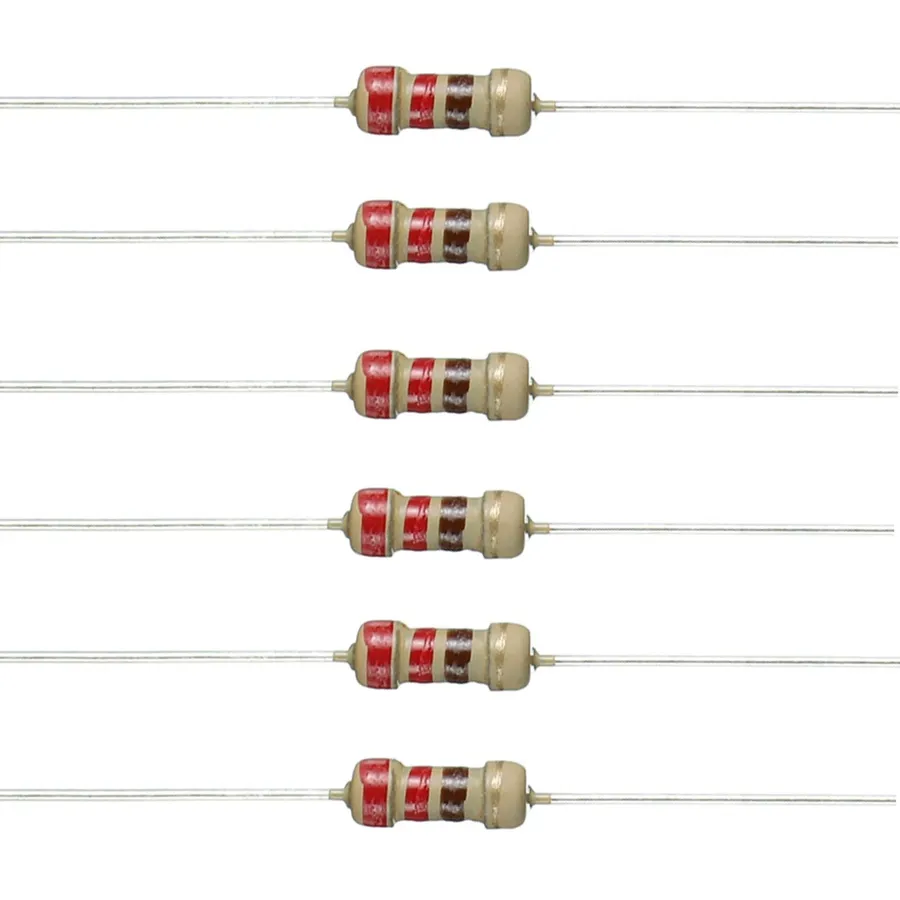
How do I identify a 220 ohm resistor by its color code? A standard 220 ohm resistor typically has color bands of red, red, and brown, followed by the tolerance band. The first two bands represent the numerical value (2 and 2), and the third band acts as a multiplier (10^1). A gold band might denote a tolerance of 5%, or a brown band a 1% tolerance.
Can I use a 220 ohm resistor in an Arduino project? Yes, 220 ohm resistors are commonly used in Arduino projects, often for limiting current to LEDs or for pull-up/pull-down configurations on digital input pins. They are a standard component in electronics and prototyping and are widely compatible with the Arduino's various needs.
What is the power rating of a typical 220 ohm resistor, and why does it matter? Typical power ratings for 220 ohm resistors are 1/4W or 1/8W. This rating specifies the maximum power the resistor can safely dissipate as heat before failing or changing its characteristics. Exceeding the power rating will lead to resistor damage, so choosing a resistor that matches or exceeds the power needs of the circuit is very important.
Where to Buy 220 Ohm Resistors
Sourcing 220 Ohm resistors is straightforward, given their common use in electronics. Both online and brick-and-mortar options are available, each with distinct advantages. Selecting a reputable supplier is crucial to ensure quality and consistency in your components.
Online Retailers Numerous online platforms specialize in electronic components, offering a wide selection of 220 Ohm resistors. Key advantages include convenience, vast inventory, and competitive pricing. Consider well-established vendors like Digi-Key, Mouser Electronics, and Arrow Electronics for reliable sourcing. Amazon and eBay also offer 220 Ohm resistors, but verifying seller reputation is important to ensure component authenticity and quality.
Brick-and-Mortar Stores Local electronics stores, hobby shops, and some larger hardware retailers often stock basic components such as 220 Ohm resistors. These stores offer the advantage of immediate availability, allowing for in-person inspection of components. However, selection and pricing may not be as favorable as online options, and stock may vary. Confirm store hours and product availability before traveling.
Tips for Choosing a Reliable Supplier Prioritize suppliers with positive customer reviews and certifications, when possible, as they indicate a track record of quality and reliable service. Consider the suppliers shipping policies for a seamless purchase process. Be wary of suspiciously low prices, as these may indicate counterfeit or inferior products. Comparing product specs from multiple vendors can assist in your selection. For large or critical projects, consider purchasing samples from different suppliers to benchmark performance before committing to a bulk order. If buying on open marketplaces like Amazon or eBay, be sure to verify the seller's reviews and ratings to confirm the authenticity and reliability of their products.
Troubleshooting with 220 Ohm Resistors
When integrating 220 Ohm resistors into electronic circuits, several issues can arise. Understanding the common problems and their solutions is crucial for efficient troubleshooting and ensuring the correct operation of the circuit. This section provides practical guidance on diagnosing and resolving typical issues associated with 220 Ohm resistors.
Incorrect Resistance Value A common problem is using a resistor that is not actually 220 ohms. This can happen if the color bands are misread or if the resistor was incorrectly labeled. Use a multimeter to confirm the resistance value. A deviation beyond the stated tolerance (typically 5% or 1%) indicates a problem.
Open Circuit or No Resistance If the multimeter shows no resistance (open circuit), the resistor is likely faulty. This can be due to physical damage, overheating, or manufacturing defects. Replace the resistor to fix this issue. A break in the internal resistive material leads to this condition.
Higher Than Expected Resistance This can result from physical damage to the resistor, a poor solder joint, or the resistor operating near its maximum temperature rating for an extended period. Over time, materials can degrade, causing an increase in resistance. Check the resistor for physical damage and try replacing it. Also, verify the application is within the rated wattage of the resistor.
Overheating If the 220 ohm resistor is getting unusually hot, it is an indication of excessive power dissipation. Check that the current through the resistor is within its rated power capacity (e.g., 1/4W, 1/8W). Select a resistor with a higher power rating or adjust the circuit to reduce current through the resistor to prevent resistor failure.
Poor Solder Joint A poor solder joint at the resistor's leads can lead to intermittent connections or increased resistance. Examine solder joints carefully. Resolder the connections properly to ensure they are robust and make good electrical contact. Use flux and ensure the solder flows smoothly for a good connection.
Incorrect Placement in the Circuit Ensure the 220 ohm resistor is placed in the intended location in the circuit. A misplaced resistor can have unintended effects on the circuit's behavior. Review schematics and carefully verify the placement.
The 220 ohm resistor, though seemingly simple, is a cornerstone of electronic design. Understanding its color code, applications, and specifications enables you to build and troubleshoot electronic circuits effectively. Whether you're illuminating an LED or integrating a microcontroller, the humble 220 ohm resistor plays a significant role. This article has shed light on this key component, encouraging further exploration of the world of electronics.