Understanding the Ubiquitous 10K Ohm Resistor: A Comprehensive Guide
2025.02.11
In the realm of electronics, the humble 10k resistor plays a pivotal role, akin to a well-tuned instrument in an orchestra. From controlling LED brightness to stabilizing circuits, it's the unsung hero powering countless devices. This article will explore everything about the 10k ohm resistor, including its function, identification, and diverse applications. Just like how the right 10k resistor can make or break your electronics project, understanding this component can lead to deeper understanding of electronics principles.
What is a 10K Resistor?
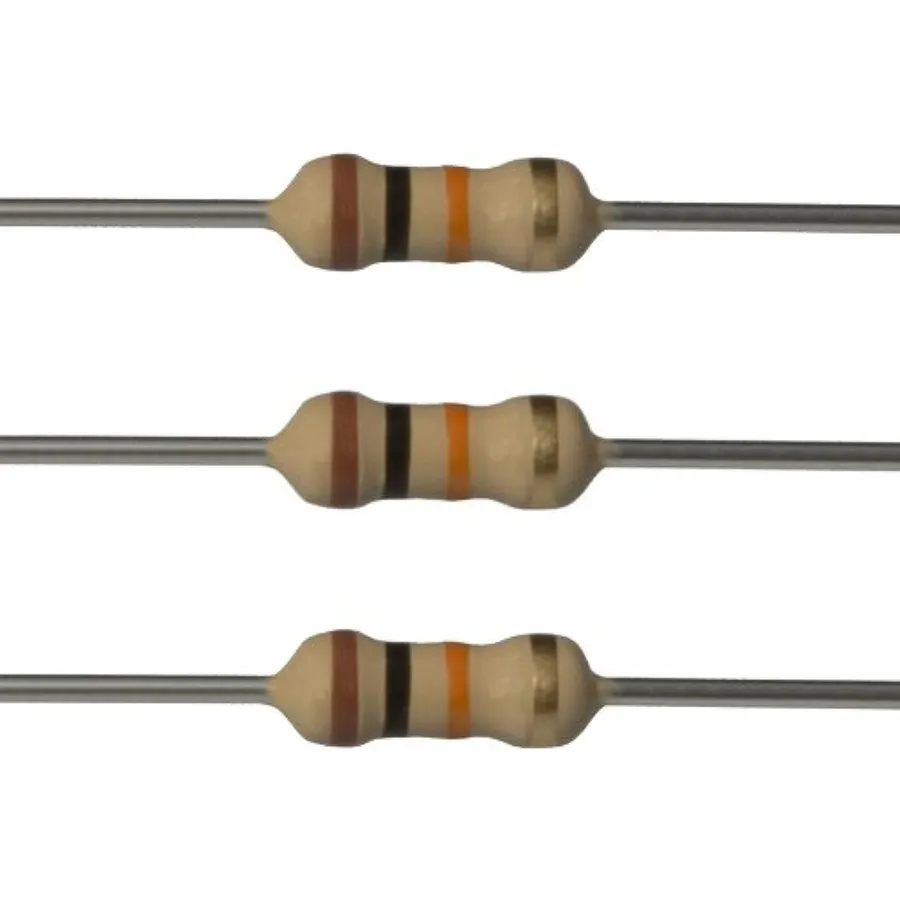
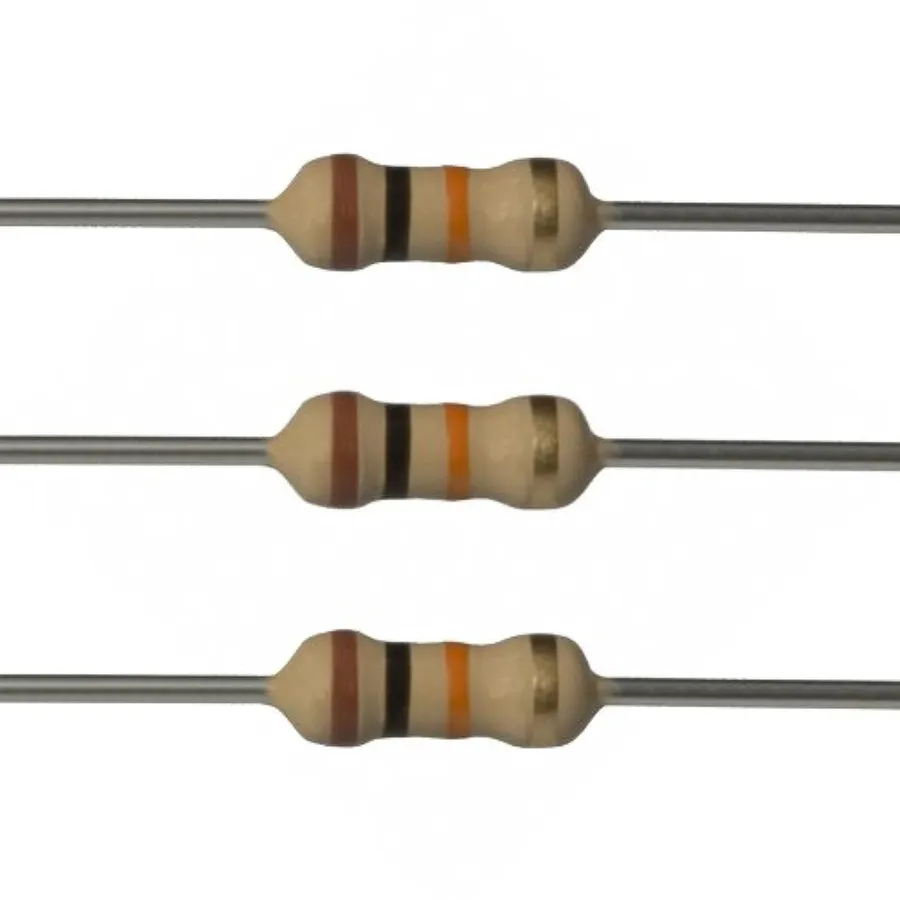
10k Ohm Resistor
A 10k resistor is a fundamental electronic component that opposes the flow of electrical current, with a specified resistance of 10,000 ohms. It is a passive component, meaning it doesn't generate power but instead dissipates it as heat when current passes through. The resistance value is a key parameter that determines how much the resistor impedes current flow and is measured using an ohmmeter. Its primary function within a circuit is to control current levels, ensuring other components receive the appropriate amount of power. These components, characterized by their color bands indicating their resistance, play a crucial role in a wide array of applications due to their common and standard 10k value.
10K Resistor Color Code: Decoding the Bands
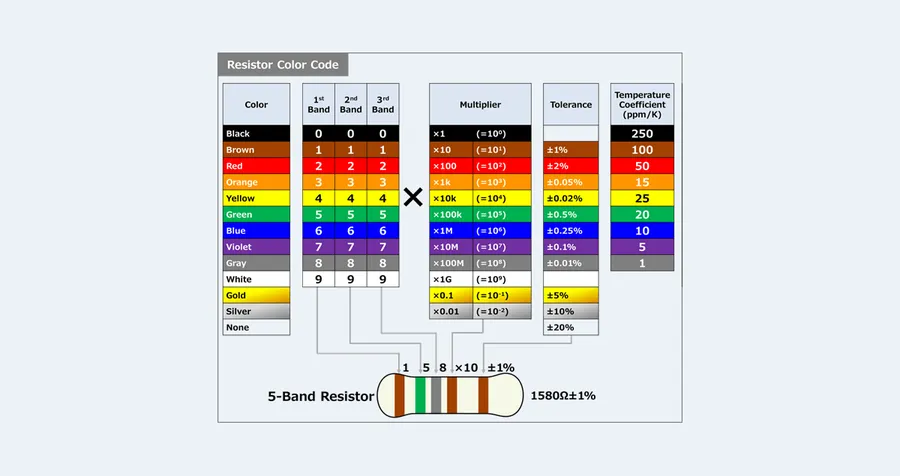
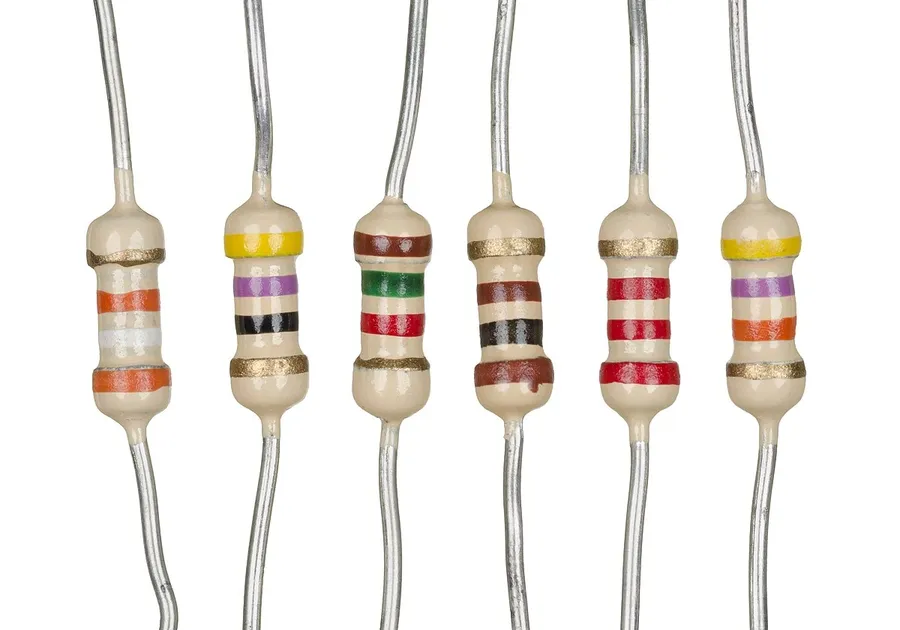
Resistor Color Bands
The color code on a 10k ohm resistor is a standardized method to quickly identify its resistance value and tolerance. This system uses a series of colored bands, each representing a numerical digit, a multiplier, or a tolerance value. For a standard 4-band resistor, the first three bands determine the resistance, and the fourth band indicates the tolerance.
Band
Color
Digit/Multiplier/Tolerance
10k Resistor Value
1st Band
Brown
1
1
2nd Band
Black
0
0
3rd Band
Orange
Multiplier x 1000
x 1000
4th Band
Gold
Tolerance ±5%
±5%
Therefore a 10k resistor is decoded as follows: Brown (1) , Black (0), Orange(x1000), Gold (±5%) which means the resistance value is 10 x 1000 = 10,000 ohms, and the tolerance is +/- 5%.
Key Uses of 10K Resistors in Electronic Circuits
10k Resistor in Breadboard
The 10k ohm resistor, a component of immense versatility, is a staple in electronic circuit design. Its ubiquitous nature stems from its ideal resistance value, which balances current flow limitations with minimal voltage drop, making it suitable for a wide spectrum of applications, including current regulation, signal biasing, and establishing reference levels within circuits.
Current Limiting 10k resistors are frequently deployed to constrain the electrical current to safe levels within circuits, particularly when safeguarding sensitive components. By adding resistance, the current flow is managed, preventing damage and ensuring a stable operating environment.
Pull-Up and Pull-Down Resistors These resistors play a crucial role in digital circuits by providing a defined logic state (high or low) to an input pin when it is not actively driven by another component. A 10k resistor is often used in these applications due to its balance between current consumption and speed of signal transitions.
Voltage Division Within voltage divider circuits, 10k resistors are essential for creating specific reference voltages. When used in conjunction with other resistors, they form a network that produces an output voltage that is a fraction of the input voltage, which is needed for biasing amplifiers or signal conditioning.
LED Control Although 10k resistors themselves cannot directly power LEDs due to the resistance value, they can serve as crucial components within a circuit designed to control the current flowing to the LED. By strategically integrating a 10K resistor with other components, such as a transistor, it helps to regulate the current and ensures that LED operates within its safe parameters.
10K Resistor Specifications: Power, Tolerance, and Type
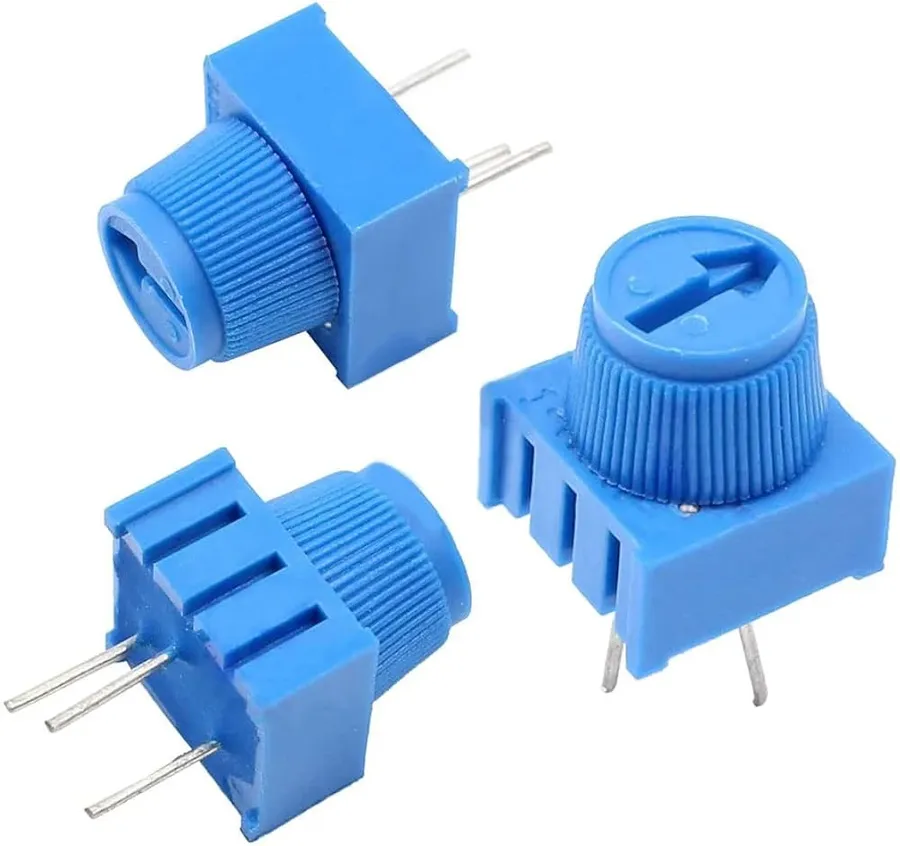
Different 10k Resistor Types
Understanding the specifications of a 10K resistor is crucial for its correct application in electronic circuits. Key parameters include power rating, tolerance, and the resistor's construction type. These specifications dictate how the resistor will behave under various operating conditions and impact its overall performance and reliability.
Specification
Description
Typical Values
Impact on Circuit
Power Rating
The maximum power a resistor can dissipate without being damaged.
1/4W, 1/2W, 1/8W, 1/10W (common)
Insufficient rating may lead to overheating, failure; higher rating can increase cost and size.
Tolerance
The permissible deviation of the actual resistance from its nominal value.
±1%, ±5%, ±10% (common)
High tolerance may lead to inaccuracy in precision applications. Lower tolerance ensures consistent performance, at an increased cost
Type
Materials and construction that influence characteristics, such as precision and stability.
Carbon Film, Metal Film, Wirewound, Thick Film.
Different types offer varying accuracy, temperature sensitivity, and noise characteristics; Metal film is common for general purpose precision applications, carbon film is often more affordable, while wirewound is higher power, and thick film is common in surface mount
When selecting a 10K resistor, consider the operating environment, expected current and voltage, and the precision required for the circuit application.
10K Resistor vs. Other Common Resistors: A Comparison
Resistor Value Comparison
While the 10k ohm resistor is ubiquitous in electronics, understanding its differences from other common resistor values is crucial for effective circuit design. This section provides a comparative analysis, highlighting distinct characteristics, applications, and specific use cases of the 10k resistor alongside 1k, 100k, and 220 Ohm resistors.
Feature
10k Ohm Resistor
1k Ohm Resistor
100k Ohm Resistor
220 Ohm Resistor
Typical Use Cases
Pull-up/pull-down, voltage division, LED current limiting (low current), general purpose
Current limiting (moderate current), feedback circuits, sensor interfaces
High impedance circuits, timing applications, gain control, pull-up resistor with low power consumption
Current limiting (high current), LED current limiting, simple signal control
Resistance Value
10,000 ohms
1,000 ohms
100,000 ohms
220 ohms
Current Handling
Lower current
Moderate current
Very low current
Higher current
Voltage Drop
Moderate voltage drop for moderate current
Lower voltage drop for moderate current
High voltage drop for low current
Very low voltage drop for high current
Impact on Circuit
Good balance between current and voltage, suitable for diverse applications
Lower impedance, generally for higher current applications
High impedance, reduces current flow, good for low power circuits
Low impedance, useful in circuits that require significant current
Common Applications Example
Microcontroller digital input pull up/down
Current limiter in op-amp circuits
Timing circuits
LED Current Limiting, protection resistors
Selecting the Right 10K Resistor for Your Project
Component Selection
Choosing the correct 10k resistor for a project is crucial for optimal circuit performance and reliability. The selection process involves careful consideration of the application's specific demands, including power dissipation, tolerance requirements, and environmental factors. This section provides a practical guide to ensure you select a 10k resistor that meets your project's needs.
Here is a breakdown of the key factors to consider:
Power Rating: The power rating of a resistor indicates how much power it can safely dissipate as heat without being damaged. Standard power ratings for 10k resistors are typically 1/4W, 1/2W, and 1/6W. Determine the power dissipation in your circuit by calculating the voltage across the resistor and current through it (P=V*I) and then choose a resistor with a power rating greater than the calculated value. It is good practice to select a resistor with at least double the power rating to have a safety margin.
Tolerance: Tolerance is the percentage by which the actual resistance can vary from the nominal value. For a 10k resistor, common tolerances include ±1%, ±5%, and ±10%. If precise resistance is needed, such as for sensitive measurement circuits, use a resistor with a smaller tolerance (±1% or better) . For most general applications a 5% tolerance is adequate.
Resistor Type: The resistor type determines its construction material and characteristics. Common types of 10k resistors include carbon film and metal film. Carbon film resistors are more economical, and metal film resistors offer higher precision, temperature stability and lower noise, making them ideal for more demanding applications.
Environmental Conditions: Consider the operating environment for your circuit. High temperatures, humidity, or physical stress may degrade a resistor's performance over time. Metal film resistors are generally more resistant to environmental changes. If extreme environmental conditions are anticipated, look for specialized resistors designed to withstand such conditions.
Physical Size and Mounting: The physical dimensions of the resistor must align with your circuit board design. Through-hole resistors are suitable for breadboards and prototype boards. Surface mount devices (SMD) are for PCB boards when space is limited. Always check the datasheet for specific dimensions.
Frequently Asked Questions About 10K Resistors
This section addresses common questions regarding 10k resistors, providing concise and authoritative answers to assist in your electronic projects.
What is a 10k resistor typically used for? A 10k resistor is versatile and used in various applications such as current limiting, particularly for LEDs, pull-up or pull-down resistors in digital circuits, voltage division in sensor circuits, and general circuit biasing. Its moderate resistance value makes it a common choice for many low to medium current applications.
What are the color bands on a 10k resistor and what do they mean? The color bands on a standard 10k ohm resistor are typically Brown, Black, Orange, and Gold. These correspond to the following: Brown (1), Black (0), Orange (1000 or *10^3 multiplier), and Gold (5% tolerance). Thus the value 10 multiplied by 1000 equals 10,000 ohms or 10k ohms with a 5% tolerance.
What is the precise value of a 10k resistor? The nominal value of a 10k resistor is 10,000 ohms. Due to manufacturing tolerances, the actual resistance may vary slightly from this value, typically within the tolerance band indicated by the last color band. Standard tolerances for 10k resistors are 5%(gold), 1% (brown) or 0.1% (purple) .
Can a 10k resistor be used to control an LED? Yes, a 10k resistor can be used in series with an LED to limit the current flowing through it. However, for most standard LEDs and voltages, a 10k resistor might be too high, resulting in a very dim LED or no light at all. A lower value resistor, such as a 220 or 330 ohm resistor, is more commonly used for general purpose LED current limiting based on the forward voltage and current rating of the LED and power supply voltage
Are 10k resistors used in pull-up or pull-down configurations? Yes, 10k resistors are frequently used as pull-up or pull-down resistors in digital logic circuits to establish a defined voltage state when an input is not actively driven. The 10k value is ideal, as it does not draw a significant amount of current, while still providing a reliable logic level. Other typical values range from 1k ohms to 100k ohms, depending on the design needs and power consumption consideration.
How does a 10k resistor behave in a voltage divider circuit? In a voltage divider circuit, a 10k resistor combined with another resistor of value (R2) will divide the voltage based on the ratio of their resistances (Vout= Vin*R2/(R1+R2)). For example if R1 and R2 are both 10k then the output voltage would be one half of the input voltage. Choosing an appropriate resistor combination determines the proportional output voltage with the higher resistor consuming less current. 10k resistors, due to its moderate resistance, are often used when both current consumption and predictable voltage division are considerations.
What is the typical power rating of a 10k resistor? Common power ratings for 10k resistors include 1/4W, 1/2W, and 1/8W depending on its application. The power rating must be selected such that it is greater than or equal to the expected power dissipation during operation. The power dissipated is computed from the current and resistance value with P=I^2*R, therefore careful selection is important when high currents are involved.
Troubleshooting with 10k Resistors
Successfully integrating 10k resistors into electronic circuits requires not only understanding their function but also the ability to troubleshoot common issues. These issues typically range from identifying faulty components to incorrect usage in circuit designs, both of which can lead to unpredictable circuit behavior.
Identifying a Faulty 10k Resistor A faulty resistor may exhibit a resistance value significantly different from its nominal 10k ohms. This can result from physical damage, overheating, or manufacturing defects. To accurately check, use a digital multimeter set to the resistance measurement setting. A reading far from 10k ohms or an open circuit (infinite resistance) indicates a faulty resistor. Before testing, ensure the resistor is not connected to any live circuit.
Incorrect Circuit Placement The position of the 10k resistor within a circuit design is critical. For example, in a voltage divider circuit, an incorrectly placed resistor can cause an improper division of voltage, leading to functional errors. If the 10k resistor is used in a pull-up or pull-down configuration, improper connections will cause logic gates to misinterpret signals. Always double-check the circuit diagram and verify the connections are in line with the design specifications.
Power Dissipation Issues The 10k resistor's power rating must be considered. If the power dissipation requirements are higher than the resistor is rated for, overheating and potentially a resistor failure may occur. To calculate power dissipation (P), use the formula P=I²R, where 'I' is the current flowing through the resistor and 'R' is the resistance (10k ohms). Select a resistor with a power rating well above this calculated value.
Environmental Factors Environmental factors like moisture and temperature can affect resistor performance. High temperatures can increase resistance value, while excessive moisture may cause corrosion or resistance fluctuations. Ensure the chosen 10k resistor is rated for the operational environment. Consider hermetically sealed or surface mount resistors if the application demands resistance to harsh environmental conditions.
Tolerance Issues All resistors have a tolerance, which is the deviation in the specified resistance value. A 10k resistor with a 5% tolerance could be anywhere between 9.5k ohms and 10.5k ohms, a 1% tolerance resistor varies from 9.9k ohms to 10.1k ohms. If your circuit requires high precision, be sure to select a resistor with a lower tolerance. Tolerance is usually coded into the 4th color band or 5th band (for high precision) and you will need to consult with a resistor color code guide.
Solder Joint Problems Poor soldering can also lead to functional issues with your 10k resistor. A cold solder joint (a joint that did not heat up properly during soldering) causes inconsistent connections and potential open circuits, while over heated joints may damage the resistor. A good solder joint is smooth and shiny. Ensure the soldering process is correct and the integrity of the joints are intact before using your circuit.
The 10k resistor, though small, stands as a cornerstone of electronics. Understanding its properties, applications, and proper selection is crucial for any electronics enthusiast or professional. Whether you're building a complex circuit or simple project, the 10k resistor will be an important component of it all. By incorporating knowledge of the 10k resistor, you can enhance not just your projects, but also your fundamental understanding of electrical engineering. Remember, choosing the right 10k resistor is as important as knowing what it is, and can ensure your project runs smoothly and efficiently.