In our modern digital age, transistor electronics is the unsung hero, the invisible force behind almost every electronic device we use. From smartphones to supercomputers, these tiny semiconductor devices are the building blocks of our technological world. This article aims to demystify transistor electronics, delving into their core principles, diverse functionalities, and crucial applications in our daily lives and beyond. By understanding these foundational components, we can better appreciate how technology shapes our society.
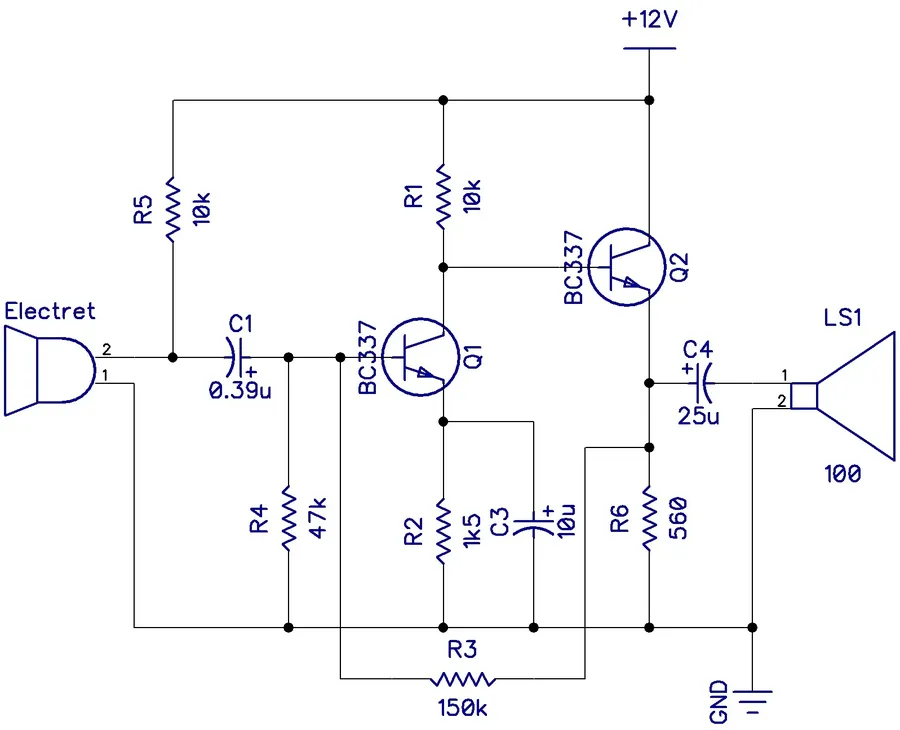
A transistor is a fundamental semiconductor device that serves as the cornerstone of modern electronics. Functioning primarily as an amplifier or a switch, it manipulates electronic signals by controlling the flow of current between its terminals. This control is achieved through the application of a small input signal, which can dramatically amplify or abruptly switch the output signal. The material composition of transistors involves specially treated semiconductors, namely N-type and P-type, which introduce specific electrical characteristics.
N-type semiconductors are created by doping a pure semiconductor material, such as silicon, with impurities that have extra electrons. These additional electrons are free to move, thereby increasing the conductivity. P-type semiconductors, on the other hand, are doped with impurities that create 'holes,' which are effectively positive charge carriers. These holes contribute to electrical conductivity by facilitating the movement of electrons between atoms. The strategic combination and layering of N-type and P-type materials within a transistor are what enable its unique amplifying and switching capabilities.
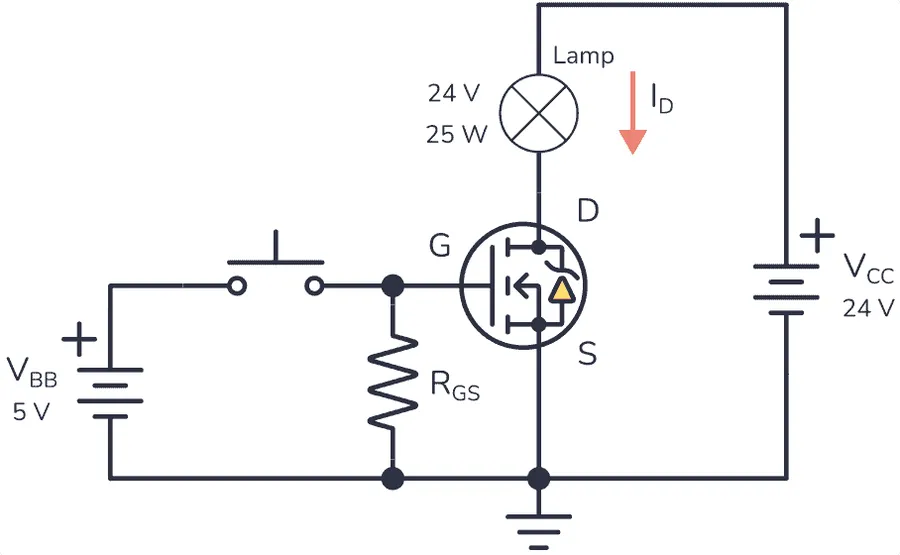
Transistors are fundamental building blocks of modern electronics, primarily functioning in two critical modes: amplification and switching. Amplification allows transistors to boost weak electronic signals, while switching enables them to control the flow of current, effectively acting as electronic on/off switches. These dual capabilities are at the heart of virtually all electronic devices.
These functions are not mutually exclusive; a transistor can be used in a circuit that exploits both amplification and switching simultaneously, although generally one function will be prioritized.
Below are explanations of each functionality:
Examples of transistor functions in real-world devices include the use of amplification in audio amplifiers in headphones and speakers to amplify very weak signals so they become audible to a human. Switching operations can be found in digital logic circuits of mobile phones, computers, etc. where transistors are used as fast electronic switches controlling logic gates that perform calculations.
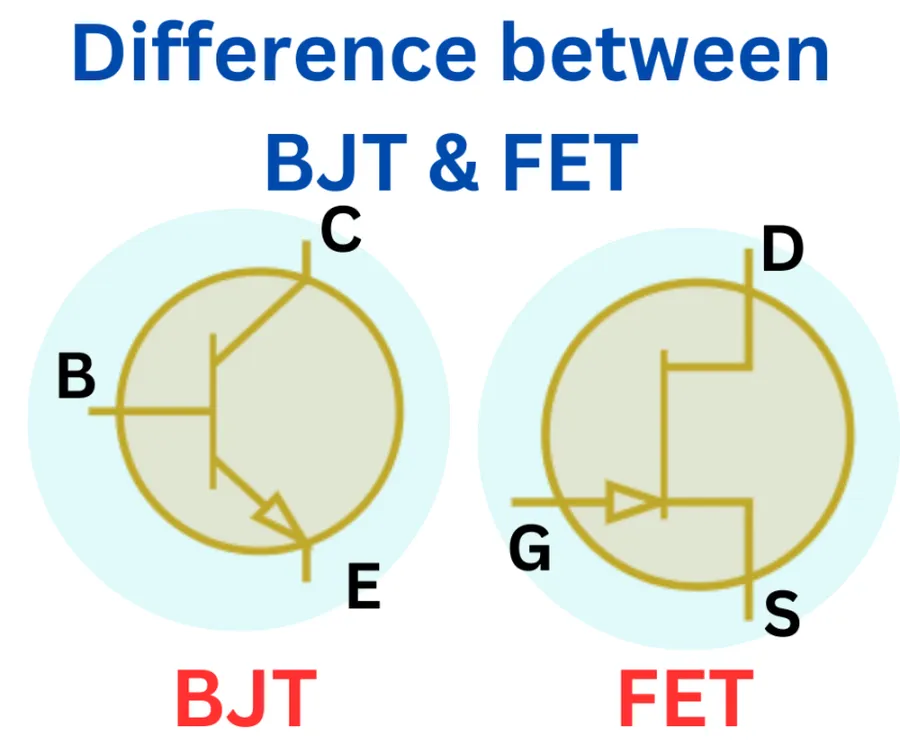
Transistors, the fundamental building blocks of modern electronics, are broadly classified into two primary categories: Bipolar Junction Transistors (BJTs) and Field-Effect Transistors (FETs). These two types differ significantly in their structure, operation, and how they control the flow of electrical current, making each suitable for different applications.
| Feature | Bipolar Junction Transistor (BJT) | Field-Effect Transistor (FET) |
|---|---|---|
| Control Mechanism | Current-controlled (current at the base controls current between collector and emitter) | Voltage-controlled (voltage at the gate controls current between source and drain) |
| Current Flow | Involves both majority and minority carriers | Primarily involves majority carriers |
| Input Impedance | Low | High |
| Gain | High current gain | High voltage gain |
| Structure | Two PN junctions (NPN or PNP) | A gate, source and drain |
| Temperature Sensitivity | More sensitive to temperature variations | Less sensitive to temperature variations |
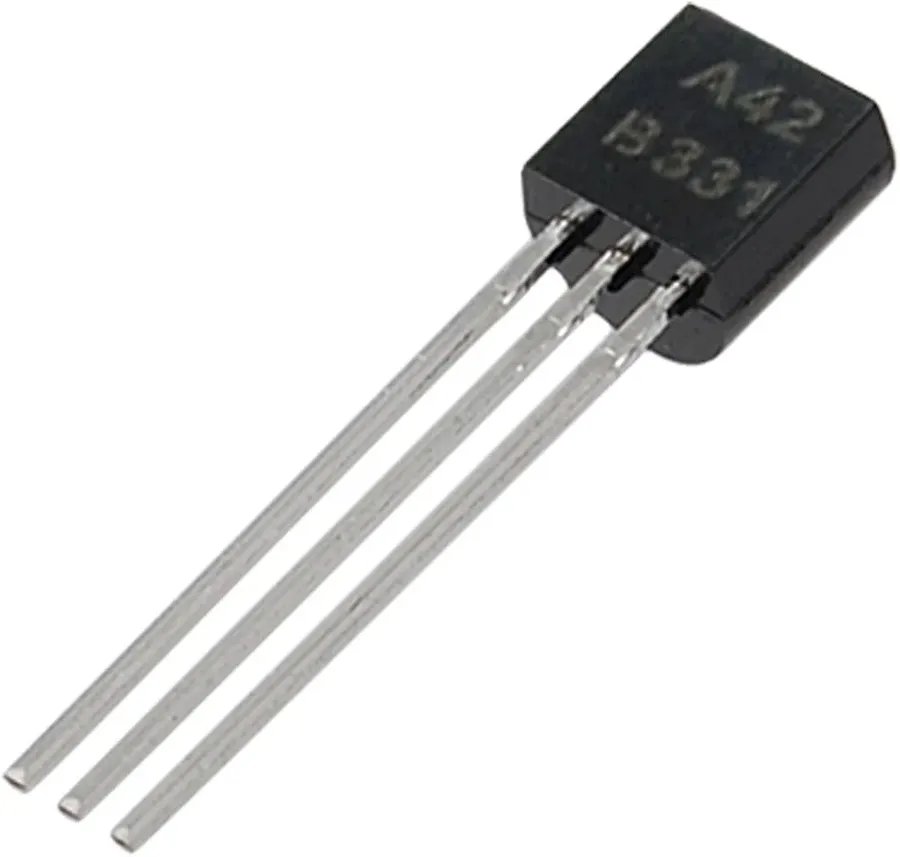
Bipolar Junction Transistors (BJTs) are a fundamental type of transistor characterized by the use of both electrons and holes as charge carriers. They come in two primary configurations: NPN and PNP, each with distinct structural and operational characteristics that determine their application in electronic circuits. Understanding these differences is crucial for effective circuit design.
| Feature | NPN Transistor | PNP Transistor |
|---|---|---|
| Structure | Two N-type semiconductor regions separated by a P-type region. | Two P-type semiconductor regions separated by an N-type region. |
| Polarity of Operation | Current flows from collector to emitter when a positive voltage is applied to the base. | Current flows from emitter to collector when a negative voltage is applied to the base. |
| Current Direction | Conventional current flow is from collector to emitter. | Conventional current flow is from emitter to collector. |
| Majority Charge Carriers | Electrons are the majority carriers. | Holes are the majority carriers. |
| Biasing Conditions | Base-emitter junction is forward biased, and base-collector junction is reverse biased for normal operation. | Base-emitter junction is forward biased (negative base voltage), and base-collector junction is reverse biased for normal operation. |
In an NPN transistor, a small current flowing into the base terminal allows a larger current to flow from the collector to the emitter. Conversely, in a PNP transistor, a small current flowing out of the base terminal allows a larger current to flow from the emitter to the collector. These fundamental differences in current flow direction and biasing requirements dictate their specific uses in various circuit designs.
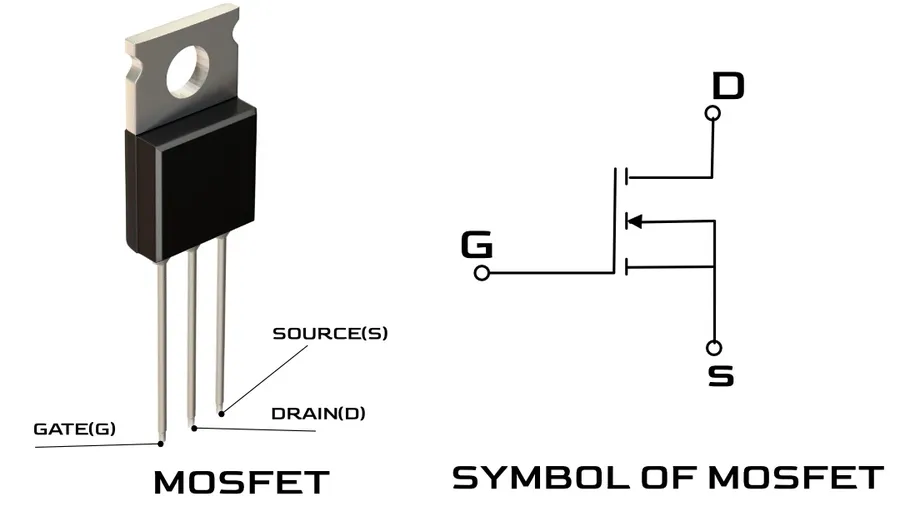
Field-Effect Transistors (FETs) are a cornerstone of modern electronics, offering unique advantages over Bipolar Junction Transistors (BJTs) by controlling current flow through an electric field. This characteristic allows FETs to exhibit high input impedance and are typically more energy-efficient compared to BJTs. FETs are primarily classified into two major categories: Metal-Oxide-Semiconductor FETs (MOSFETs) and Junction FETs (JFETs), each with distinct operational characteristics and applications.
| Feature | MOSFET | JFET |
|---|---|---|
| Control Mechanism | Electric field applied to gate through an insulator (oxide layer) | Electric field at reverse-biased PN junction |
| Input Impedance | Very high | High |
| Gate Insulation | Insulated gate | Not insulated gate |
| Channel | Can be enhanced (normally off) or depleted (normally on) | Typically depleted (normally on) |
| Operation Modes | Enhancement Mode and Depletion Mode | Depletion Mode |
| Temperature Stability | Generally less temperature sensitive | More temperature sensitive |
| Applications | Widely used in digital circuits, memory, microprocessors | Used in high-impedance applications, analog switches, low-noise amplifiers |
| Construction | Metal-Oxide-Semiconductor structure | PN junction forms the gate |
MOSFETs, owing to their insulated gate, boast extremely high input impedance, making them suitable for numerous applications, particularly in digital circuits where minimizing power loss is crucial. They are available in both enhancement mode, where the channel is created by applying a gate voltage, and depletion mode, where the channel is already present but can be reduced. JFETs, on the other hand, control current through the depletion region of a reverse-biased PN junction, offering high impedance but being more sensitive to temperature variations compared to MOSFETs.
The choice between MOSFETs and JFETs is dependent on specific requirements of the application. MOSFETs dominate digital logic design due to their superior switching capabilities and low power consumption, while JFETs are utilized in niche applications like high-impedance sensors and low-noise amplifiers where their simpler structure and high input impedance are beneficial.
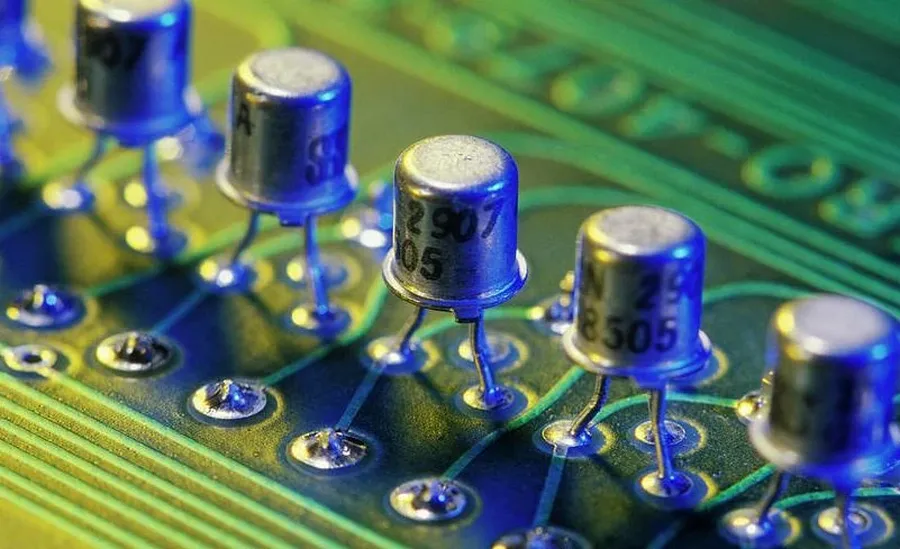
Transistors are ubiquitous in modern electronics, serving as the fundamental building blocks for a vast array of devices and systems. Their ability to amplify and switch electronic signals makes them indispensable in applications ranging from the simplest circuits to the most complex computational machinery. This section explores the diverse landscape of transistor applications, highlighting their critical role in shaping the technological world.
The advent of the transistor marked a pivotal moment in the history of electronics, revolutionizing the field by supplanting bulky, inefficient vacuum tubes with compact, highly effective semiconductor devices. This transition not only led to a dramatic reduction in the size and power consumption of electronic devices but also paved the way for the development of modern integrated circuits, forming the bedrock of today's information technology.
The impact of the transistor extends far beyond mere miniaturization. It has enabled the creation of complex computational devices and has revolutionized various industries. Looking ahead, research and development are focused on creating more efficient, smaller, and faster transistors. These include efforts on advanced materials such as graphene, exploring quantum computing concepts, and creating three-dimensional transistor architectures to increase the density of circuits, all aiming to overcome the physical limits of silicon and extend the capabilities of transistor technology.
| Feature | Vacuum Tubes | Transistors |
|---|---|---|
| Size | Large and Bulky | Small and Compact |
| Power Consumption | High | Low |
| Reliability | Lower | Higher |
| Speed | Slower | Faster |
| Lifespan | Shorter | Longer |
| Cost | Higher | Lower |
This section addresses common queries regarding transistor electronics, providing clear and concise answers to enhance understanding and resolve potential user confusion. We delve into the core functionalities, applications, and relevance of transistors in today's technology.
Working with transistor electronics requires careful attention to safety and proper techniques to ensure reliable circuit operation and prevent damage to components. This section provides practical tips on managing heat, implementing correct biasing, and handling transistors to maintain their performance and longevity.
Transistor electronics is the cornerstone of modern technology, underpinning countless devices with their unique ability to amplify and switch electrical signals. From the simple circuits of the past to today's sophisticated microprocessors, transistors have revolutionized how we interact with the world. Understanding the fundamental concepts of transistor electronics not only provides insight into modern technology but also inspires innovation, shaping the future of our technologically driven society. The continued miniaturization and enhanced performance of transistors will undoubtedly continue to push the boundaries of what's possible in electronics.

