In the world of electronics, the seemingly humble 10 kilo ohm resistor plays a vital role, akin to a traffic controller managing the flow of electrons. From simple LED circuits to complex microcontrollers like Arduino, the 10k ohm resistor is indispensable. This article unravels the significance of the 10k ohm resistor, its workings, and its diverse applications, illuminating its importance in both hobbyist projects and industrial machinery.
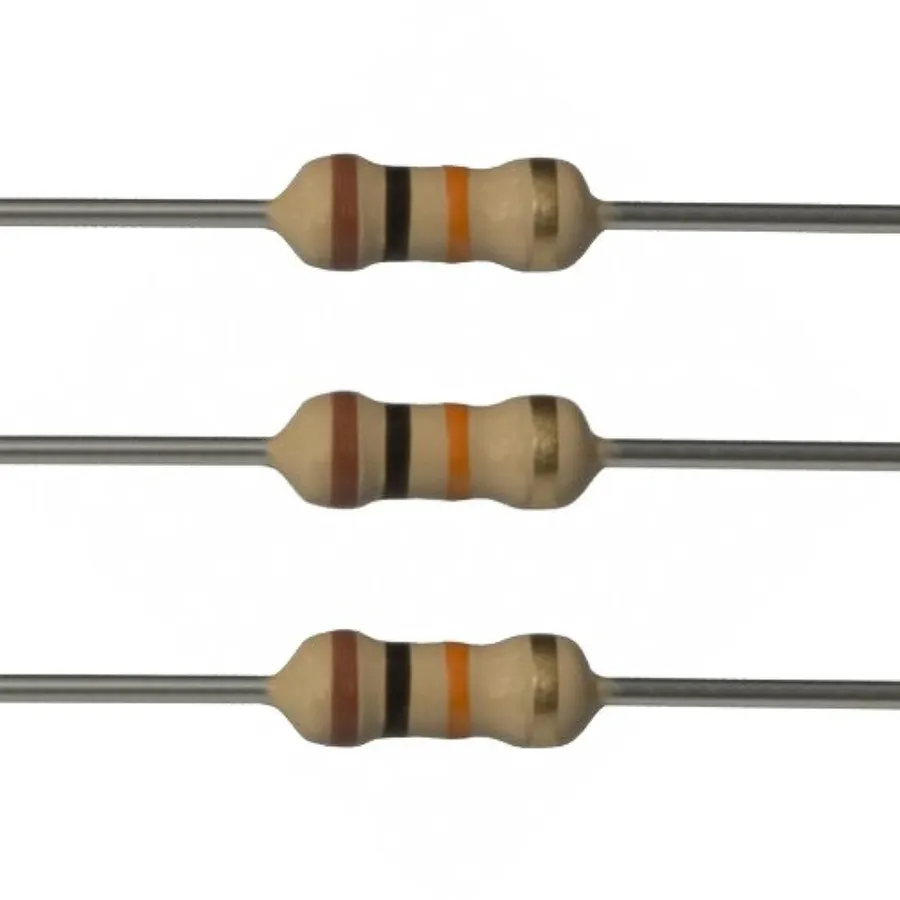
The 10k ohm resistor is a fundamental component in electronics, characterized by its specific resistance of 10,000 ohms. This value dictates the extent to which the resistor impedes the flow of electrical current, a crucial property for circuit design and function. Understanding resistance, measured in ohms (Ω), and the meaning of the '10k' designation is essential for properly utilizing this common component.
In electrical terms, resistance is the opposition to the flow of electric current. It is analogous to friction in a mechanical system. The ohm (Ω), named after Georg Simon Ohm, is the standard unit of electrical resistance. A 10k ohm resistor, therefore, provides 10,000 ohms of resistance to the current passing through it. The 'k' denotes kilo, which is a prefix meaning 1000, thus 10k = 10 * 1000 = 10,000 ohms.
The significance of a 10k ohm resistance value lies in its widespread use in numerous applications, offering a balance between current limiting and signal management. Its moderate resistance makes it suitable for a range of functions, including limiting current in LED circuits, serving as pull-up or pull-down resistors in digital logic, and creating voltage dividers. The 10k ohm resistor is a go-to component for both hobbyists and professional engineers due to its versatile properties.
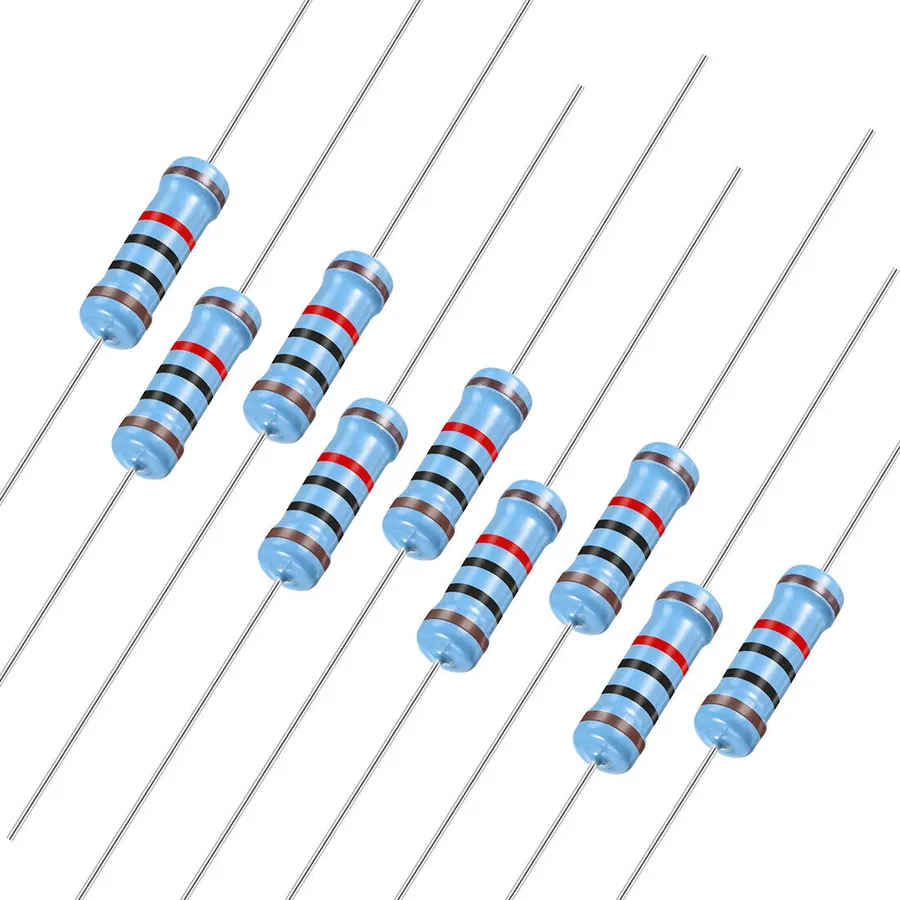
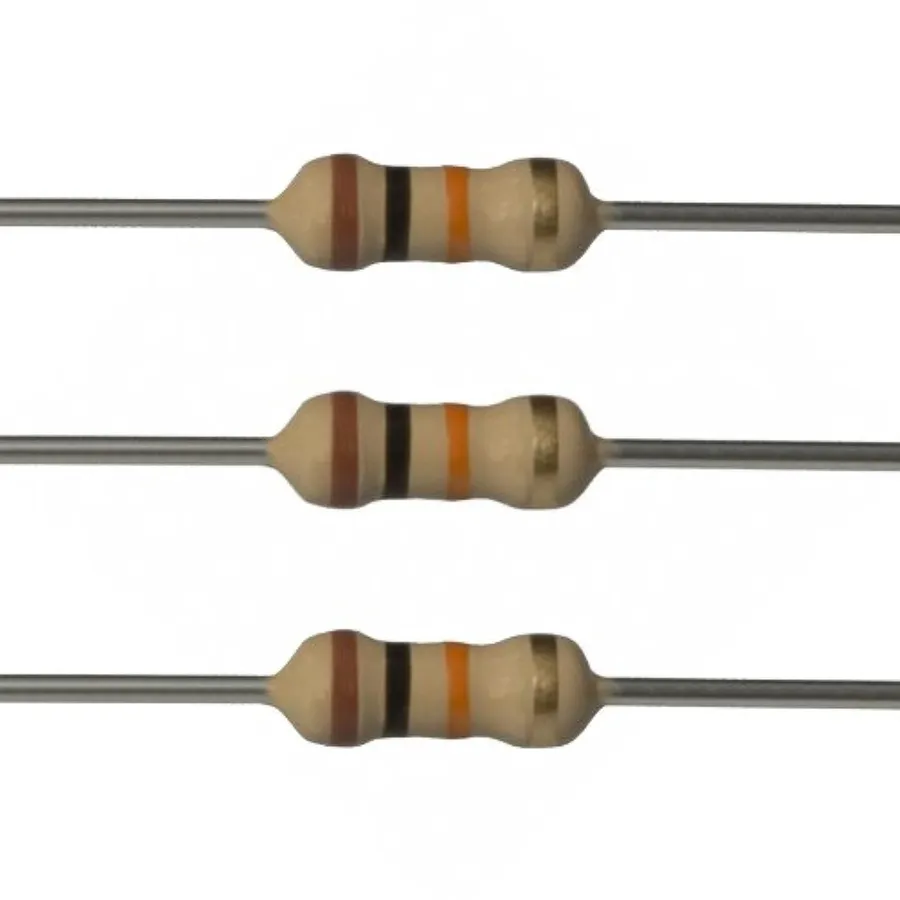
The color code on a 10k ohm resistor is a standardized system used to quickly identify its resistance value and tolerance. Typically, a 10k ohm resistor will have four or five color bands. The four-band configuration is most common, following a sequence that directly translates to the resistor's value, and the five-band configuration increases precision. Understanding this code is crucial for accurately selecting components in electronics projects. The most common code for a 10k ohm resistor is Brown-Black-Orange-Gold for a four band resistor, or Brown-Black-Black-Red-Gold for a five band resistor.
| Band | Color | Digit Value | Multiplier Value | Tolerance Value |
|---|---|---|---|---|
| 1st Band | Brown | 1 | ||
| 2nd Band | Black | 0 | ||
| 3rd Band | Orange | 1,000 (10^3) | ||
| 4th Band | Gold | ±5% | ||
| 3rd Band | Black | 1 | ||
| 4th Band | Red | 100 (10^2) | ||
| 5th Band | Gold | ±5% |
For a four-band resistor, the first two bands represent the first and second digits of the resistance value, the third band is a multiplier, and the fourth band represents tolerance. In our 10k ohm case (Brown-Black-Orange-Gold), Brown is 1, Black is 0, which gives us 10. The Orange band indicates a multiplier of 1,000, resulting in a value of 10,000 ohms. The gold band indicates a ±5% tolerance. For a five-band resistor, the first three bands represent the digits, the fourth band is the multiplier, and the fifth band indicates tolerance.
Tolerance indicates the precision of the resistor's actual value, with Gold representing ±5% tolerance, this means the actual value of the 10k ohm resistor may be between 9.5k ohms and 10.5k ohms. Understanding the color code helps ensure that the appropriate resistor is selected for a project and that the desired circuit function is accurately achieved.
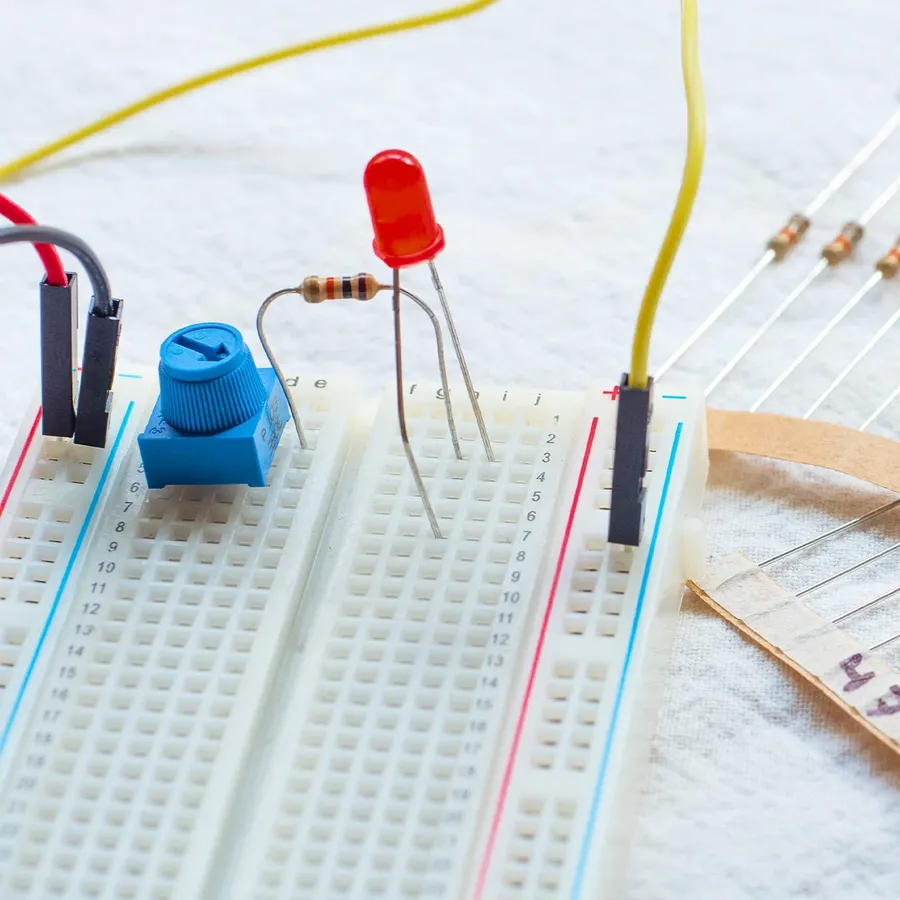
The 10k ohm resistor is a versatile component in electronics, utilized across a wide range of applications due to its moderate resistance value. Its role is pivotal in controlling current flow, establishing stable voltage levels, and facilitating signal processing in various circuits. This section delves into three key applications: current limiting for LEDs, pull-up/pull-down resistor configurations, and voltage division.
Current Limiting for LEDs: A primary use for a 10k ohm resistor is to limit the current passing through a Light Emitting Diode (LED). LEDs require a specific forward current to operate correctly, and excessive current can damage them. By placing a 10k ohm resistor in series with the LED, the current is controlled to a safe level. Ohm's Law dictates the relationship, V = IR, so adding a resistor increases the total resistance and reduces the circuit current.
Pull-up and Pull-down Resistors: In digital circuits, 10k ohm resistors frequently function as pull-up or pull-down resistors. These are used to establish a defined logic state (high or low) at an input pin when no signal is applied. A pull-up resistor connects the input to a high voltage supply, while a pull-down connects it to the ground. The 10k resistance provides enough resistance to prevent excessive current flow while still reliably establishing a defined state. The actual pull-up/pull-down resistor value can vary based on the circuit, but 10k is a common and effective choice.
Voltage Dividers: A voltage divider circuit uses two or more resistors to reduce a higher voltage to a lower one. A 10k ohm resistor, when combined with other resistor values, is used to create a specific voltage output. The output voltage is proportional to the resistance ratio based on the following equation: Vout = Vin * (R2 / (R1 + R2))
These applications illustrate the versatility of the 10k ohm resistor. Its moderate resistance allows it to be effective in both current limiting and voltage manipulation, making it a staple in many electronic circuits.
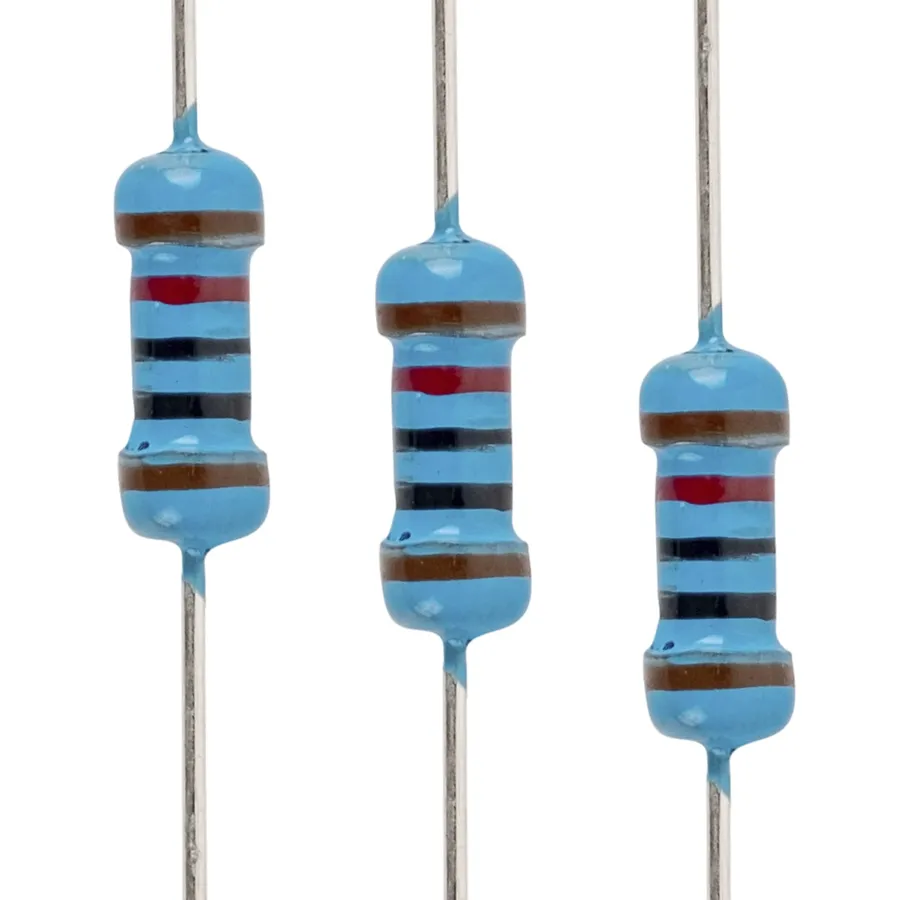
The 10k ohm resistor is a ubiquitous component in Arduino projects, playing a crucial role in ensuring stable and reliable digital and analog signal processing. Its primary use revolves around pull-up and pull-down configurations, and sensor interfacing. These configurations are essential for handling various input devices like buttons, switches, and analog sensors.
This section addresses common inquiries about 10k ohm resistors, providing practical guidance on their characteristics, usage, and selection. Understanding these aspects is crucial for effective circuit design and troubleshooting.
Selecting the appropriate 10k ohm resistor is crucial for optimal circuit performance and reliability. This choice involves considering several key factors beyond the resistance value itself, including tolerance, power rating, and mounting style. A mismatch can lead to circuit malfunction or premature component failure. Understanding these factors will ensure your resistor operates within its specifications.
| Parameter | Description | Considerations |
|---|---|---|
| Tolerance | The allowable variation in the resistor's actual resistance from its nominal value (10k ohms). | Expressed as a percentage (e.g., ±1%, ±5%, ±10%). Choose tighter tolerances for precision circuits; looser tolerances are acceptable for less critical applications. |
| Power Rating | The maximum power (in Watts) that the resistor can dissipate without overheating or damage. | Common values include 1/8W, 1/4W, 1/2W. Select a power rating that exceeds the expected power dissipation in the circuit, ensuring a safety margin to prevent overheating and failure. |
| Mounting Style | The method of physically attaching the resistor to a circuit board. | Common options include through-hole (leaded) for breadboard or prototyping and surface mount (SMD) for compact and permanent installations. Choose based on your project assembly needs. |
| Temperature Coefficient | How much the resistance value changes with temperature. | Important for designs where temperature variation is expected, you will need to consider the temperature coefficient. |
| Package Size | Physical dimensions of the resistor. | SMD resistors come in various standard sizes (e.g., 0603, 0805, 1206) which should match your design. |
| Operating Voltage | Maximum voltage that can be safely applied to the resistor. | Ensure the maximum voltage of your circuit will not exceed the maximum voltage rating of the resistor. |
While a 10k ohm resistor is a versatile component in electronics, understanding its differences from other common resistor values like 220 ohm and 1k ohm is crucial for effective circuit design. The choice of resistor value significantly impacts circuit behavior, and selecting the appropriate value ensures optimal performance.
| Resistor Value | Typical Application | Current Limiting Capability | Voltage Division Characteristics |
|---|---|---|---|
| 220 Ohm | LED current limiting, low impedance loads | High, allows more current flow | Less effective in voltage division due to low resistance |
| 1k Ohm | Current limiting, moderate impedance loads, sensor interfaces | Medium, offers a balance between current and voltage changes | Effective for moderate voltage division |
| 10k Ohm | Pull-up/pull-down resistors, voltage dividers, analog sensors | Low, limits current significantly | Excellent for voltage division, stable signal for digital inputs |
A 220 ohm resistor is commonly used for limiting current to LEDs where a relatively high current is needed but must be limited to prevent damage. Its low resistance allows more current to flow, making it less suitable for applications that require a substantial voltage drop. In contrast, a 1k ohm resistor offers a moderate level of current limiting and is often used in sensor interfaces or as part of a simple voltage divider. The 10k ohm resistor, with its higher resistance, is ideal for pull-up or pull-down applications in digital circuits, providing stable signal levels for logic inputs, and creating accurate voltage division with minimal current draw. The key advantage of a 10k ohm resistor in such scenarios is its higher resistance which ensures minimal current flow, thereby conserving energy and reducing heat generation in the circuit.
The selection between 220 ohm, 1k ohm, and 10k ohm resistors hinges on the specific requirements of the circuit. For high current applications, lower values like 220 ohms are favored. For moderate current and voltage dividing situations 1k ohm is a reasonable choice and for digital circuits that need stable logic levels or analog signal interfaces, 10k ohm resistors are preferred for their low current consumption and excellent voltage division characteristics.
Effective troubleshooting of 10k ohm resistor issues requires a systematic approach, considering common failure modes such as incorrect connections, thermal stress from overheating, and damage due to over-voltage conditions. Recognizing these potential problems allows for prompt corrective action.
The 10 kilo ohm resistor, despite its small size, is a foundational component in electronics. Its ability to precisely control electrical current makes it essential in countless circuits, from simple LEDs to sophisticated microcontrollers. As technology advances, the fundamental principles governing the 10k ohm resistor will continue to apply, making a good understanding of this component vital for anyone engaging in electronics. Understanding and correctly applying the 10k ohm resistor is a key skill for success in the field.

