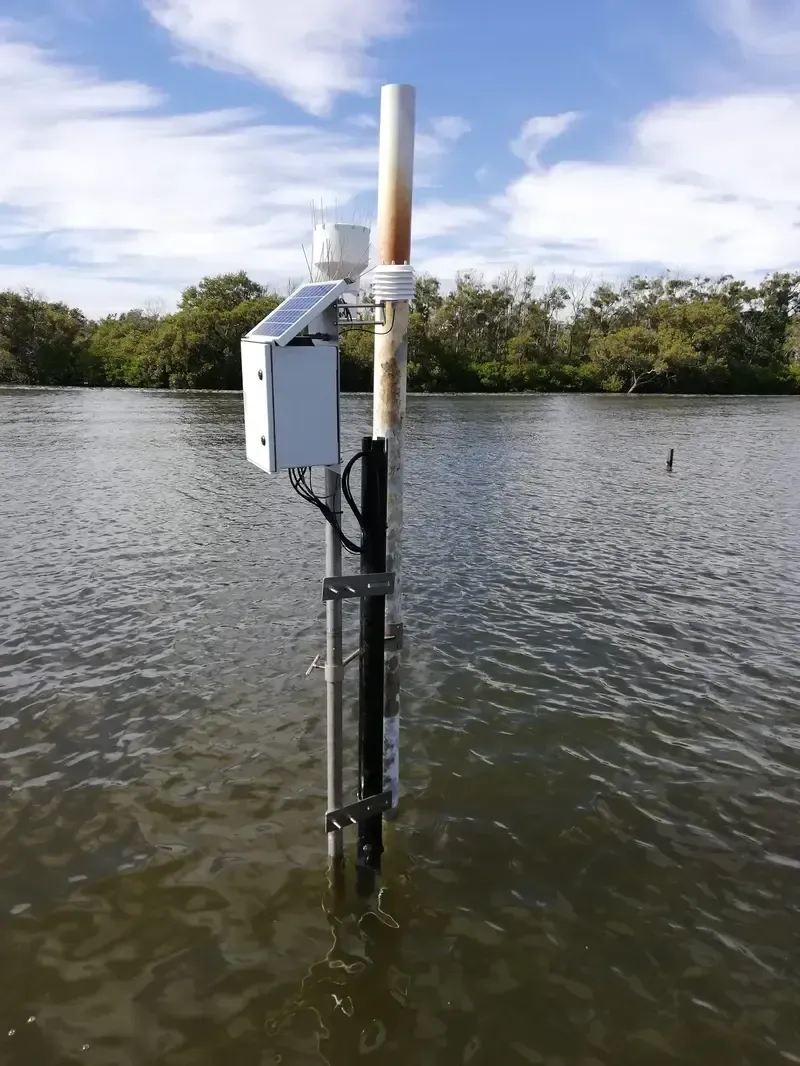
In an era defined by increasing environmental concerns, the need for precise and reliable water quality monitoring has never been greater. Water quality monitoring buoys are pivotal in gathering critical data, enabling informed decisions for environmental protection and resource management. At the heart of these sophisticated systems lies the printed circuit board (PCB), the unsung hero ensuring seamless operation and data accuracy. Zero One Solution Limited specializes in providing cutting-edge PCB solutions tailored for water quality monitoring buoys, empowering researchers, environmental agencies, and industries to safeguard our precious water resources. This article delves into the critical role of PCBs in water quality monitoring buoys and showcases how Zero One Solution Limited is revolutionizing environmental monitoring through innovative PCB design, manufacturing, and assembly.
The Vital Role of PCBs in Water Quality Monitoring Buoys
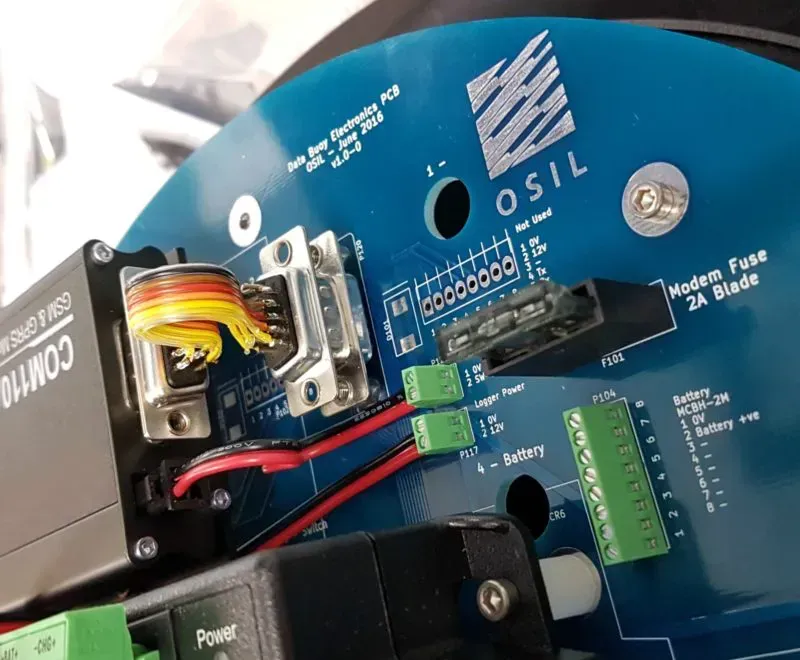
PCB in Water Quality Buoy
Printed Circuit Boards (PCBs) are the indispensable nerve centers within water quality monitoring buoys, serving as the core enabler for reliable data acquisition, sophisticated processing, and seamless transmission. These robust electronic platforms facilitate the integration of diverse sensors, from pH and conductivity probes to dissolved oxygen and turbidity meters, converting raw environmental data into actionable insights crucial for ecological preservation and public health. Their role extends beyond mere connectivity; PCBs are engineered to operate with unwavering precision in some of the most challenging and unpredictable environmental conditions on Earth, demanding a level of durability and performance that few other applications require.
Data Acquisition & Processing Hub PCBs in water quality monitoring buoys are the central processing units, efficiently collecting and consolidating data from multiple sensors. They convert analog signals into digital formats, perform preliminary data processing, and often incorporate microcontrollers for local analysis, ensuring high-fidelity data capture essential for accurate environmental assessment.
PCB Function
Importance in Buoys
Environmental Impact
Sensor Integration
Connects various sensors (pH, DO, Temp, etc.)
Enables comprehensive water quality assessment
Data Logging
Stores collected data securely
Provides historical trends for long-term analysis
Power Management
Efficiently distributes power to all components
Extends buoy operational life and reduces maintenance
Communication Modules
Facilitates data transmission (LoRa, Cellular, Satellite)
Ensures real-time data access for timely interventions
The operational environment for these PCBs is uniquely harsh. Submerged or semi-submerged, they face continuous exposure to saltwater corrosion, extreme temperature fluctuations, high humidity, biofouling, and mechanical stresses from waves and currents. Such conditions necessitate an exceptional focus on robust design and meticulous material selection. Without PCBs that can withstand these stressors, the reliability and longevity of water quality monitoring buoys would be severely compromised, leading to inaccurate data, system failures, and ultimately, ineffective environmental management. The critical nature of their application demands not just functionality, but unyielding resilience.
Challenges in PCB Design for Aquatic Environments
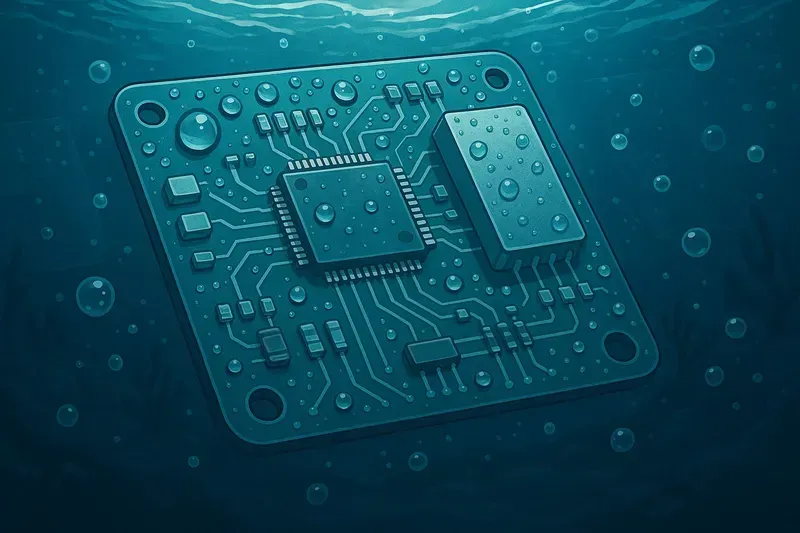
PCB Corrosion Test
Designing Printed Circuit Boards (PCBs) for water quality monitoring buoys presents a unique confluence of engineering challenges, primarily due to the inherently hostile aquatic environments they operate within. Unlike terrestrial applications, these PCBs must withstand constant exposure to moisture, salinity, varying temperatures, and biological fouling, all of which can severely compromise their integrity and performance. Addressing these challenges is paramount to ensuring the accuracy, longevity, and reliability of water quality data acquisition. The complexity arises from the need to balance robust protection with maintaining optimal signal integrity and thermal efficiency, a critical aspect that demands specialized expertise in material science, enclosure design, and circuit layout.
Corrosion Resistance and Material Selection The presence of dissolved salts, chemicals, and pollutants in water, particularly in marine or industrial wastewater environments, makes PCBs highly susceptible to corrosive degradation. This necessitates the meticulous selection of corrosion-resistant base materials, such as specific FR-4 variants or alternative substrates, along with specialized surface finishes (e.g., Electroless Nickel Immersion Gold - ENIG, Immersion Silver) and solder alloys. Furthermore, component leads and exposed metallic parts must be carefully chosen for their inherent resistance to oxidation and electrochemical reactions, preventing open circuits or signal degradation over time. Ignoring this can lead to premature system failure and costly replacements, underscoring the importance of long-term material stability testing in simulated aquatic conditions before deployment. According to a study by the Electrochemical Society, the corrosion rate of unprotected copper in seawater can be significantly accelerated, emphasizing the need for advanced protective measures like conformal coatings and robust encapsulations to extend operational lifespan significantly. This protective layer acts as a critical barrier, preventing direct contact between the corrosive elements and the sensitive circuitry, thereby mitigating electrochemical degradation.
Zero One Solution's Expertise in Water Quality Monitoring Buoy PCBs
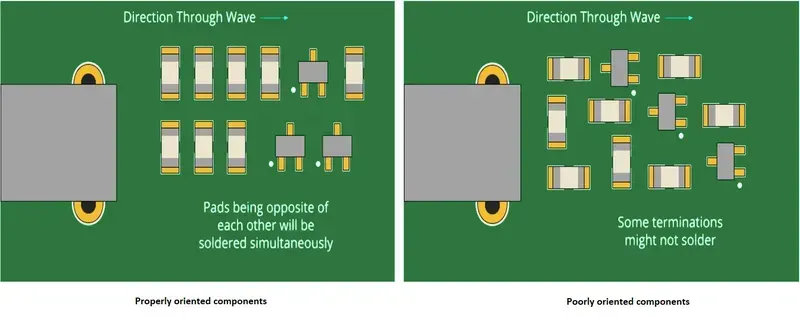
PCB Component Placement
Zero One Solution Limited stands at the forefront of providing robust PCB solutions specifically engineered for the demanding environment of water quality monitoring buoys. Our deep understanding of aquatic challenges, combined with over a decade of specialized experience since our founding in 2011, enables us to deliver PCBs that ensure unparalleled reliability and accuracy in critical environmental data acquisition. We meticulously consider every aspect of the design and manufacturing process, from material selection to advanced assembly techniques, to mitigate the unique risks associated with submersion, corrosion, and extreme temperatures, ensuring your monitoring systems function flawlessly for extended periods.
Specialized Material Selection for Aquatic Durability Our expertise begins with the careful selection of substrate materials, such as FR-4 variants with enhanced moisture resistance or specialized high-performance laminates, along with corrosion-resistant finishes like ENIG (Electroless Nickel Immersion Gold) or OSP (Organic Solderability Preservatives). These choices are crucial for preventing degradation from saltwater, freshwater, and various chemical pollutants, ensuring the PCB's longevity and signal integrity.
Optimized Component Placement for Environmental Resilience We employ advanced layout strategies to optimize component placement, minimizing thermal stress points and facilitating efficient heat dissipation, even in enclosed buoy systems. This includes strategic spacing for critical components, consideration of convective cooling paths, and the integration of thermal vias, all aimed at enhancing overall system stability and performance under fluctuating environmental conditions.
Advanced Manufacturing Techniques for Enhanced Protection Zero One Solution Limited leverages state-of-the-art manufacturing techniques, including precision automated assembly and advanced soldering processes, to ensure superior joint integrity and minimize defects. Furthermore, we apply specialized conformal coatings (e.g., acrylic, epoxy, or urethane) and potting compounds to create an impermeable barrier against moisture ingress, chemical exposure, and fungal growth, significantly extending the operational lifespan of the PCBs in harsh aquatic environments.
Rigorous Quality Control and Testing Protocols Every PCB destined for water quality monitoring buoys undergoes a series of stringent quality control and testing protocols. This includes automated optical inspection (AOI), X-ray inspection for internal layers, and functional testing to verify electrical performance under simulated operational loads. Our commitment to rigorous testing ensures that each board meets the highest standards of reliability and performance before deployment in critical monitoring applications.
Extended operational life and reduced maintenance in saline or corrosive waters. Hundreds of successful deployments globally.
Moisture Resistance
Applies advanced hydrophobic materials and hermetic sealing techniques where applicable.
Prevents short circuits and component failure due to water ingress, ensuring uninterrupted data collection even in high humidity or submerged conditions.
Thermal Management
Incorporates thermal vias, heat sinks, and optimized copper pours in PCB design.
Maintains stable operating temperatures for sensitive electronics, crucial for accurate sensor readings and long-term reliability in varying water temperatures.
Signal Integrity
Employs impedance controlled routing, ground plane optimization, and EMI shielding.
Ensures accurate and clear data transmission from sensors to processing units, vital for precise environmental analysis and avoiding data corruption.
Power Efficiency
Designs for low power consumption, utilizing efficient component selection and power management ICs.
Extends battery life for remote buoys, reducing the need for frequent servicing and enabling longer deployment durations in isolated locations.
Our Comprehensive PCB Solution Services
Zero One Solution Limited provides a comprehensive, end-to-end PCB solution specifically engineered for the rigorous demands of water quality monitoring buoys. Our integrated approach covers every stage from initial concept design to final assembly, ensuring manufacturers and researchers receive robust, reliable, and high-performance PCBs essential for critical environmental data acquisition and transmission. This holistic service mitigates integration challenges, streamlines the development lifecycle, and significantly accelerates time-to-market for advanced water quality monitoring systems.
Service Phase
Key Offerings
Benefits for Water Quality Monitoring Buoys
PCB Design & Engineering
Schematic capture, layout design, DFM/DFA optimization, material selection for harsh environments, signal integrity analysis.
Optimized performance in challenging aquatic conditions, enhanced signal accuracy, reduced failure rates from environmental stressors, accelerated design cycles.
Rapid Prototyping
Quick-turn PCB fabrication and assembly for iterative design refinement and functional validation.
Fast validation of design concepts, reduced development costs, rapid iteration to meet specific project requirements, minimized risk before mass production.
Superior electrical performance, consistent product quality, increased reliability in long-term deployments, compliance with industry standards for mission-critical applications.
Enhanced durability against moisture and corrosion, verified functionality under operational conditions, reduced field failures, ensured data integrity and system longevity.
End-to-End Project Management We manage the entire PCB lifecycle, from initial design consultation to final product delivery, providing a single point of contact and ensuring seamless coordination across all phases. This streamlines communication and accelerates project completion for water quality monitoring buoy developers.
Advanced Materials and Technologies for Enhanced Durability
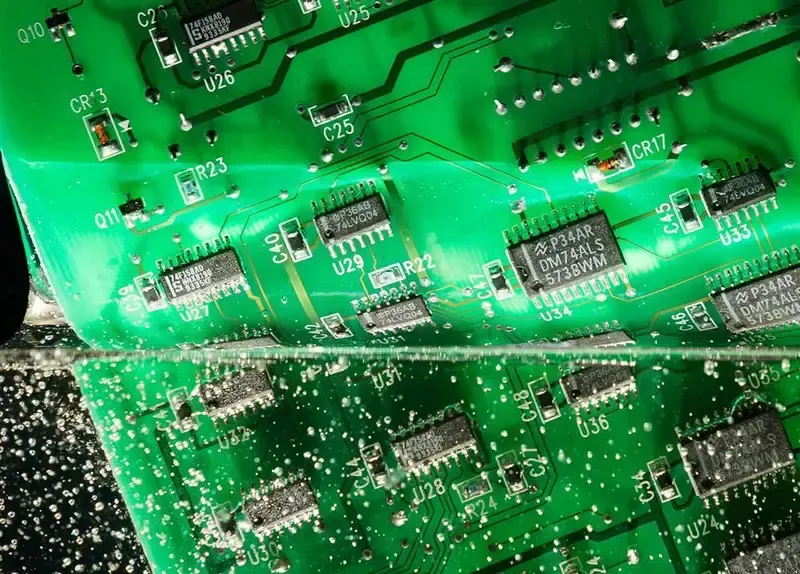
PCB with Conformal Coating
Ensuring the longevity and reliability of Printed Circuit Boards (PCBs) in the demanding aquatic environments of water quality monitoring buoys necessitates the application of advanced materials and cutting-edge manufacturing technologies. The relentless exposure to moisture, salinity, and temperature fluctuations demands solutions that go beyond conventional PCB fabrication. At Zero One Solution Limited, our expertise lies in integrating these innovations to fortify PCBs against environmental degradation, ensuring stable performance and extended operational life, which is critical for accurate and continuous data acquisition in remote and harsh aquatic settings.
Conformal Coatings: The Invisible Shield Conformal coatings, thin polymeric films applied to PCBs, are a cornerstone of environmental protection. They encapsulate components and traces, forming an impermeable barrier against moisture, humidity, chemicals, and even fungal growth. We meticulously select coating types—such as acrylic, silicone, polyurethane, or parylene—based on the specific environmental stresses anticipated for the buoy's deployment. For instance, parylene offers superior barrier properties and thermal stability, ideal for extreme conditions, while silicone provides excellent flexibility and moisture resistance. The application process, whether spray, dip, or vapor deposition, is precisely controlled to ensure uniform coverage and optimal thickness, maximizing protection without hindering thermal dissipation or signal integrity. Our rigorous post-coating inspection guarantees defect-free protection.
Corrosion-Resistant Materials: Building to Last Beyond external coatings, the fundamental materials comprising the PCB itself must exhibit inherent resistance to corrosion. This includes the substrate, copper traces, and component finishes. We primarily utilize high-Tg (glass transition temperature) FR-4 laminates for their excellent thermal and mechanical stability, and when extreme moisture resistance is paramount, specialized substrates like CEM-3 or even ceramic-based materials are considered. For conductive traces, while copper is standard, its exposed surfaces are treated with finishes like Electroless Nickel Immersion Gold (ENIG) or Immersion Silver. ENIG, with its nickel barrier layer and gold outer layer, provides exceptional oxidation and corrosion resistance, crucial for long-term solderability and reliability in humid or saline atmospheres. These finishes prevent copper oxidation, maintaining electrical conductivity and robust solder joints.
Advanced Soldering Techniques: The Strength of Connections The integrity of solder joints is paramount for PCB reliability, especially in environments subject to vibration and thermal cycling. We employ advanced soldering techniques that enhance the mechanical and electrical robustness of these critical connections. Lead-free soldering processes, in compliance with environmental regulations, are optimized to ensure strong metallurgical bonds. This involves precise temperature profiles and high-quality solder pastes with optimized flux formulations to minimize voiding and ensure complete wetting. For high-reliability applications, selective soldering or even vacuum reflow soldering can be utilized to further reduce voids, which are potential points of failure under stress. Furthermore, incorporating underfill materials for sensitive components, particularly BGA (Ball Grid Array) packages, provides additional mechanical support and thermal stress relief, significantly enhancing joint durability against thermal expansion mismatches and vibrations.
Case Studies: Successful Water Quality Monitoring Projects
Water Monitoring Station
Zero One Solution Limited's expertise in PCB solutions for water quality monitoring buoys is best exemplified through our successful project implementations. These case studies underscore our capability to overcome complex environmental challenges and deliver highly reliable, high-performance PCBs crucial for accurate and continuous water quality data acquisition. Our commitment to innovation and engineering excellence ensures that our partners can deploy robust monitoring systems, contributing significantly to environmental protection and resource management.
Case Study 1: Remote River Basin Monitoring Network A client required a PCB solution for a network of water quality monitoring buoys deployed in a remote river basin, demanding ultra-low power consumption and exceptional reliability for continuous operation over several years without human intervention. Zero One Solution designed and manufactured custom PCBs featuring advanced power management ICs and multi-layered designs for optimal signal integrity. We employed specialized conformal coatings (e.g., Parylene) and hermetic sealing techniques to withstand extreme humidity and temperature fluctuations. The resulting buoy systems have provided uninterrupted, accurate data for over three years, significantly aiding in early pollution detection and resource management strategies, demonstrating a 99.8% uptime rate in harsh conditions.
Case Study 2: Coastal Estuary Algae Bloom Detection System For a coastal environmental agency, the challenge was to develop a buoy system capable of real-time detection and prediction of harmful algae blooms, requiring high-speed data processing and robust communication in corrosive saltwater environments. Our team engineered high-density interconnect (HDI) PCBs optimized for integrating multiple chemical and optical sensors, along with a powerful onboard microcontroller for real-time data analysis. We utilized specialized corrosion-resistant laminates (e.g., high-Tg FR-4 with enhanced moisture resistance) and advanced soldering processes to ensure long-term integrity against saline exposure. The deployed buoys successfully provided critical early warnings for algae blooms, leading to timely interventions and protecting marine ecosystems, reducing economic losses from affected fisheries by an estimated 30% annually.
Case Study 3: Deep-Sea Oceanographic Research Buoy A leading oceanographic institute needed bespoke PCBs for a deep-sea buoy designed for long-term data collection at extreme pressures and varying temperatures. The solution demanded exceptional mechanical robustness and resistance to pressure-induced deformation. Zero One Solution developed PCBs using rigid-flex technology, enabling compact integration of sensors and communication modules while withstanding immense hydrostatic pressures. We selected high-performance, low-CTE (Coefficient of Thermal Expansion) materials to minimize stress on components and implemented rigorous vacuum encapsulation. These PCBs facilitated the collection of unprecedented datasets on ocean currents and subsurface nutrient levels, contributing to groundbreaking climate research and demonstrating flawless operation at depths exceeding 2,000 meters for over five years.
Quality Assurance and Testing for Reliable Performance
PCB Stress Testing
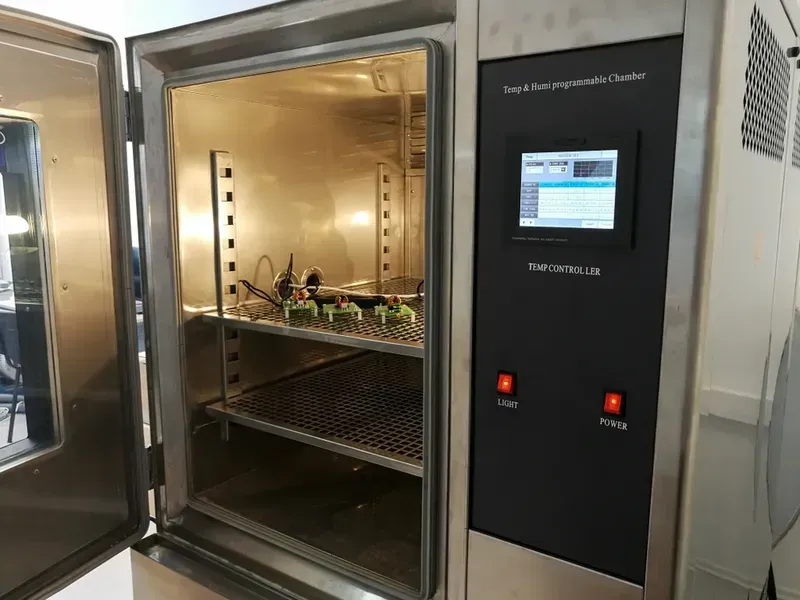
Ensuring the unwavering reliability of PCBs within water quality monitoring buoys is paramount, given the mission-critical nature of environmental data collection in demanding aquatic environments. Zero One Solution Limited implements a multi-faceted, rigorous quality assurance and testing protocol, meticulously designed to validate the performance, durability, and longevity of every PCB. Our comprehensive approach, from design verification to post-manufacturing validation, guarantees that our PCB solutions stand resilient against the harshest conditions, providing dependable data acquisition and transmission capabilities.
Testing Method
Description
Purpose in Buoy PCB Assurance
Environmental Stress Screening (ESS)
Exposing PCBs to extreme temperature cycling, humidity, and vibration profiles beyond anticipated operational limits.
Identifies latent defects that might emerge under stress, ensuring long-term reliability in varying aquatic climates and harsh weather conditions. Crucial for marine deployments.
Accelerated Aging Testing
Applying intensified operational stresses (e.g., elevated temperature, voltage) over a short period to simulate years of service life.
Predicts long-term performance and identifies potential failure modes over the operational lifespan of the buoy, crucial for continuous monitoring applications.
Functional Testing (FT)
Verifying that the PCB operates according to its design specifications, including power consumption, sensor interfaces, data processing, and communication modules.
Confirms all electronic components and circuits are working as intended, ensuring accurate data collection and transmission from all integrated sensors and communication systems.
Corrosion Resistance Testing
Exposing PCB materials and coatings to saline solutions or corrosive gases to evaluate their resistance to degradation.
Ensures the integrity of the PCB and its components in saltwater or polluted freshwater environments, preventing premature failure due to corrosion.
Ingress Protection (IP) Testing
Assessing the PCB's ability to resist water and dust penetration when integrated into its housing, according to IP standards.
Verifies the effectiveness of sealing and conformal coatings, preventing water ingress which is a primary cause of failure in submerged or exposed buoy electronics.
Vibration and Shock Testing
Subjecting PCBs to simulated mechanical stresses encountered during deployment, transport, or turbulent water conditions.
Confirms structural integrity and component resilience, ensuring the PCB withstands physical impacts and vibrations common in marine or riverine environments.
Partnering with Zero One Solution for Your PCB Needs
Choosing the right PCB solution provider is paramount for the success and longevity of water quality monitoring buoys, which operate in demanding environmental conditions. Partnering with Zero One Solution Limited offers a distinct advantage, combining deep technical expertise with a steadfast commitment to delivering reliable, high-performance printed circuit boards tailored to the unique challenges of aquatic sensing applications. Our integrated approach ensures that every PCB not only meets but exceeds the stringent requirements for durability, precision, and operational stability in real-world scenarios, directly addressing the critical needs of environmental monitoring projects.
Why Choose Zero One Solution for Water Quality Monitoring Buoy PCBs? Zero One Solution Limited brings over a decade of specialized experience in rapid prototyping and high-reliability PCB manufacturing. Our comprehensive understanding of the environmental stressors faced by water quality monitoring buoys, coupled with our advanced material science and manufacturing processes, ensures that our PCBs offer unparalleled performance and longevity. We provide end-to-end support, from initial design consultation to final assembly and rigorous testing.
Future Trends in Water Quality Monitoring Technology
The evolution of water quality monitoring technology is driven by the increasing need for real-time, comprehensive, and cost-effective data. As a leading PCB solution provider, Zero One Solution Limited is at the forefront, anticipating these shifts and developing innovative PCB solutions that empower the next generation of monitoring devices. This forward-looking approach ensures our clients remain competitive and effective in addressing critical environmental challenges.
Miniaturization and Integration Future buoys will feature significantly smaller footprints, enabled by highly integrated PCBs that consolidate multiple functions onto a single board. This reduces overall size and weight, making deployments easier and more discreet. Zero One Solution is leveraging advanced HDI (High-Density Interconnect) and System-in-Package (SiP) technologies to create compact, high-performance PCB designs that facilitate this trend, allowing for more sensors and communication modules within a confined space. This also contributes to reduced material usage and energy consumption, aligning with sustainable development goals.
Advanced Wireless Connectivity The drive for continuous, remote monitoring necessitates robust and efficient wireless communication. Emerging trends include the broader adoption of LPWAN (Low-Power Wide-Area Networks) technologies like LoRaWAN and NB-IoT, alongside enhanced 5G capabilities, for long-range, low-power data transmission. Zero One Solution is specializing in designing PCBs optimized for these protocols, ensuring stable and secure data links from remote buoy locations to central data platforms. Our designs prioritize antenna integration and RF signal integrity, crucial for reliable communication in challenging maritime or freshwater environments.
Enhanced Sensor Integration and AI Capabilities The future of water quality monitoring lies in the integration of an increasingly diverse array of sensors, capable of detecting a wider range of parameters from microplastics to specific contaminants, often coupled with on-board artificial intelligence (AI) for real-time data analysis and anomaly detection. Zero One Solution is developing PCBs that support this multi-sensor integration, providing robust interfaces and processing power for complex data algorithms. Our solutions facilitate the seamless integration of electrochemical, optical, and biological sensors, and incorporate edge computing capabilities, reducing reliance on constant cloud connectivity and enabling faster, more localized decision-making. This enhances the actionable insights derived directly from the buoy.
Energy Harvesting and Sustainable Power Solutions To extend deployment durations and reduce maintenance, future water quality monitoring buoys will increasingly rely on energy harvesting technologies, such as solar, wave, and thermal gradients. Zero One Solution is focusing on PCB designs that efficiently integrate and manage power from these diverse sources, ensuring continuous operation with minimal human intervention. Our expertise in low-power circuit design and power management ICs (Integrated Circuits) is critical to developing self-sustaining buoy systems that are both environmentally friendly and economically viable. This reduces the need for frequent battery replacements, lowering operational costs and environmental impact.
FAQs About Water Quality Monitoring Buoy PCBs
Why are specialized PCBs critical for water quality monitoring buoys? Specialized PCBs are critical because water quality monitoring buoys operate in extremely harsh aquatic environments, demanding superior resistance to corrosion, moisture, and temperature fluctuations. Standard PCBs lack the robust material selection, conformal coatings, and meticulous design required to ensure long-term reliability and accurate data acquisition and transmission in such conditions. Without these specialized considerations, system failures, data inaccuracies, and frequent maintenance would be inevitable, undermining the primary purpose of environmental monitoring. For instance, the use of hydrophobic materials and hermetic sealing around sensitive components prevents water ingress, which is a common failure point for generic electronics in marine applications. Moreover, specialized designs often incorporate advanced thermal management techniques to dissipate heat efficiently, even within enclosed, waterproof compartments, preventing component degradation and ensuring stable performance over extended periods in varied climates. The integration of high-performance, low-power components also extends battery life, crucial for autonomous buoy operation in remote locations, minimizing the need for frequent servicing and reducing operational costs. Zero One Solution Limited designs these PCBs with these specific environmental stressors in mind, ensuring unparalleled durability and performance.
What are the primary environmental challenges PCBs face in water quality monitoring buoys? PCBs in water quality monitoring buoys contend with a multitude of severe environmental challenges, including: 1. **Extreme Moisture and Humidity:** Constant exposure to water, high humidity, and potential submersion necessitates highly effective waterproofing and moisture barriers. 2. **Corrosion from Salinity and Chemicals:** Saltwater, dissolved pollutants, and aggressive chemicals present in various aquatic environments can rapidly corrode metallic components and traces on the PCB. 3. **Temperature Fluctuations:** Buoys are exposed to wide temperature swings, from freezing conditions to intense heat and direct sunlight, demanding materials and components stable across these extremes. 4. **Vibration and Mechanical Shock:** Wave action, strong currents, and deployment/retrieval operations subject the PCBs to continuous vibration and potential mechanical shocks. 5. **Biofouling:** The growth of algae, barnacles, and other marine organisms can interfere with sensor function and, in extreme cases, affect PCB enclosures or cooling mechanisms. Addressing these challenges requires a comprehensive approach to material selection, protective coatings, and robust mechanical design, which Zero One Solution Limited excels in providing.
How does Zero One Solution Limited ensure the durability of its PCBs for aquatic applications? Zero One Solution Limited ensures the exceptional durability of its PCBs for aquatic applications through a multi-faceted approach focusing on advanced materials, sophisticated design, and rigorous testing: 1. **Material Selection:** We utilize corrosion-resistant substrates (e.g., specific FR4 variants, polyimide) and select components with hermetic seals or robust casings. 2. **Conformal Coatings:** Application of specialized, hydrophobic conformal coatings (e.g., acrylic, silicone, polyurethane, or parylene) provides a protective barrier against moisture, chemicals, and particulates. 3. **Encapsulation & Potting:** Critical components and entire PCB assemblies may be encapsulated or potted with resilient resins to provide additional environmental protection and mechanical stability. 4. **Robust Design Principles:** Our design process incorporates wide trace spacing, optimized pad geometries, and strategic component placement to mitigate moisture-induced electrical failures and enhance thermal dissipation. 5. **Advanced Soldering Techniques:** We employ lead-free and high-reliability soldering processes that create strong, durable interconnections resistant to environmental stresses. 6. **Rigorous Testing:** Comprehensive environmental stress screening, accelerated aging tests, and functional testing in simulated aquatic conditions validate long-term reliability. Our commitment to these principles ensures that our PCBs perform reliably even in the most demanding marine and freshwater environments.
What testing procedures validate PCB reliability for water quality monitoring buoys? To validate the reliability of PCBs for water quality monitoring buoys, Zero One Solution Limited employs rigorous testing procedures that simulate real-world environmental stressors. These include: 1. **Environmental Stress Screening (ESS):** This involves exposing PCBs to rapid temperature cycling, humidity cycling, and thermal shock to identify latent defects and premature failures. 2. **Salt Spray/Fog Testing (ASTM B117):** Simulates corrosive marine environments to assess the resistance of materials and coatings to saltwater. 3. **Ingress Protection (IP) Testing (IEC 60529):** Verifies the sealing effectiveness against water and dust intrusion, crucial for submersed or splash-prone components. 4. **Vibration and Shock Testing (MIL-STD-810G):** Evaluates the PCB's structural integrity and component adhesion under conditions mimicking wave action or deployment impacts. 5. **Accelerated Life Testing (ALT):** Subjects PCBs to elevated stress levels (e.g., higher temperature, voltage) to predict their lifespan under normal operating conditions. 6. **Functional Testing:** Comprehensive electrical and data acquisition tests are performed at various stages and environmental conditions to ensure all sensors, communication modules, and processing units operate within specified parameters. These stringent tests ensure that our PCBs meet the highest standards for performance and longevity in challenging aquatic settings.
Can Zero One Solution Limited provide custom PCB solutions for unique buoy designs? Absolutely. Zero One Solution Limited specializes in providing highly customized PCB solutions tailored to the unique requirements of various water quality monitoring buoy designs. We understand that each buoy project may have specific sensor arrays, power consumption needs, communication protocols, and form factor constraints. Our experienced engineering team works closely with clients from the initial concept phase through to production, offering comprehensive services including: 1. **Custom PCB Design:** Developing bespoke circuit layouts optimized for specific sensor integration, signal processing, and power management. 2. **Material and Component Selection:** Recommending and sourcing specialized components and materials that best suit the buoy's operational environment and longevity goals. 3. **Rapid Prototyping:** Quickly producing functional prototypes for design validation and iterative refinement. 4. **Advanced Manufacturing & Assembly:** Employing cutting-edge techniques to ensure the highest quality and reliability for even the most complex custom designs. Our agile and client-centric approach ensures that the final PCB solution seamlessly integrates with the unique architecture of your water quality monitoring buoy, maximizing its performance and reliability in the field.
In conclusion, the reliability and accuracy of water quality monitoring buoys are intrinsically linked to the quality and design of their PCBs. Zero One Solution Limited is dedicated to providing innovative and robust PCB solutions that meet the demanding requirements of environmental monitoring. By partnering with us, you gain access to unparalleled expertise, cutting-edge technology, and a commitment to environmental stewardship. Contact Zero One Solution Limited today to discover how our PCB solutions can enhance the performance and longevity of your water quality monitoring buoys. Let's collaborate to protect our planet's most vital resource – water.